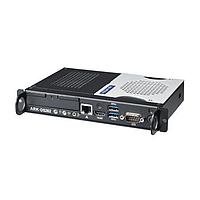
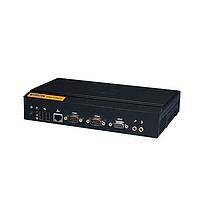
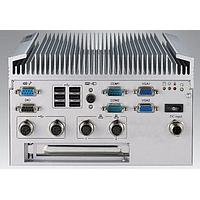
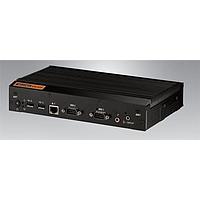
Embedded Box Computers
When a system needs reliable local computing in a compact, industrial-friendly format, an embedded platform is often the practical choice. Embedded Box Computers are widely used where conventional office PCs are not ideal, especially in automation, machine control, edge data processing, transport, medical environments, and industrial communication.
Compared with general-purpose desktop hardware, this category focuses on compact enclosures, stable operation, flexible I/O, and deployment in space-constrained installations. Depending on the application, buyers may need anything from a basic low-power node to a higher-performance unit with multiple display outputs, serial ports, LAN connectivity, digital I/O, or wider input voltage support.
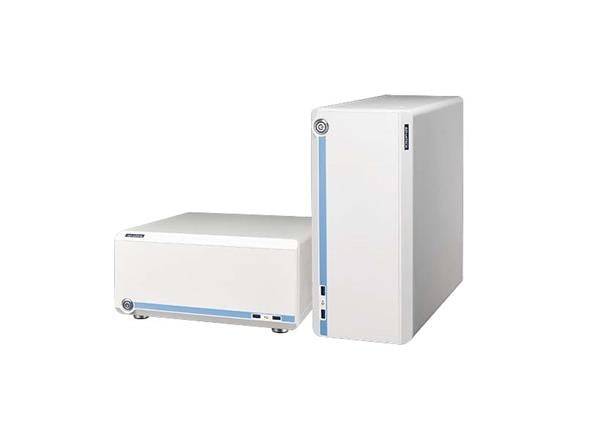
Where embedded box computers fit in real-world systems
These systems are commonly selected for projects that require a dedicated computer rather than a consumer PC. In industrial automation, they can serve as machine controllers, protocol gateways, HMI back-end systems, or edge devices that collect, process, and forward operating data. In digital infrastructure, they may be used for signage, communications, or application-specific control.
They are also relevant in sectors with tighter environmental or integration requirements. For example, certain platforms are used in medical or transportation-related installations, while smaller units can support IIoT deployments, remote monitoring, and compact equipment interfaces. If an application needs an integrated display and operator interface in one device, Panel PCs may be a better fit than a standalone box computer.
Key selection factors before you buy
The right choice usually starts with the workload. Processor class, memory capacity, and storage architecture should match the actual task, whether that means simple data acquisition, lightweight control logic, visualization, or multi-service edge computing. Some systems in this category are designed around Intel-based platforms, while others focus on ARM architectures for lower power consumption and task-specific deployment.
I/O availability is just as important as CPU performance. Many projects depend on the right mix of Ethernet, USB, HDMI or DisplayPort, serial interfaces, digital I/O, expansion slots, or wireless-ready options. Input power range, mechanical size, and operating temperature should also be checked early, especially for cabinet installation, mobile equipment, or distributed field deployments.
Typical product profiles in this category
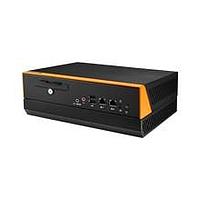
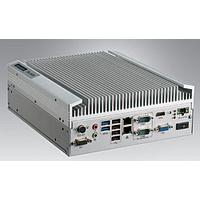
The category includes a wide spread of system types rather than one fixed format. For higher-performance applications, examples such as the ADLINK Technology MXE-5601/M4G or the Kontron 78510901-402 illustrate the kind of embedded box computer used where strong connectivity and computing capability matter. These types of systems are relevant for edge analytics, machine integration, and control tasks that require more than entry-level hardware.
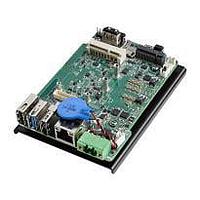
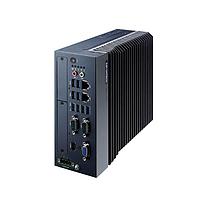
There are also compact and purpose-built options for more focused roles. The HARTING 2095000000300 HAIIC MICA BASIC and HARTING 2095000000200 HAIIC MICA USB represent smaller embedded systems suited to communication and IIoT-oriented deployment, while the Advantech USM-110A-UR110 shows how ARM-based platforms can support signage or lightweight embedded applications. For expansion-oriented use cases, the Arbor Technology FPC-7703 R1.1 is an example of a system built around broader interface flexibility.
Leading manufacturers and platform ecosystems
This category brings together established industrial computing brands with different design strengths. Advantech is commonly selected for broad industrial and application-specific embedded computing needs, including medical-grade and signage-related platforms. ADLINK Technology is often considered for edge computing, machine communication, and rugged embedded system deployment.
HARTING adds value in compact industrial connectivity and IIoT-oriented devices, while Arbor Technology and Kontron are relevant when system integrators need industrial-grade computing with practical expansion and interface options. Many products in the category are also built around Intel processors, making the wider Intel ecosystem relevant for teams standardizing on familiar architecture, software compatibility, and long-term embedded platform planning.
Choosing by application instead of by model name
For B2B purchasing, selecting by use case is usually more effective than comparing part numbers in isolation. A machine builder may prioritize serial communication, digital I/O, and broad DC input range. An edge gateway project may focus on Ethernet density, compact dimensions, and low maintenance. A medical or specialized embedded deployment may place more importance on certification context, enclosure design, and application-specific integration.
This is why product examples in the category vary so much in form and capability. The Advantech USM500JW72410-CT, for instance, is positioned for medical-oriented use, while systems such as the Advantech EPC-T22865A-12Y0E or ADLINK Technology MXC-6621/M4G can be more relevant for industrial computing or infrastructure deployments. If your design requires a modular CPU platform rather than a complete enclosed system, it may be worth reviewing Computer On Modules as an alternative design path.
Integration considerations for industrial and edge deployments
Beyond hardware specifications, system integration details often determine long-term success. Mounting constraints, cable routing, serviceability, thermal management, and operating environment all affect whether a unit will be practical in the field. Even a compact embedded box computer can become difficult to deploy if the port layout, power requirements, or maintenance access do not match the installation.
Software environment and expansion strategy also matter. Some buyers need a fixed-function appliance with minimal setup, while others need room for storage expansion, wireless modules, additional network interfaces, or legacy connectivity. In projects where logic control hardware must work alongside embedded computing, related categories such as SPLDs may support the broader system architecture.
Why this category matters for modern embedded projects
Embedded box computers sit at an important point between compact electronics and full industrial systems. They allow engineers, OEMs, and system integrators to deploy dedicated computing close to the process, equipment, or data source without having to build a custom platform from scratch. That makes them relevant for both new designs and retrofit projects where space, reliability, and interface flexibility are all important.
As you compare options in this category, focus on the actual operating scenario: processing demand, connectivity, environment, installation space, and long-term maintainability. A well-matched embedded box computer can simplify integration, support stable field operation, and provide a practical foundation for industrial automation, edge computing, and application-specific control.
Get exclusive volume discounts, bulk pricing updates, and new product alerts delivered directly to your inbox.
By subscribing, you agree to our Terms of Service and Privacy Policy.
Direct access to our certified experts