Panel PCs
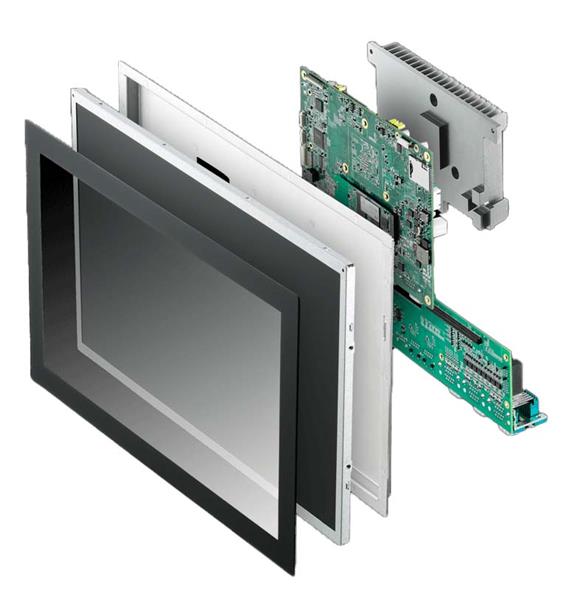
When operators need a single device that combines visualization, touch input, and computing power at the machine or line level, a panel-mounted industrial computer is often the most practical choice. Panel PCs help simplify system architecture by bringing the display and processing platform into one enclosure, which is especially useful in production cells, operator stations, kiosks, and equipment dashboards.
In industrial and embedded computing environments, these systems are selected not only for screen size or processor class, but also for mounting method, interface options, operating conditions, and long-term integration needs. This category brings together panel-based computing platforms designed for applications where reliability, space efficiency, and direct human-machine interaction matter.
Where panel PCs fit in industrial systems
A panel PC typically serves as the front-end interface for monitoring, control, data entry, and local application execution. Instead of pairing a separate monitor with a box PC, the integrated design reduces wiring complexity and can make installation cleaner in control cabinets, machine doors, and operator consoles.
They are commonly used in manufacturing, process equipment, building systems, packaging, and specialized service terminals. For projects that do not require an integrated display, a separate platform such as embedded box computers may be a better fit, but panel-based systems are often preferred when direct user interaction is central to the application.
Key features buyers usually compare
The right choice often starts with the display format. Screen size, resolution, and touch technology all affect usability. In this category, examples range from compact interfaces such as the Eaton XV-102-H3-57TVRL-10 with a 5.6-inch TFT resistive touch display to larger platforms like the ADLINK Technology SP2-21WP-TGL-i3 with a 21.5-inch LCD panel and full HD resolution.
Processing capability is another important factor. Some applications only need a lightweight interface for visualization and basic data handling, while others must run heavier software, local analytics, or multiple services. Models in this category include Intel-based configurations from Omron Automation and Safety and ADLINK Technology, as well as specialized mobile-oriented designs such as the Advantech AIM-75S-331S10 built around a Qualcomm processor.
Connectivity should also be reviewed carefully. Ethernet, serial communication, USB, HDMI, and other interfaces can determine how easily the panel PC integrates with PLCs, drives, scanners, printers, or plant networks. For legacy equipment, the availability of RS-232 or RS-485 can still be a deciding requirement.
Industrial design considerations beyond the processor
In B2B deployments, the computer itself is only one part of the decision. Buyers usually need to consider environmental suitability, panel cutout constraints, touch usability with gloves, service access, and power input range. A panel PC installed on a packaging machine may face very different conditions than one used in an indoor service terminal or logistics station.
Operating temperature range can be particularly important for factory-floor use. Several listed products indicate operation from 0 C up to +50 C or +60 C, which helps frame the kind of environment they are intended for. Input voltage flexibility also matters in vehicle, machine, and distributed industrial systems, as shown by the ADLINK Technology model supporting a wide 9 V to 36 V supply range.
Touch technology should not be overlooked. Resistive touch may suit applications that require simple operation in industrial settings, while capacitive touch can offer a more modern user experience where the operating environment allows it. The choice depends on how the device will actually be used on site.
Examples from leading industrial brands
This category includes solutions from established manufacturers such as Advantech, Eaton, Omron Automation and Safety, ADLINK Technology, and Arbor Technology. Each tends to serve slightly different application profiles, from compact HMI-style industrial terminals to higher-performance panel computers for more demanding software environments.
For example, the Omron Automation and Safety NYP17-213K2-15WC1000 is positioned around a 15-inch panel format with Intel processing, while the NYP1C-21391-12WC1000 and NYP25 series reflect 12-inch panel options for machine-level deployment. Eaton’s XV family highlights integrated industrial operator interface concepts, and the Advantech UTC-723FP-VFK0E illustrates how a panel computer can also support multi-function service applications with integrated peripheral-oriented features.
Arbor Technology also appears in this category with the GT7820-TR2, showing that some panel computing platforms are designed around more mobile or specialized data-capture workflows rather than only fixed control-panel installation.
How to choose the right panel PC for your application
A practical selection process usually starts with the application role. If the unit is mainly an operator interface for machine control, screen size, mounting, touch response, and industrial I/O may be more important than raw computing power. If it must run SCADA, edge software, databases, or custom visualization locally, CPU platform, memory, and storage become more significant.
It is also worth defining whether the device will connect to PLCs, barcode readers, printers, cameras, or enterprise systems. That affects interface requirements and may influence whether a panel PC is the right platform or whether a modular approach based on computer on modules is more appropriate for a custom design.
For retrofit projects, physical replacement constraints often drive the decision. Existing panel cutouts, preferred operating systems, available power, and legacy serial devices can narrow the shortlist quickly. For new machine designs, long-term maintainability and consistency across product lines are often just as important as initial specifications.
Panel PCs in the broader embedded computing landscape
Within embedded computing, panel PCs occupy the space where local interaction and integrated presentation are essential. They differ from board-level solutions and compact embedded systems because they are intended to be seen and used directly by people, not only installed behind the scenes.
That makes them a strong fit for OEM equipment builders, system integrators, and industrial users who need an all-in-one front-end device. In some architectures, they work alongside controllers, I/O, and communication devices; in others, they act as the visible endpoint for a larger automation system. If your project centers on interface, operation, and on-site data access, this category is often the most relevant starting point.
For buyers comparing installation styles and integrated display options, reviewing the broader panel PC range alongside brand-specific offerings can help identify the right balance of screen size, performance, and connectivity.
What to review before placing an order
Before final selection, verify the basics that most strongly affect deployment: mounting dimensions, power requirements, processor class, supported interfaces, touch type, and expected operating environment. It is also helpful to confirm whether the system will be used for continuous industrial operation, lighter-duty operator access, or specialized service functions.
Comparing a few representative products can make the decision clearer. A compact unit such as the Eaton XV-102-H3-57TVRL-10 may suit space-limited control points, while larger systems like the ADLINK Technology SP2-21WP-TGL-i3 can support richer visualization and more demanding software workloads. Omron Automation and Safety panel PCs provide additional options across different screen sizes and processing levels, helping buyers match the device to the machine or workstation role.
Conclusion
Selecting the right industrial panel PC is ultimately about matching the device to the real operating context: who uses it, what software it runs, how it connects, and where it is installed. A well-chosen panel computer can simplify operator interaction, reduce cabinet complexity, and provide a reliable embedded interface for years of service. Exploring the available range by display size, interface set, and application profile is the most effective way to narrow down the best fit for your project.
Get exclusive volume discounts, bulk pricing updates, and new product alerts delivered directly to your inbox.
By subscribing, you agree to our Terms of Service and Privacy Policy.
Direct access to our certified experts