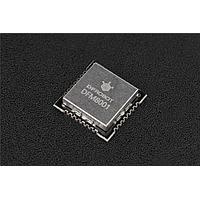
Energy Harvesting Modules
Designing low-power electronics often means working around one practical constraint: how to keep small devices running when battery replacement, wiring, or maintenance is difficult. In these cases, Energy Harvesting Modules help convert ambient sources such as thermal gradients, vibration, RF energy, linear motion, or available electrical energy into usable DC power for embedded systems.
This category is relevant for engineers building autonomous sensors, industrial monitoring nodes, wireless controls, and other embedded devices that need improved energy efficiency or reduced service intervals. Rather than treating energy harvesting as a one-size-fits-all solution, it is usually selected based on the available energy source, required output voltage, startup behavior, and the duty cycle of the connected load.

Where energy harvesting modules fit in embedded system design
These modules are typically used when the surrounding environment already contains recoverable energy. A temperature difference across surfaces, machine vibration, RF transmission in the area, linear movement, or intermittent electrical input can all become useful sources if the application is designed around a realistic power budget.
In many embedded projects, harvested power does not replace every power architecture. Instead, it supports low-power operation, energy storage, or periodic sensing and transmission. This makes the category especially useful for remote sensor nodes, condition monitoring, smart building controls, and maintenance-sensitive installations.
Common energy sources and module types
One of the main selection factors is the type of ambient energy available in the target environment. Thermal harvesting modules are intended for applications with a stable temperature difference, while piezo-based devices are more suitable where recurring vibration or mechanical movement is present. RF harvesting is usually considered in systems designed around nearby transmitted power, and some modules are designed to capture or manage available electrical energy directly.
Examples in this category reflect that range. The MATRIX Industries Prometheus series focuses on thermal harvesting, while Mide Technology devices such as the S128-J1FR-1808YB and S230-J1FR-1808XB are aligned with mechanical vibration use cases. For RF-powered designs, the Powercast P2110B is a useful reference point, and products such as the Advanced Linear Devices EH300A and EH301A address electrical energy harvesting scenarios with DC output.
Representative products in this category
Several products here illustrate how different harvesting approaches support different embedded requirements. The Advanced Linear Devices EH300A and EH301A modules provide configurable DC output ranges for designs that need to work with harvested electrical input and manage energy delivery to low-power circuits. They are relevant when designers need a compact conversion stage rather than a conventional fixed supply.
For thermal energy harvesting, MATRIX Industries modules such as PRMT07-18305-30, PRMT21-18305-42, and PRMT15-18305-42B show how output options can vary depending on the intended design target. In applications built around vibration, Mide Technology piezo transducer and harvester modules can support sensing nodes attached to machinery or structures where recurring motion is available. The EnOcean ECO260 also stands out for linear motion energy conversion, which can suit switches, controls, or mechanisms that generate movement as part of normal operation.
How to choose the right module
A practical selection process starts with the available energy source. If the installation offers a measurable thermal gradient, a thermal module may be appropriate. If the device is mounted on a motor, pump, compressor, or other moving equipment, a vibration harvester may be more relevant. For installations near dedicated RF transmission or systems designed around RF power capture, an RF receiver module can be considered.
Next, review the electrical side of the application: output voltage, power level, startup conditions, and whether energy is delivered continuously or in bursts. Some designs only need to wake a microcontroller briefly, take a reading, and transmit data at intervals. Others need to charge a storage element first and then support a short high-current event. Where the embedded architecture also includes signal interface stages, related components such as data conversion modules may help complete the system.
Integration considerations for low-power embedded systems
Harvested energy is limited, so the rest of the design must be built around careful power management. Engineers often combine these modules with low-power MCUs, duty-cycled sensors, sleep modes, and efficient communication strategies. The system should be designed so that energy consumption stays aligned with the amount of recoverable power available in the real operating environment.
Communication choice matters as well. If the application is sending data over a network, selecting efficient interfaces and minimizing transmission time can significantly improve viability. In some projects, additional hardware from categories such as Ethernet & Communication Modules may be part of the wider architecture, although the energy budget must be evaluated carefully before pairing harvested power with higher-demand communication tasks.
Typical application scenarios
Industrial monitoring is one of the clearest use cases. Vibration harvesters can support sensors mounted on rotating or reciprocating equipment, helping reduce dependency on battery replacement in hard-to-access locations. Thermal modules can be considered for hot-cold interfaces in process equipment, piping, or surfaces where a usable gradient exists over time.
Building automation and wireless controls are also relevant. Linear motion harvesters such as the EnOcean ECO260 can suit switch-like or actuation-based scenarios, while RF harvesting may support specialized low-power receiver designs. In product development workflows, engineers may also evaluate firmware behavior and power optimization alongside embedded software tools to validate whether the load profile matches the module’s harvesting capability.
Working with manufacturers in this category
This category includes established names for different harvesting methods rather than one single technology path. EnOcean is closely associated with motion-based energy harvesting approaches for wireless controls, while Advanced Linear Devices, Mide Technology, Powercast, and MATRIX Industries each represent different strengths across electrical, mechanical, RF, and thermal conversion.
That variety is useful for engineering teams because module choice is usually application-driven. A machine-health sensor, a thermal-powered node, and a motion-activated control interface may all fall under the same category, but their operating conditions and design constraints are very different. Comparing source type, output characteristics, environmental range, and integration complexity is often more valuable than comparing products by name alone.
Final considerations
Energy harvesting is most effective when the module is selected as part of the full embedded power strategy, not as an isolated component. The best approach is to start with the real energy available in the environment, then align the load profile, storage behavior, and communication pattern around that constraint.
Within this category, engineers can explore modules for thermal, vibration, RF, electrical, and motion-based harvesting depending on the application. For low-power embedded designs where maintenance reduction and autonomous operation matter, these products provide a practical starting point for building more efficient, self-sustaining systems.
Get exclusive volume discounts, bulk pricing updates, and new product alerts delivered directly to your inbox.
By subscribing, you agree to our Terms of Service and Privacy Policy.
Direct access to our certified experts