Acceleration Sensor Modules
When vibration, impact, tilt, or dynamic motion needs to be measured with confidence, the sensor choice has a direct effect on signal quality, installation effort, and long-term reliability. This is where Acceleration Sensor Modules become essential across industrial monitoring, embedded design, test systems, and condition-based maintenance.
On this page, buyers and engineers can explore module-level accelerometer solutions for different measurement priorities, from compact embedded integration to rugged industrial sensing. The range includes analog and digital options, single-axis and triaxial designs, as well as models intended for wireless measurement nodes or high-g environments.

Where acceleration sensor modules are used
Acceleration sensing is widely used wherever movement needs to be quantified rather than observed indirectly. In practical terms, these modules support machine vibration analysis, shock detection, structural monitoring, motion tracking, and embedded system feedback in applications where response speed and repeatability matter.
Depending on the installation, an accelerometer module may be used to monitor rotating assets, detect abnormal mechanical behavior, capture impact events, or provide motion data in a compact electronic assembly. In broader sensor architectures, they are often deployed alongside solutions such as temperature sensor modules when both thermal and dynamic conditions need to be tracked together.
Key differences across module types
Not every acceleration module is built for the same measurement task. One of the first distinctions is output type: analog models are often selected for direct integration with monitoring hardware or signal conditioning chains, while digital versions can simplify communication and processing in embedded or wireless systems.
Another important factor is axis count. A 1-axis sensor can be the right fit when vibration is expected in a known direction, while a 3-axis design is better suited for more complex motion, orientation changes, or multi-directional shock events. Mounting style also matters, with chassis-mount formats supporting industrial installation and SMD/SMT options fitting compact electronic assemblies.
Measurement range should always be matched to the expected event. Lower-range, higher-sensitivity devices are typically useful for finer vibration monitoring, while higher-g variants are more appropriate for severe shock, impact, or harsh mechanical environments.
Examples from leading manufacturers
Several well-known manufacturers are represented in this category, including Amphenol Wilcoxon, TE CONNECTIVITY SENSORS, and MicroStrain by HBK. Each is relevant in slightly different use cases, from industrial vibration sensing to rugged embedded and wireless measurement.
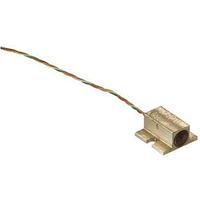
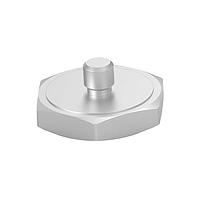
For example, the Amphenol Wilcoxon 786A-M12 is a general-purpose analog acceleration sensor module with 100 mV/g sensitivity, suitable for standard vibration monitoring workflows. The Amphenol Wilcoxon 793-10 is positioned for high-g measurement, while the 797L and 787-500-IS illustrate how some applications prioritize low-frequency response or higher sensitivity.
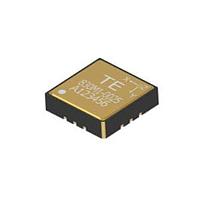
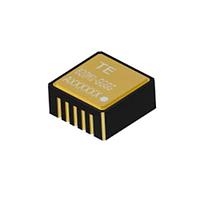
In embedded and compact designs, TE CONNECTIVITY SENSORS options such as the 830M1-0500 and 830M1-2000 show how triaxial modules can be used when high shock tolerance and board-level integration are important. For wireless condition monitoring or test setups, MicroStrain by HBK G-Link-200 variants provide ruggedized triaxial sensing with digital output in a node-based format.
How to choose the right acceleration sensor module
A practical selection process usually starts with the motion profile. If the target is continuous machine vibration, sensitivity and usable frequency behavior often matter more than extreme g rating. If the target is impact or crash-like events, the required range may increase substantially, and a lower-sensitivity but more robust device can be more appropriate.
Next, consider system integration. Think about whether the design expects analog signal output, digital data, or a wireless node architecture. Connector style, power availability, and mechanical mounting should also be reviewed early, especially in retrofit projects where cable routing and enclosure space are already constrained.
Environmental conditions are equally important. Operating temperature, isolation approach, and installation orientation can influence long-term performance. In some systems, acceleration data may also be combined with position or proximity feedback from related technologies such as distance sensor ICs and embedded modules to create a more complete view of movement and machine behavior.
Analog, digital, and wireless considerations
Analog accelerometer modules remain common in industrial monitoring because they are straightforward to interface with legacy equipment, data acquisition systems, and many vibration analysis platforms. They are often preferred when deterministic signal paths and established measurement practices are already in place.
Digital and wireless modules can offer advantages where installation flexibility, distributed sensing, or simplified system communication is important. A triaxial wireless node such as the G-Link family may be attractive in field measurement scenarios where running cables is difficult or where a temporary measurement setup is needed.
The right choice depends less on trends and more on the measurement chain. Sampling method, power strategy, data logging, and deployment location should all be considered together rather than treating the sensor as an isolated component.
Applications across industrial and embedded environments
In industrial settings, acceleration modules are frequently selected for predictive maintenance, rotating equipment monitoring, and troubleshooting of pumps, motors, fans, and gearboxes. In these cases, stable mounting, repeatable readings, and compatibility with the existing monitoring architecture are often more important than miniaturization alone.
In embedded systems, the priorities may shift toward compact footprint, low current consumption, and multi-axis sensing. This is especially true in portable devices, mobile equipment, test fixtures, and electronics exposed to shock or motion. Buyers evaluating broader sensing strategies may also compare acceleration solutions with nearby technologies such as enclosed distance sensor modules when the application involves both motion detection and spatial measurement.
What to review before ordering
Before selecting a part, it is worth confirming a few core parameters: expected acceleration range, number of sensing axes, preferred output format, mounting style, supply voltage, and operating temperature. These specifications shape whether a module will perform as intended once deployed in the real system.
It is also helpful to check the broader installation context, including connector compatibility, environmental exposure, and whether the device is being used for permanent monitoring or temporary testing. Some products in this category are optimized for fixed industrial mounting, while others are more aligned with embedded integration or wireless measurement workflows.
Find a module that fits the measurement task
This category brings together acceleration sensing options for a wide span of engineering requirements, from compact triaxial embedded modules to rugged industrial vibration sensors and wireless measurement nodes. By comparing axis configuration, output type, range, mounting approach, and operating conditions, it becomes much easier to narrow the shortlist to modules that fit the actual application.
If your project involves machine health monitoring, shock measurement, or motion-aware embedded design, the right acceleration sensor module should support both the sensing target and the way your system is built. A careful match between measurement needs and integration requirements will usually deliver better results than choosing on range or sensitivity alone.
Get exclusive volume discounts, bulk pricing updates, and new product alerts delivered directly to your inbox.
By subscribing, you agree to our Terms of Service and Privacy Policy.
Direct access to our certified experts