Distance Sensor ICs & Embedded Modules
Precise ranging is a core requirement in modern embedded design, whether the goal is obstacle detection, presence sensing, level monitoring, touchless interfaces, or spatial awareness in compact devices. Distance Sensor ICs & Embedded Modules help engineers add this capability at component level, making them suitable for integration into consumer products, industrial equipment, smart devices, and automation subsystems.
This category brings together compact sensing solutions built for measuring distance or detecting proximity using different operating principles. Depending on the application, designers may be looking for a small IC for board-level integration, a multizone time-of-flight device for basic scene mapping, or a module that simplifies development when optical or ultrasonic ranging needs to be added quickly.
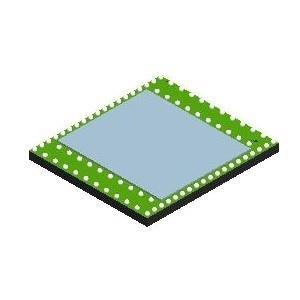
Where these devices fit in embedded systems
Distance sensing sits between simple presence detection and more advanced machine perception. In many products, it provides the data needed to trigger actions based on how far an object is from the sensor, helping systems respond without physical contact. This can improve usability, support safety functions, and reduce wear in applications where mechanical switches or contact-based measurement are not ideal.
These components are commonly considered alongside other embedded sensing technologies such as capacitance touch sensor modules or motion-related sensors, depending on the type of interaction or detection required. The right choice depends on range, field of view, environmental conditions, package constraints, and how much onboard processing the design can support.
Common technology approaches in this category
A major group within this category is based on time-of-flight sensing, where the device measures how long it takes for emitted energy to return after reflecting from a target. In optical implementations, this is often used for short- to mid-range distance measurement in compact electronics. These devices can be attractive when size, low power operation, and fine distance resolution are important.
Another approach uses ultrasonic ranging, which can be useful in applications where acoustic measurement is better suited to the target material or operating environment. Compared with some optical methods, ultrasonic devices may offer different behavior with transparency, reflectivity, surface finish, or ambient light conditions. Selecting between optical and ultrasonic options is usually an application-level decision rather than a simple performance ranking.
Examples from leading manufacturers
Several established suppliers are active in this area, including STMicroelectronics, OMRON, ams OSRAM, and TDK InvenSense. Their product lines cover both compact ICs and more integrated modules for applications that need anything from simple proximity functions to richer multi-zone or 3D ranging data.
For example, the STMicroelectronics VL53L4CDV0DH/1 is positioned for shorter-range measurement, while devices such as the VL53L3CPV9DH/1 and VL53L8CXV9GC/1 extend capability toward longer reach or more advanced sensing architectures. For applications needing multizone detection, parts such as the VL53L5CPV9GC/1, VL53L7CPV9GC/1, and VL53L8CHV9GC/1 illustrate how the category supports more than simple single-point ranging. On the module side, the OMRON B5LA2SU01010 3D TOF Sensor Module and TDK InvenSense offerings such as MOD_CH101-03-01 and ICU-20201 show how integration can be simplified when a more complete sensing building block is preferred.
How to choose the right device
The most practical starting point is the required measurement range. Some designs only need short-range object detection at close distance, while others need reliable ranging over several meters. Range should be reviewed together with target size, target reflectivity, and installation geometry, because real-world performance depends on more than the headline number.
Next, consider package style, operating voltage, interface requirements, and the available processing resources in the host system. A compact LGA sensor IC may suit high-volume embedded products with tight board space, while a ready-to-use module can shorten prototyping time and reduce design complexity. If the application needs more contextual information than a single distance value, multizone devices may be a better fit than a conventional point sensor.
Environmental factors also matter. Ambient light, surface properties, acoustic noise, window materials, enclosure design, and mounting angle can all affect results. In industrial or semi-industrial settings, some projects may ultimately need more self-contained hardware from the enclosed distance sensor modules range rather than open IC-level integration.
Use cases across product development
In embedded products, these sensors are often used for wake-up functions, hand detection, occupancy awareness, automatic display behavior, robotics support, and object approach monitoring. They can also contribute to fluid or material level indication in designs where non-contact measurement is preferred. In user interfaces, distance sensing can complement touch technologies by enabling gesture-like interaction or pre-touch detection.
For engineering teams building broader sensing platforms, distance sensing is often combined with other data sources. A system may use ranging together with acceleration data for motion-aware devices, or with thermal inputs for condition-based control. If your design spans multiple sensing modes, it can also be useful to review related categories such as acceleration sensor modules and temperature sensor modules.
ICs versus embedded modules
A sensor IC is typically the better choice when board space, unit cost, and custom integration are priorities. It gives the design team more flexibility in optics, mechanics, power architecture, and firmware implementation, but it also places more responsibility on the overall system design.
An embedded module is often more convenient when development speed matters or when integration risk needs to be reduced. Modules can help simplify proof-of-concept work, shorten bring-up time, and reduce the effort needed to evaluate sensing performance early in the design cycle. This makes them especially relevant for prototyping, lower-volume specialist equipment, or teams that want a more direct route to functional distance measurement.
What to review before final selection
Before locking in a part, it is worth checking how the intended target behaves under actual operating conditions. Reflective, transparent, dark, angled, or absorbent surfaces can all influence response depending on the sensing method. Mechanical placement, protective covers, and contamination risk should also be evaluated early, especially for compact optical designs.
It is also good practice to compare output type, integration effort, and software implications rather than focusing only on nominal distance. A device that fits the electrical and mechanical design cleanly may deliver a better overall result than one with a more ambitious specification but heavier implementation demands. Reviewing representative parts such as the STMicroelectronics VL6180V1NR/1, the ams OSRAM TMF8805-1B, or the TDK InvenSense ICU-20201 can help clarify the trade-offs between compact proximity-oriented sensing, ToF architectures, and longer-range ultrasonic options.
Finding the right fit for your application
This category is intended for engineers and buyers who need board-level ranging solutions with a clear path into embedded products. Whether the priority is compact integration, multizone measurement, or a module-based starting point, the available devices support a wide range of design strategies across sensing, automation, and smart electronic systems.
Choosing the right part usually comes down to matching sensing principle, distance requirement, mechanical constraints, and integration effort to the real application. With that approach, Distance Sensor ICs & Embedded Modules can provide a practical foundation for reliable non-contact detection in both new designs and product upgrades.
Get exclusive volume discounts, bulk pricing updates, and new product alerts delivered directly to your inbox.
By subscribing, you agree to our Terms of Service and Privacy Policy.
Direct access to our certified experts