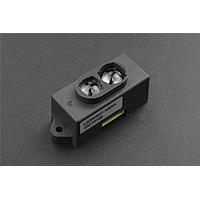
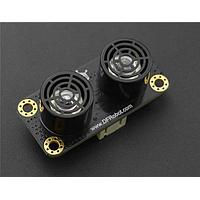
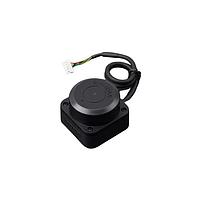
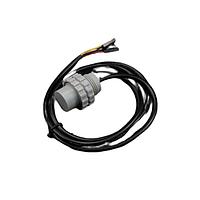
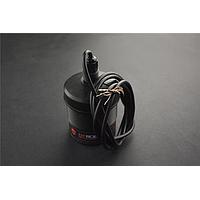
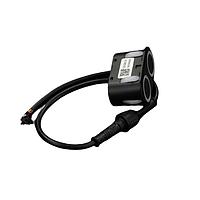
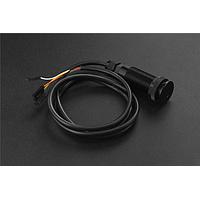
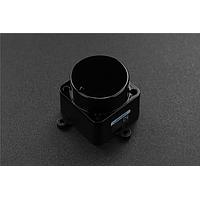
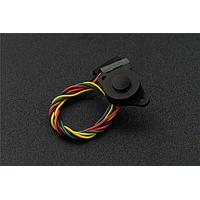
Enclosed Distance Sensor Modules
When compact equipment needs reliable object detection or short-range position feedback, a protected optical sensing format is often easier to integrate than building a sensing circuit from discrete parts. Enclosed Distance Sensor Modules are designed for that kind of task, combining the sensing element and supporting electronics in a compact package that can be used in embedded systems, automation subassemblies, robotics, and space-constrained product designs.
On this page, buyers and engineers can review enclosed optical distance sensing options suited to proximity monitoring, presence detection, and range-based control logic. Compared with a bare sensor IC, the enclosed format can simplify mechanical integration and reduce design effort when a ready-to-mount module is preferred.

Where enclosed distance sensor modules fit in a design
These modules are commonly selected when a system needs non-contact distance sensing over short to medium ranges. Typical use cases include obstacle detection, media or part presence checking, simple level thresholds, user proximity detection, and motion-related triggering inside compact equipment.
Because the sensing method in the featured products is optical, they are often suitable for embedded electronics that need fast response without physical contact. Teams comparing module-level solutions with chip-level approaches may also want to review distance sensor ICs and embedded modules when deciding between faster integration and deeper circuit-level customization.
Key characteristics to evaluate
The most practical starting point is sensing range. Within this category, example products cover different operating windows, from short-range detection such as 4 cm to 30 cm, through mid-range options like 15 mm to 150 mm, and up to wider beam or longer detection ranges extending to 80 cm. The right choice depends on target size, installation geometry, and how much variation is acceptable in the sensing zone.
Output type is another major factor. Some modules provide analog output, which can be useful when the control system needs a variable signal related to distance. Others are better suited to threshold-based detection, where the design simply needs to know whether an object is present within a defined range. Supply voltage, current consumption, mounting style, and available board space should also be reviewed early in the selection process.
Examples from Sharp Microelectronics
This category prominently features solutions from Sharp Microelectronics, a recognized name for compact optical distance sensing components. Their enclosed module lineup is often considered for embedded and OEM applications where proven optical sensing formats are needed in a small footprint.
Representative models on this page include the GP2Y0D21YK0F for wide-beam distance detection in the 10 cm to 80 cm range, the GP2Y0D02YK0F for 80 cm sensing applications, and the GP2Y0A41SK0F for analog measurement across 4 cm to 30 cm. For shorter-range analog sensing in compact designs, the GP2Y0AF15Y and GP2Y0AF15X are also relevant references. These examples illustrate how enclosed modules in the same family can support different detection distances and interface requirements without changing the overall sensing principle.
Analog vs. threshold-style sensing
Not every application needs the same type of output behavior. If the controller must react to gradual position changes, estimate proximity bands, or create calibrated switching points in software, an analog-output module may be a better fit. This approach is often useful in small automation assemblies, lab devices, or compact mechatronic systems.
For simpler presence detection, a threshold-oriented sensor can help reduce processing complexity. In these cases, the priority is often repeatable object detection within a practical range rather than high-resolution measurement. The intended control logic should guide the selection more than the sensor package alone.
Integration considerations for embedded and OEM use
Mechanical installation matters as much as electrical compatibility. Enclosed modules can be easier to place into housings or brackets than exposed sensing elements, but designers still need to account for field of view, target reflectivity, ambient light conditions, and the possibility of contamination in the sensing path. Optical modules generally perform best when the mounting geometry is stable and the target conditions are reasonably consistent.
Electrical integration should also be checked against the host design. Review operating voltage, current draw, and interface expectations before finalizing the part. If the application combines range detection with other environmental inputs, related module categories such as temperature sensor modules or acceleration sensor modules may help support a broader sensing architecture.
How to choose the right enclosed distance sensor module
A practical selection process usually starts with four questions: what distance must be detected, what kind of target is being sensed, what signal does the controller need, and what mechanical space is available? Answering those points will narrow the field much faster than comparing model numbers alone.
It is also useful to think about the end environment. A lab prototype, educational robot, industrial subassembly, and consumer device may all use optical distance sensing, but packaging constraints and control strategy can be very different. Looking at the intended operating range, required response behavior, and system-level integration effort will generally lead to a better choice than focusing on a single specification.
Supporting a broader sensor ecosystem
Enclosed distance sensing is often one part of a larger embedded platform rather than a standalone function. In many systems, it works alongside motion, touch, or environmental sensors to improve awareness and control. That makes module-level consistency, compactness, and ease of integration especially valuable for development teams building scalable designs.
For buyers sourcing components for prototypes, production builds, or design upgrades, this category brings together compact optical sensing modules that help shorten evaluation time. By comparing sensing range, output type, and package style, it becomes easier to identify a module that matches both the electrical design and the physical constraints of the application.
Conclusion
Choosing the right enclosed module is less about finding a generic distance sensor and more about matching sensing behavior to the real operating conditions of the product. Range window, output style, package format, and integration requirements all influence long-term performance.
This category is intended to support that evaluation process with a focused selection of enclosed optical distance modules for embedded and B2B applications. If you are comparing options for object detection, proximity response, or compact measurement tasks, reviewing the available Sharp Microelectronics models here is a practical place to start.
Get exclusive volume discounts, bulk pricing updates, and new product alerts delivered directly to your inbox.
By subscribing, you agree to our Terms of Service and Privacy Policy.
Direct access to our certified experts