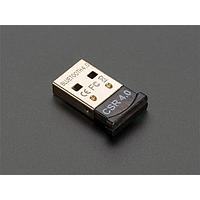
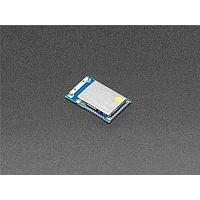
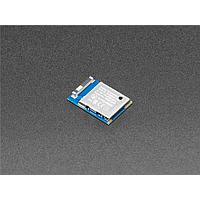
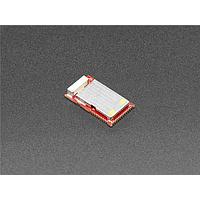
Bluetooth Modules 802.15.1
Short-range wireless connectivity is often the simplest way to add cable-free communication to embedded products, industrial controllers, handheld devices, and smart peripherals. When low power use, compact integration, and proven interoperability matter, Bluetooth Modules 802.15.1 are a practical choice for designers who want to reduce RF design complexity and speed up development.
This category brings together module options used in applications such as device-to-device communication, wireless data transfer, audio-enabled products, and embedded HMI connectivity. For engineers, buyers, and system integrators, the main value of a pre-certified or ready-to-integrate module is that it can simplify hardware design compared with building a radio section from discrete RF components.
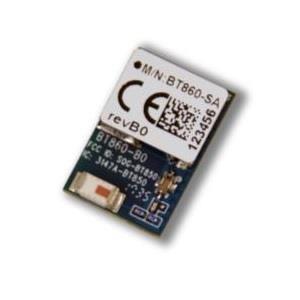
Where Bluetooth modules fit in embedded wireless design
Bluetooth technology is widely used when products need reliable short-range communication in the 2.4 GHz band. In embedded systems, these modules are commonly selected for wireless configuration, sensor data exchange, local control interfaces, and communication with smartphones, tablets, gateways, or nearby equipment.
Compared with more application-specific wireless solutions, Bluetooth is often chosen for its broad ecosystem and straightforward user interaction. If a project needs a different connectivity path, such as wide-area communication through cellular modules or position-aware tracking with GNSS/GPS modules, those categories may be more suitable for the overall system architecture.
Why engineers use ready-to-integrate Bluetooth modules
A module-based approach helps shorten development cycles because the radio section, interface design, and integration requirements are usually more manageable than a fully custom RF implementation. This is especially useful for teams that want to focus on application firmware, user interface logic, or product-level functionality rather than deep RF tuning.
Another advantage is design consistency across product variants. A module can provide a stable wireless foundation for different end devices, whether the need is a simple serial-style link, an embedded peripheral connection, or a more specialized wireless interface. In many cases, selecting the right companion antenna solution is also an important part of achieving dependable range and link quality.
Examples available in this category
This range includes solutions from established semiconductor suppliers such as Microchip Technology, Intel, and Infineon. Within the available products, examples such as the RN42-I/RM615, RN52-I/RM, RN4870-I/RM128, RN4870-V/RM118, BM70BLE01FC2-0002AA, BM70BLES1FC2-0002AA, RN4678APL-V/RM100, RN-USB-T, and IS1677SM-101 illustrate the breadth of module choices used across embedded applications.
Some modules in this category are well aligned with compact low-voltage embedded designs, while others are relevant when audio-related functionality or USB connectivity is part of the system concept. For example, the RN52-I/RM is listed with a 2.4 GHz operating band, a supply range of 1.8 to 3.6 V, and an operating temperature range of -40 to 85C, which reflects the kind of information engineers typically review during component selection. The RN4870-V/RM118 is listed with a supply range of 1.9 to 3.6 V, another useful reference point for low-power design planning.
How to choose the right module for your application
The best starting point is the communication role of the device. Some projects need a transparent wireless link for command and data exchange, while others need support for user-facing connectivity, audio transport, or integration with an embedded host through a specific interface. Looking at the intended data path early helps narrow the field before comparing footprints or electrical details.
Next, review the electrical and environmental requirements. Supply voltage, temperature range, and the host platform all affect integration effort. Mechanical constraints, PCB layout limitations, and antenna placement should also be considered from the start, especially in compact enclosures or products with metal shielding, batteries, or dense digital circuitry nearby.
It can also be useful to evaluate whether the design may later need broader wireless flexibility. If the roadmap could expand beyond Bluetooth into combined wireless approaches, a review of multiprotocol modules may help during platform planning.
Typical application scenarios
Bluetooth modules are used across many product types, from industrial monitoring nodes and service tools to medical accessories, smart consumer devices, and embedded control panels. In B2B product development, they are often selected when direct local communication is more appropriate than cloud-dependent or infrastructure-heavy connectivity.
They are also relevant in systems where commissioning and maintenance are important. A Bluetooth link can allow nearby setup, diagnostics, firmware interaction, or parameter adjustment without a wired service port on the enclosure. That can simplify field access while preserving a cleaner product design.
Manufacturer and platform considerations
Supplier choice matters not only for availability, but also for long-term design support and ecosystem fit. In this category, names such as Microchip Technology, Intel, and Infineon appear among representative products, giving buyers a useful starting point when comparing module families and preferred vendor ecosystems.
For design teams already aligned with a particular silicon or embedded platform strategy, manufacturer familiarity can reduce onboarding time. At the same time, the right decision should balance interface compatibility, integration effort, and lifecycle planning rather than relying on brand preference alone.
What to review before placing an order
Before final selection, it is worth checking the intended host interface, power budget, operating environment, and whether the module will be used for data, control, or audio-oriented communication. Engineers should also confirm board space, antenna strategy, and any enclosure-related constraints that could affect wireless performance after installation.
For procurement teams, the practical view is equally important: confirm the exact module variant, expected deployment volume, and whether the design may need a second-source strategy or a future migration path. A well-matched Bluetooth module can make product integration much more efficient when both technical and sourcing requirements are considered together.
Finding the right fit for your build
Choosing from a broad range of Bluetooth modules is less about finding a generic “best” part and more about matching wireless behavior, electrical requirements, and integration effort to the actual device. By comparing module role, voltage range, environment, and system architecture, engineering and purchasing teams can narrow the options to the solutions that fit their application with fewer compromises.
If you are reviewing wireless building blocks for a new or updated product, this category is a strong starting point for identifying embedded Bluetooth options that support dependable short-range connectivity and efficient product development.
Get exclusive volume discounts, bulk pricing updates, and new product alerts delivered directly to your inbox.
By subscribing, you agree to our Terms of Service and Privacy Policy.
Direct access to our certified experts