
Multiprotocol Modules
When a connected device needs to handle more than one wireless standard without adding unnecessary design complexity, choosing the right module becomes an important part of the architecture. Multiprotocol Modules help engineers integrate Wi-Fi, Bluetooth, and related wireless capabilities in a compact format that is easier to design into embedded products, gateways, industrial equipment, and edge devices.
For B2B buyers and design teams, this category is especially relevant when balancing performance, board space, integration time, and long-term product support. Instead of building RF functionality from the ground up, multiprotocol solutions provide a practical path for adding wireless connectivity while reducing development effort in many embedded applications.
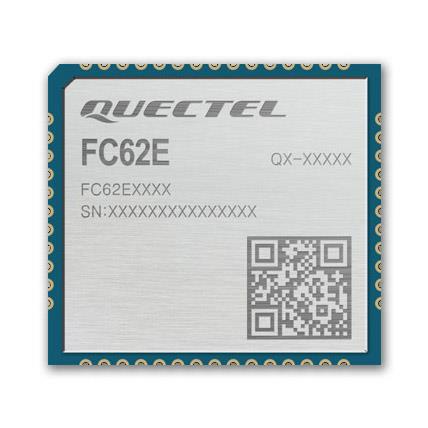
Where multiprotocol modules fit in embedded wireless design
In many products, one communication standard is no longer enough. A system may need Wi-Fi for network access and Bluetooth for local configuration, pairing, or short-range device communication. That is where multiprotocol wireless integration becomes valuable, especially in compact designs where simplifying the RF section can save both engineering time and PCB space.
This category includes modules intended for embedded systems that must support multiple wireless functions in a single hardware platform. Depending on the product, that may involve combinations of IEEE 802.11 standards and Bluetooth generations, making these modules suitable for smart equipment, industrial interfaces, portable electronics, and connected control systems.
Common protocol combinations and application needs
Many products in this category combine Wi-Fi and Bluetooth because that pairing addresses a broad set of real-world requirements. Wi-Fi is commonly used for data backhaul or network access, while Bluetooth supports provisioning, local communication, and user interaction. In product development, this combination is often preferred when designers want one module to support both infrastructure connectivity and short-range control.
For example, several Murata and Intel modules in this category cover 2.4 GHz and 5 GHz operation, while some Intel options also extend into 6 GHz for Wi-Fi 6E use cases. If your design is focused mainly on dedicated short-range communication rather than combined wireless functionality, it may also be useful to compare this category with Bluetooth modules for narrower application requirements.
Representative products in this range
This selection includes well-known module families from Murata and Intel, which are commonly considered in embedded connectivity projects. Murata examples such as the LBEE5XV1YM-574, LBEE5XV2EA-802, and LBEE5KL1DX-883 illustrate compact solutions for combined wireless functionality, while models like the LBEH5DU1BW-777 address applications that need support for established Wi-Fi and Bluetooth environments.
Intel options in this category include the AX210 series and earlier 8260 family modules. Products such as Intel AX210.NGWG.NV 999M85, AX210.NGWGE.NVK99AP9N, and AX210.NGWGIE.NVQ are relevant for designs targeting newer wireless standards, including Wi-Fi 6E and Bluetooth 5.3 in selected variants. These examples are useful for understanding the range of integration levels and protocol coverage available within the category.
How to choose the right module for your project
The best starting point is the wireless requirement of the end product. Check which protocols are actually needed, the target frequency bands, expected throughput, and the role of Bluetooth in the design. In some applications, Bluetooth is only needed for commissioning, while in others it is a core part of the device interaction model. That distinction can affect cost, feature selection, and module choice.
It is also important to review operating temperature range, supply conditions, mounting style, and physical size. For example, some listed modules are surface-mount devices intended for embedded assembly, while others may align with specific host platforms or integration approaches. Looking at data rate and band support can also help filter options, especially when comparing modules intended for basic connectivity versus those aimed at higher-bandwidth wireless systems.
Design considerations beyond the module itself
Successful wireless integration depends on more than selecting the module alone. Antenna strategy, enclosure material, layout practice, and the physical placement of RF components all influence actual field performance. For that reason, engineers evaluating this category often review related antenna options at the same time, especially when planning compact or industrial enclosures.
System-level requirements may also determine whether a multiprotocol approach is the right fit. If the design needs wide-area communication, a dedicated cellular module may be more appropriate. If accurate positioning is part of the application, pairing wireless connectivity with GNSS/GPS modules can be a practical next step in the overall embedded system design.
Why this category matters for industrial and OEM sourcing
For OEMs, product developers, and technical purchasing teams, a category like this supports faster comparison across protocol support, frequency range, and integration format. That is useful when preparing new designs as well as when evaluating alternative modules for lifecycle planning, cost control, or platform refresh projects.
Because multiprotocol modules often sit at the intersection of hardware, firmware, and network design, the selection process usually benefits from a clear view of system requirements rather than a simple part-by-part comparison. A module that is suitable for a compact HMI, for example, may not be the best fit for a high-throughput edge device or a design targeting newer Wi-Fi bands.
Practical buying perspective for technical teams
From a procurement and engineering standpoint, this category is most useful when you already know the broad wireless architecture you need but want flexibility in implementation. Reviewing a mix of Murata and Intel products can help teams compare mainstream embedded options for Wi-Fi and Bluetooth integration without narrowing too early to a single form factor or protocol generation.
If your project requires more than one wireless function in a single module, this category provides a focused starting point for evaluation. By comparing protocol combinations, operating bands, and integration characteristics alongside related RF components, buyers can move toward a selection that fits both technical and commercial requirements with fewer compromises later in the design cycle.
Get exclusive volume discounts, bulk pricing updates, and new product alerts delivered directly to your inbox.
By subscribing, you agree to our Terms of Service and Privacy Policy.
Direct access to our certified experts