RF Modules
Wireless links are often only one part of a larger embedded or industrial design, but they can have a major impact on range, signal quality, system flexibility, and integration effort. In projects that rely on radio communication, signal routing, amplification, switching, or ready-to-deploy transceiver functions, choosing the right RF Modules helps reduce development time while keeping the design aligned with application requirements.
This category brings together modules and RF building blocks used across embedded electronics, industrial wireless systems, and high-frequency signal chains. Depending on the application, that may include transceivers for short-range communication, amplifier modules for wideband RF paths, switching hardware for signal routing, or specialized RF modules that support measurement, control, or infrastructure integration.
Where RF modules fit in real systems
In practical terms, RF modules are used when a design needs reliable radio functionality without building every RF stage from discrete components. They can support wireless data links between devices, extend coverage in industrial communication systems, or simplify the implementation of controlled RF paths in test and instrumentation environments.
Some applications are focused on embedded connectivity, while others are closer to signal conditioning or lab-grade RF handling. For example, a design team may use a transceiver module for 2.4 GHz communications, while another project may need an RF amplifier or mechanical RF switch to manage broadband signals. If antenna performance is a key part of the design, it is also worth reviewing suitable antenna options alongside the module selection.
Typical module types in this category
This category covers a broad RF ecosystem rather than a single device format. Transceiver modules are commonly chosen for embedded wireless communication, especially when SPI, I2C, or similar interfaces are needed for integration into host controllers. Models such as the Murata Electronics DNT24MP and DNT24MCA illustrate this type of solution for 2.4 GHz communication in compact systems.
There are also modules that serve signal-chain functions rather than end-node communication. Examples include the Analog Devices HMC-C009 I/Q mixer module, the Mini-Circuits RC-3MTS-18 mechanical RF switch, and programmable attenuation solutions such as the Mini-Circuits RCDAT-8000-90. For higher-power or wideband requirements, amplifier modules like the Microchip AML218P2801 and UA0U50HM show how this category can support broadband RF design and test applications.
Common application areas
In embedded and industrial environments, RF modules are often selected to shorten development cycles and reduce RF design complexity. A pre-integrated module can be a practical choice when the project needs a defined operating band, stable electrical interfaces, and a more predictable path to system-level testing. This is particularly relevant for machine connectivity, sensor networks, controller-to-device communication, and wireless retrofit projects.
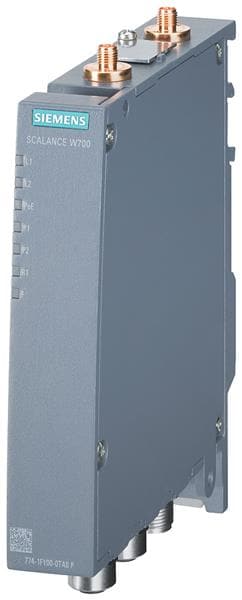
Industrial examples from Banner Engineering, such as the R70KSR9MQ radio module set and the SG-R70-DR2M MultiHop segment, highlight the role of RF modules in plant-floor communication and ruggedized wireless architectures. In other use cases, a module may be part of a development platform, a gateway accessory, or a measurement setup where repeatable RF performance matters as much as wireless connectivity itself.
How to choose the right RF module
The best starting point is the actual communication or signal-path requirement. Frequency band is one of the first filters, but it should not be the only one. Teams typically also compare interface type, output power, physical size, supply voltage range, environmental conditions, and whether the module is intended for communication, switching, amplification, or RF signal conversion.
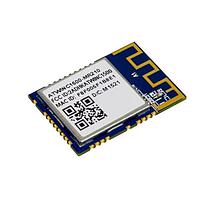
For embedded wireless links, protocol and host integration are usually critical. A module such as the Microchip Technology ATWINC1500-MR210UB1977 may be relevant when Wi-Fi connectivity is part of the design, while other projects may be better served by dedicated short-range transceivers or industrial radio modules. If the application extends beyond generic RF links and requires device-to-device wireless networking, related categories like Bluetooth modules or multiprotocol modules may offer a closer fit.
Manufacturer landscape and product approach
This category includes solutions from manufacturers with different RF strengths. Microchip appears in amplifier and wireless module examples, making it relevant for both embedded connectivity and broadband RF functions. Murata Electronics is well known in module integration, while Mini-Circuits is widely associated with RF building blocks such as switches and attenuators used in signal routing and test setups.
Other featured manufacturers add application-specific depth. Analog Devices contributes specialized RF signal-chain modules, Banner Engineering supports industrial wireless deployment, and Advantech appears in system-oriented module accessories such as the USC-P03-B110. This mix is useful for buyers who are not only comparing part numbers, but also looking at how each product fits into a wider system architecture.
Integration considerations for engineering teams
Even when using prebuilt modules, successful implementation depends on the surrounding design. Engineers should review power requirements, control interfaces, thermal constraints, and the RF path outside the module itself. Antenna selection, connector type, enclosure effects, and cabling can all influence final performance, especially at higher frequencies or in electrically noisy industrial environments.
Mechanical integration also matters. Some modules are optimized for compact embedded boards, while others are better suited to bench, cabinet, or infrastructure installation. In addition, the expected operating temperature range and environmental exposure should be checked early, particularly for industrial deployments where vibration, dust, or outdoor conditions may affect long-term reliability.
Finding a practical fit for your application
Because RF modules span communication, amplification, switching, and conversion roles, selection is rarely about frequency alone. A strong shortlist usually comes from matching the module’s function to the system objective first, then narrowing by interface, power, packaging, and deployment environment. That approach helps avoid over-specifying a design in one area while missing an integration constraint in another.
Whether the requirement is a compact 2.4 GHz transceiver, a programmable attenuator, an RF switch, or a broadband amplifier module, this category supports a wide range of embedded and industrial RF needs. Reviewing the intended signal path and the surrounding hardware ecosystem will usually make the right choice clearer and help ensure the selected module works as expected in the final application.
Get exclusive volume discounts, bulk pricing updates, and new product alerts delivered directly to your inbox.
By subscribing, you agree to our Terms of Service and Privacy Policy.
Direct access to our certified experts