WiFi Modules 802.11
Reliable wireless connectivity is now a basic requirement in many embedded systems, industrial devices, gateways, and connected products. When a design needs network access without building the RF section from scratch, WiFi Modules 802.11 provide a practical path for adding WLAN capability with less integration effort and a faster route to deployment.
This category brings together 802.11 module solutions used in embedded electronics, machine interfaces, networked equipment, and IoT platforms. Whether the priority is compact board-level integration, support for common WiFi standards, or compatibility with existing host hardware, these modules help engineers add wireless communication in a more structured and scalable way.
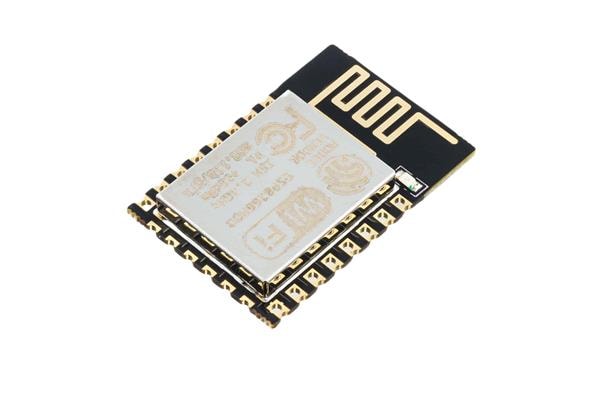
Where WiFi modules fit in embedded and industrial design
In many projects, a WiFi module acts as the bridge between a local device and the wider network. It may connect a controller to a plant network, allow a panel PC or HMI to communicate wirelessly, or enable data transfer from sensors, field devices, and edge systems to software platforms.
Compared with a fully custom RF implementation, an integrated module can simplify development by combining the wireless interface, core radio functions, and hardware integration format in one component. This is especially useful in designs where space, time-to-market, and interoperability matter as much as raw performance.
Typical module formats and use cases
The products in this category cover several common integration approaches. Some are intended for direct embedding on application boards, while others are suited to host platforms that already support Mini-PCIe or similar modular interfaces. There are also specialized wireless serial solutions for equipment that needs WLAN communication without a full redesign of the base electronics.
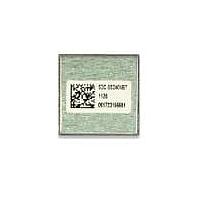
For example, the Advantech WIFI-113E is positioned as a full-size Mini-PCIe wireless module, making it relevant for industrial computing and embedded system upgrades. Intel options such as the 633AN.HMWWB and 62205AN.HMW1EB illustrate module choices for dual-band or host-card style integration, while Murata HN-214DX highlights a more application-specific approach for wireless serial communication in outdoor or control-oriented environments.
Representative products in this category
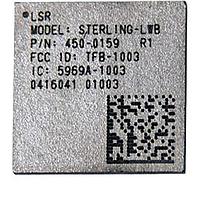
Several product families in this range show how different design priorities can be addressed. Microchip Technology modules such as ATWILC1000-MR110PA, RN171XVW/RM, ATWILC1000A-UU-T, and ATWINC1500MR210PB1954 are often relevant when designers need embedded WLAN capability that can be incorporated into connected devices and IoT nodes. The listed ATWILC1000-MR110PA also notes a 3.3 V supply, which can be an important detail in low-voltage embedded platforms.
Infineon is represented by the CYBL10563-68FLXIT, while Intel modules such as the 2200BN.HMWWB, 62205AN.HMW1EB, and 633AN.HMWWB illustrate module options aligned with established computing and networking architectures. Murata also adds context with the HN-214DX compact outdoor wireless serial modem, which is useful for applications where a serial interface remains central to the system design.
How to choose the right 802.11 module
Selecting a suitable module usually starts with the host system. Engineers should first confirm the required interface, mechanical format, available supply rails, and the role of WiFi in the device. A compact embedded controller may need a board-level WLAN module, while an industrial computer or gateway may be better served by a card-based format.
It is also important to match the module to the network environment. Some projects need basic 2.4 GHz connectivity, while others benefit from dual-band support or a specific antenna arrangement. If the wireless path is part of a larger RF design, it can also be helpful to review related components such as antenna options to ensure the overall link budget and installation approach make sense.
Beyond hardware fit, developers should consider software integration, network stack requirements, and how the module will be managed in the field. In connected products where WiFi is only one part of the communication strategy, it may also be worth comparing nearby technologies such as Bluetooth modules or cellular modules depending on range, infrastructure, and power considerations.
Design factors that matter in real deployments
Successful wireless integration depends on more than the module alone. Placement within the enclosure, antenna routing, shielding, nearby high-speed circuits, and environmental conditions can all affect WLAN performance. In industrial and embedded products, these practical details often determine whether a design performs consistently once it leaves the lab.
Mechanical constraints are equally important. A module that works well electrically still needs to fit the product architecture, service strategy, and manufacturing process. This is why engineers often evaluate interface type, antenna connection method, board space, and installation environment together rather than looking at radio capability in isolation.
Manufacturers commonly considered in this range
This category includes products from recognized suppliers used across embedded and industrial electronics. Among the names most relevant here are Microchip Technology, Infineon, Intel, Murata, and Advantech. Each tends to appear in different integration scenarios, from compact embedded WLAN functions to host-oriented wireless upgrade modules.
Rather than choosing by brand alone, it is usually more effective to compare the intended application, physical form factor, supported WiFi standard, and system-level integration needs. That approach helps narrow the selection to modules that fit the actual design constraints instead of simply matching a familiar manufacturer name.
When this category is the right starting point
If a project needs wireless LAN access for an embedded controller, industrial PC, gateway, serial device, or connected product, this category is a strong place to begin. It is especially relevant for teams that want to add WiFi without creating a custom RF design from the ground up and need options across different module styles and integration methods.
Reviewing the available WiFi modules alongside host interface requirements, antenna strategy, and deployment conditions will usually lead to a more reliable shortlist. With that process, it becomes easier to identify whether a compact embedded WLAN module, a Mini-PCIe format, or a specialized wireless serial modem is the better fit for the application.
Choosing the right 802.11 module is ultimately about balancing connectivity needs with integration effort, mechanical fit, and long-term product support. This category provides a focused starting point for comparing WLAN modules from established manufacturers and finding a practical match for embedded, industrial, and B2B hardware projects.
Get exclusive volume discounts, bulk pricing updates, and new product alerts delivered directly to your inbox.
By subscribing, you agree to our Terms of Service and Privacy Policy.
Direct access to our certified experts