Zigbee Modules 802.15.4
Reliable short-range wireless communication is a core building block in modern embedded design, especially when devices need to exchange data with low power consumption and support scalable node-to-node networking. Zigbee Modules 802.15.4 are widely used in this space for sensor networks, building automation, industrial monitoring, smart control panels, and connected edge devices where stable mesh communication matters more than raw bandwidth.
This category brings together module-level options for engineers and purchasing teams looking for compact RF solutions that can be integrated into new designs or used to upgrade existing wireless systems. Whether the requirement is 2.4 GHz operation for global deployments or sub-GHz options for regional applications, the selection here supports practical embedded development with established interfaces such as SPI and UART, along with different antenna connection formats.
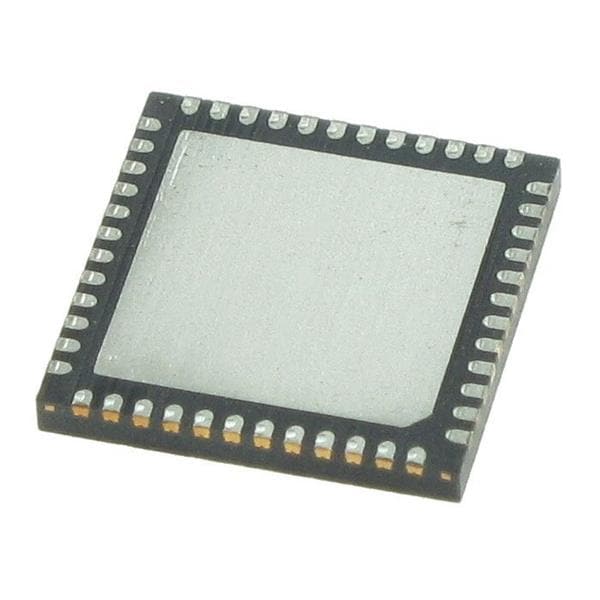
Where Zigbee and IEEE 802.15.4 fit in embedded systems
IEEE 802.15.4 provides the underlying wireless framework used by many low-data-rate, low-power networked devices. In real projects, this makes it a strong fit for distributed sensing, remote I/O, control nodes, and gateway-connected field devices that need predictable communication without the complexity of higher-bandwidth wireless platforms.
Zigbee builds on that foundation to support network formation, routing, and device interoperability concepts that are useful in mesh-style deployments. For design teams evaluating alternatives, it can also be useful to compare Zigbee with Bluetooth modules when the application priorities differ in topology, power profile, mobile device interaction, or network scale.
Typical applications for Zigbee modules
These modules are commonly selected for applications where many endpoints need to communicate over a distributed area with modest payload sizes. Examples include smart lighting, HVAC control, environmental sensing, energy management, metering interfaces, occupancy detection, and industrial status monitoring.
In commercial and industrial environments, Zigbee can be especially attractive when installers need flexible node placement and the ability to extend coverage through a mesh network. For OEM and system integration projects, the module approach also helps shorten RF design effort compared with building a wireless section entirely from discrete components.
Common module options in this category
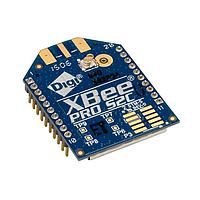
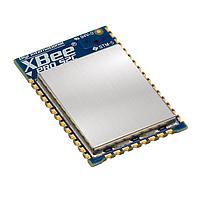
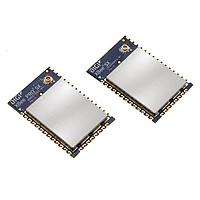
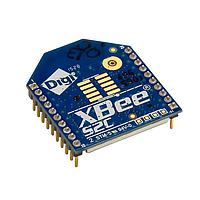
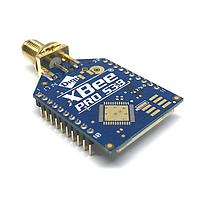
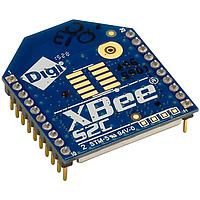
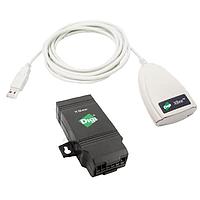
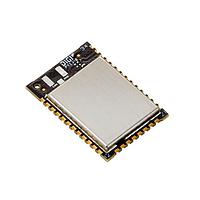
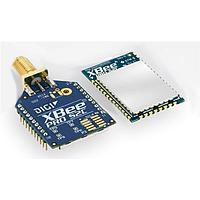
The range includes several established product families from DIGI and Microchip, covering different footprints, interfaces, and frequency bands. For example, DIGI XBRR-24Z8ST-J is a 2.4 GHz RF wireless module in a 20-pin DIP format, while DIGI XBRR-24Z8UM-J and DIGI XB24CZ7UIS-004 are suited to designs that need external antenna connectivity through U.FL-style interfaces.
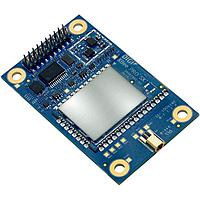
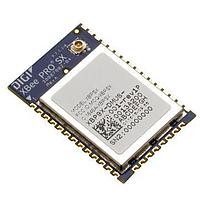
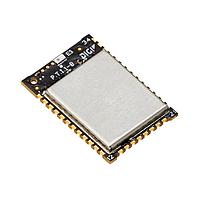
Microchip options in the category include the MRF24J40MDT-I/RM, as well as ATZB-RF-233-1-CR for 2.4 GHz IEEE 802.15.4 implementations. Where regional requirements favor lower-frequency operation, products such as Microchip ATZB-RF-212B-0-CNR and DIGI XB9X-DMRS-031 support operation in the 902 MHz to 928 MHz range, while DIGI SX868 Zigbee & Mesh Modules provide an 868 MHz option for suitable deployments.
How to choose the right Zigbee module
A good starting point is the target frequency band. Many global embedded products use 2.4 GHz modules because they are broadly recognized and widely supported. However, some projects may benefit from 868 MHz or 900 MHz-class solutions depending on local regulations, propagation characteristics, and the intended installation environment.
Next, review the electrical and mechanical integration needs of the host design. Interface type is important: some modules expose SPI, some UART, and some support both. Antenna strategy also matters. A module with an on-board or chip antenna can simplify assembly, while versions with U.FL or similar connectors offer more flexibility when enclosure design, antenna placement, or RF path optimization is a concern. If your design also requires a separate RF path component, this category can be complemented by suitable antenna options.
Design considerations beyond the datasheet headline
Module selection should not be based only on frequency and interface. Engineers should also consider network architecture, expected node count, enclosure material, installation density, power budget, and how the product will be commissioned or maintained in the field. In a large distributed system, RF performance is closely tied to layout quality, antenna positioning, and real deployment conditions rather than nominal radio range alone.
It is also useful to think about the broader connectivity roadmap. Some products are designed around a single wireless technology, while others may eventually need coexistence with positioning or multi-radio systems. In those cases, adjacent categories such as multiprotocol modules or GNSS/GPS modules may become relevant during later design phases.
Why module-based integration is practical for OEM and industrial projects
Using a pre-built wireless module can reduce development risk in embedded programs where time-to-market, certification planning, and repeatable manufacturing are all important. Instead of creating a complete RF stage from scratch, teams can focus on application firmware, system control logic, power management, and host-level communications.
This approach is particularly useful for B2B purchasing and engineering workflows because it supports clearer BOM planning and easier comparison across frequency bands, connector types, and interface options. It also allows procurement teams to align sourcing decisions more closely with the intended deployment model, whether that means compact board-level integration, external antenna routing, or a migration path between product variants.
Finding a suitable option for your network design
The products in this category are aimed at embedded developers, OEMs, and industrial buyers who need dependable short-range wireless building blocks for low-power networking. From compact 2.4 GHz solutions such as DIGI XBRR-24Z8CM-J and DIGI XB24CZ7RIS-004 to regional sub-GHz options from DIGI and Microchip, the available range supports different design priorities without forcing a one-size-fits-all approach.
When narrowing down the shortlist, focus on the communication interface, operating band, antenna method, and mechanical format that best match the end device. A well-chosen Zigbee module simplifies system integration and creates a stronger foundation for reliable field communication across sensors, controllers, and connected industrial endpoints.
Get exclusive volume discounts, bulk pricing updates, and new product alerts delivered directly to your inbox.
By subscribing, you agree to our Terms of Service and Privacy Policy.
Direct access to our certified experts