Clock & Timer Development Tools
Precise timing is a foundation of modern electronic design, especially in communications, embedded control, signal processing, and high-speed digital systems. When engineers need to evaluate clock generation, synchronization, PLL behavior, or timing distribution before committing to a full hardware design, Clock & Timer Development Tools provide a practical way to shorten development cycles and reduce integration risk.
This category brings together evaluation boards, demonstration platforms, and development kits used to test timing-related ICs and clock architectures in realistic conditions. Whether the goal is validating a PLL, reviewing clock generator behavior, experimenting with a direct digital synthesizer, or checking signal timing in a prototype, these tools help engineers move from datasheet review to hands-on verification.
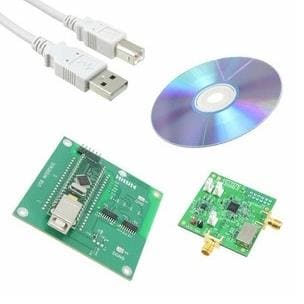
Where clock and timing development tools fit in a design workflow
Timing issues often appear early in system planning but become more difficult and expensive to correct later. Evaluation hardware allows teams to examine startup behavior, frequency stability, clock relationships, interface compatibility, and distribution strategy before final PCB layout. This is especially useful in applications involving processors, networking hardware, video systems, telecom links, and mixed-signal platforms.
Compared with general-purpose prototyping, these tools are focused on specific timing functions such as clock generation, PLL evaluation, oscillator management, and synchronization paths. For projects that also involve adjacent analog or signal-chain functions, engineers may compare options alongside data conversion development tools or amplifier IC development tools as part of a broader validation workflow.
Common types of tools in this category
This category includes several kinds of hardware, each serving a different stage of evaluation. Some boards are intended to verify a single timing IC in isolation, while others are designed to demonstrate a complete function such as a PLL, clock generator, or synthesizer in a more application-oriented setup.
Engineers will commonly encounter evaluation boards for clock generators, PLL-based timing devices, direct digital synthesis, and timer-based circuits. For example, the Renesas Electronics EVK5X2503SOCK is positioned around timing and clock generator evaluation, while the Analog Devices AD9859/PCBZ board supports work around a direct digital synthesizer architecture. Simpler learning or proof-of-concept use cases may also involve products such as the Adafruit 1526 NE555 Timer Development Board, which is useful when basic timer behavior and pulse generation are the focus rather than high-performance system timing.
Examples from leading manufacturers
Several widely used semiconductor suppliers are represented in this category, giving design teams access to vendor-specific evaluation environments and reference implementations. Solutions from Analog Devices, Maxim Integrated, Microchip Technology, Renesas Electronics, Infineon, and Adafruit illustrate the range from precision timing and synthesizer evaluation to demonstration boards for simpler timer-based functions.
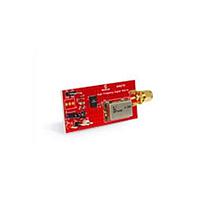
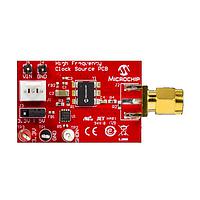
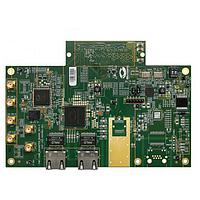
Examples include the Analog Devices EVAL-ADV7842-7511P, DC2611A-A, EVALZ-ADN2915, and EV1HMC832ALP6G, each relevant to different timing-related evaluation tasks. Maxim Integrated also appears with platforms such as the DS3502U+T$R and 78Q2123-DB, while Microchip Technology offers boards such as the ZL30102QDG1 and ZL30254LDF1 for clock and timing development. If your project is built around a preferred supplier ecosystem, browsing the related manufacturer pages can help narrow down options more efficiently.
How to choose the right development tool
The best starting point is the timing function you need to validate. If your application centers on frequency synthesis or controlled clock output, a board designed around a clock generator or synthesizer is usually the right fit. If synchronization, phase alignment, or jitter-sensitive signal paths are more important, a PLL-focused evaluation board may be more appropriate.
It also helps to review practical considerations such as supported inputs and outputs, operating voltage, frequency range, and whether the board is intended for bench evaluation only or for deeper firmware-assisted development. A kit such as the Microchip Technology ZL30254LDF1 may suit designs that need structured clock output evaluation, while the ZL30102QDG1 is more relevant in timing scenarios tied to telecom-style synchronization contexts. For broad mixed-signal work, teams sometimes explore related categories such as audio IC development tools when timing interacts with media, codec, or streaming subsystems.
What engineers typically evaluate on these boards
In practical lab work, development tools in this category are often used to examine signal integrity, output behavior, configuration flexibility, startup timing, frequency relationships, and interaction with external references. Engineers may connect oscilloscopes, logic analyzers, frequency counters, or spectrum analysis equipment depending on the objective of the test.
For PLL and synthesizer applications, the focus is often on lock behavior, frequency planning, and output configuration. In timer-oriented circuits, pulse generation, delay behavior, and repeatability may be more important. The value of a dedicated board is that it creates a known evaluation platform, which makes it easier to separate IC behavior from custom board design issues during early-stage development.
Using these tools as part of a larger IC evaluation strategy
Clocking rarely exists in isolation. It usually supports processors, converters, communication interfaces, RF sections, or control electronics, so selecting the right timing evaluation platform can improve the quality of the entire system architecture. A well-chosen board helps engineers verify assumptions early, compare implementation paths, and document performance before committing to production hardware.
For teams building a wider analog or mixed-signal prototype, timing boards may be used alongside active filter development tools or converter-related evaluation hardware to validate end-to-end signal paths. This is especially relevant when clock quality influences sampling accuracy, interface reliability, or overall synchronization across multiple subsystems.
Finding the right fit for prototype and validation work
Not every project needs the same level of timing complexity. Some engineers are looking for a straightforward way to test a timer-based concept, while others need to characterize advanced clock distribution or evaluate a specific IC before integrating it into a high-speed design. This category supports both ends of that range by covering simple demonstration boards as well as more specialized evaluation kits from major semiconductor vendors.
If you already know the device family or manufacturer you want to work with, start there and compare the intended function of each board rather than choosing by part number alone. Looking at the role of the board in the overall design flow will usually lead to a better selection than focusing only on the kit format. With the right clock and timing development platform, it becomes much easier to validate design assumptions, reduce debugging time, and move into hardware implementation with greater confidence.
Get exclusive volume discounts, bulk pricing updates, and new product alerts delivered directly to your inbox.
By subscribing, you agree to our Terms of Service and Privacy Policy.
Direct access to our certified experts