Video IC Development Tools
Bringing up a video signal chain is rarely straightforward. Engineers often need a practical way to verify image paths, test interface conversion, evaluate encoder or decoder behavior, and shorten the gap between a datasheet and a working prototype. Video IC Development Tools help make that process faster by giving design teams a hardware platform for validation, debugging, and early performance checks before committing to a custom board.
Why video IC evaluation platforms matter in development
In video design work, even a small interface mismatch can create major issues during integration. Development boards and reference kits give engineers a controlled environment to assess signal routing, conversion paths, input and output compatibility, and basic system behavior with less uncertainty than a first-pass PCB.
This is especially useful when working with HDMI, SDI, USB, analog video, MIPI, or mixed video interfaces. Rather than building every test setup from scratch, teams can use dedicated evaluation hardware to check core functions, compare options, and move more confidently into embedded, industrial, broadcast, or display-related development.
Typical use cases for Video IC Development Tools
These tools are commonly used during proof-of-concept testing, component selection, and signal-chain verification. They are relevant for engineers developing products that need video decoding, encoding, interface bridging, display processing, or format conversion in embedded systems.
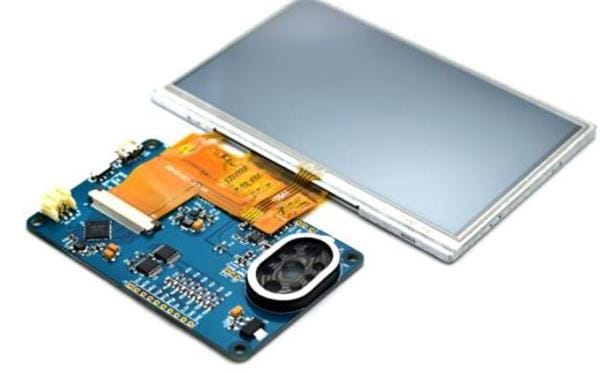
Depending on the device under evaluation, a board may support testing of analog video inputs, digital outputs, HDMI-to-SDI conversion, encoder stages, or LCD-oriented video processing. If your project also touches adjacent signal-processing functions, it may be useful to review related categories such as data conversion IC development tools or audio IC development tools where mixed-media system design is involved.
Examples of boards and kits in this category
The category includes a range of evaluation hardware aimed at different parts of the video path. From Analog Devices, examples such as the EVAL-ADV7181DEBZ, EVAL-ADV7180LFEBZ, and EVAL-ADV7393EBZ are used for assessing video encoder or decoder related functions in a practical bench setup. These are useful when engineers need to observe interface behavior and integration considerations around established video devices.
Semtech contributes platforms such as the RDK-GS12170-S2S00, RDK-GS12170-H2S00, EBK-GS12341/182-00, EBK-GT1724-00, and EBK-12GSRD-01. These examples highlight the role of development kits in conversion and high-speed video signal evaluation, particularly where HDMI, SDI, loopback, or similar signal-handling workflows are part of the design task.
There are also solutions from Intersil, including the ISL79987-EVAL, TW9900-NA1-GR-EVAL, and TW8844-LB1-EVAL-D. These boards illustrate how evaluation hardware can support analog video testing, LCD video processing, and interface-level experimentation without requiring a full production design cycle up front.
How to choose the right tool for your project
The best starting point is the target IC and interface path. If you are evaluating a specific chip, choose the board designed for that exact device whenever possible. This simplifies bring-up and reduces ambiguity during testing, especially when the goal is to confirm expected performance under known conditions.
Next, review the interfaces you need to connect in the lab. A project involving HDMI and SDI conversion has very different validation needs than one focused on analog video decoding or MIPI-connected display processing. Power requirements, connector style, host communication method, and software support should also be considered, particularly when multiple teams need to reproduce the same test environment.
It is also worth thinking about where the evaluation task fits in the wider system. If the video section interacts closely with timing, signal conditioning, or front-end analog circuitry, related categories such as clock & timer development tools or amplifier IC development tools may help when refining the broader design architecture.
What engineers usually check during evaluation
Most teams use these platforms to validate more than basic power-up. A typical workflow includes checking signal lock, format compatibility, interface conversion stability, image integrity, and communication with the host environment. This helps identify whether a part is suitable not only on paper, but also in a realistic integration scenario.
Another key objective is reducing design risk. With a dedicated evaluation board, engineers can test firmware interaction, connector strategy, and interoperability with surrounding hardware before investing in custom layout work. That can be particularly valuable in projects with tight schedules or where the video subsystem has little tolerance for repeated revision cycles.
Common buying considerations for B2B teams
For engineering, procurement, and technical sourcing teams, selection is often based on availability, device alignment, and the intended phase of the project. Some buyers need a single board for feasibility studies, while others require several kits for parallel development, lab validation, and collaboration across hardware and software teams.
Documentation and ecosystem fit also matter. A development tool is most useful when it supports a clear path from evaluation to implementation, whether that means confirming a decoder choice, testing an encoder stage, or validating a conversion architecture. In that sense, evaluation boards are not just accessories; they are practical tools for making earlier and better-informed design decisions.
Choosing within a broad video development ecosystem
Not every project needs the same level of test capability. Some engineers only need to evaluate one video IC in isolation, while others need to assess a complete chain that includes processing, interface translation, and output formatting. This category supports both workflows by covering tools tied to specific devices as well as boards aimed at broader signal-path experimentation.
When comparing options, focus on the real engineering question you need to answer: validating a chip, checking conversion quality, proving compatibility with other hardware, or preparing for system-level integration. That approach makes it easier to select the most relevant platform without overbuying or missing a critical interface requirement.
For teams developing embedded video, display, or conversion systems, the right development kit can save significant time during early validation. A well-matched board helps turn uncertain integration work into a clearer test process, making it easier to compare devices, confirm interfaces, and move toward production with fewer surprises.
Get exclusive volume discounts, bulk pricing updates, and new product alerts delivered directly to your inbox.
By subscribing, you agree to our Terms of Service and Privacy Policy.
Direct access to our certified experts