First Aids
Preparedness matters in every workplace, from factories and laboratories to warehouses, offices, and field service environments. When minor injuries happen, having the right First Aids supplies close at hand helps teams respond quickly and maintain safer day-to-day operations.
This category brings together practical products used for immediate treatment of cuts, abrasions, pressure points, and other common workplace incidents. Instead of treating first aid as a generic purchase, it is often more useful to select supplies based on the working environment, expected risk level, and the way your team stores and accesses emergency materials.
Choosing first aid supplies for real working conditions
In B2B purchasing, first aid requirements vary widely depending on the site. A compact office or reception area may need a small, organized kit for basic incidents, while a production floor, maintenance workshop, or logistics area usually benefits from a larger kit with a broader mix of dressings, plasters, and wound-care items.
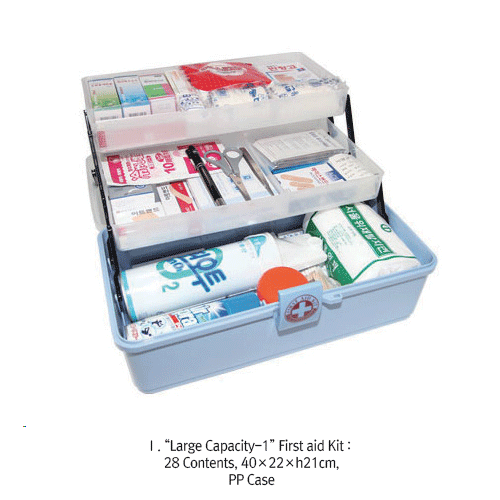
That is why many buyers compare not only product type, but also kit size, storage format, and refill practicality. For example, solutions such as the Iljin DH3.Saf3002 First Aid Kit Smart-2 or the Iljin DH3.Saf3003 First Aid Kit Classic-1 may suit smaller response points, while the Iljin DH3.Saf3009 “Large Capacity-2” First aid kit is more aligned with locations that need a higher item count and more visible emergency storage.
Key product types commonly used in this category
A complete first aid setup usually includes more than one item group. First aid kits provide a ready-to-deploy package for immediate response, while consumables such as adhesive plaster, dressing gauze, and hydrocolloid bandages help teams replenish used supplies without replacing the entire kit.
Examples in this category include DaiHan H13.Plaster330 100% Cotton Adhesive Plaster for general dressing support, DaiHan H13.DHG444B antimicrobial dressing gauze for wound coverage, and 3M hydrocolloid products such as 3M.02.5014, 3M.02.5015, and 3M.02.5018 for cases where a protective moist-healing dressing format is preferred. This mix makes the category relevant both for initial setup and for routine restocking.
How to select the right first aid kit size and format
Kit selection should start with a simple operational question: where will the kit be used, and how many people may rely on it? A more compact unit can work well in administrative rooms, small teams, or mobile use, while a larger case is often easier to manage in shared industrial spaces because it can hold a wider range of supplies in one location.
Products such as the Iljin I6.1005 First Aid Kit Beauty and Iljin DH3.Saf3002 First Aid Kit Smart-2 are examples of smaller-format kits, whereas the Iljin I6.1013 “SP-1” First aid kit and DH3.Saf3009 “Large Capacity-2” move toward broader-capacity storage. If your purchasing goal is to standardize emergency readiness across different work zones, it can make sense to combine multiple kit sizes rather than choosing one format for every location.
Consumables and replenishment planning
For many organizations, the long-term efficiency of first aid purchasing depends on replenishment planning. Adhesive plasters, gauze, and advanced dressings are the items most likely to be used and replaced regularly, so keeping these consumables available reduces downtime when incidents occur.
This is where dedicated refills become useful. DaiHan dressing materials and 3M wound-care products can support restocking strategies for sites that already maintain fixed first aid stations. Rather than waiting for a full kit to run low, teams often track the high-turnover items separately and refill them as part of routine safety inventory management.
Supporting laboratories, electronics work, and controlled environments
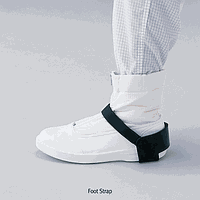
Some workplaces need first aid supplies alongside other protective measures. In laboratory areas, electronics assembly, and controlled handling zones, anti-static accessories may also be part of the broader safety ecosystem. The SciLab SL.App6021 Strap foot anti-static 1㏁ and DaiHan SL.App6021 Strap foot anti-static 1㏁ illustrate how this category can overlap with site-specific protection requirements.
Although anti-static straps are not wound-care products, they are relevant in environments where personnel protection and process protection are managed together. Buyers who are reviewing site safety materials may also want to explore related protective equipment such as insulating gloves and insulating boots or insulating carpet when electrical risk is part of the operating context.
Brands commonly considered in this range
This category includes products from established names such as Iljin, DaiHan, SciLab, and 3M. Each brand presence supports different purchasing needs, from complete first aid kits to specific wound-care consumables and specialized accessories used in technical workplaces.
In practice, brand selection is usually guided by availability, familiarity within the site safety team, and the need to match existing supplies already in use. For many buyers, consistency matters more than variety, especially when standardizing emergency materials across multiple departments or branches.
When this category is the right place to start
If you are building or updating workplace emergency response supplies, this category is a practical starting point for both complete kits and individual refill items. It is especially useful when the goal is to balance readiness, ease of access, and simple ongoing maintenance rather than buying isolated products without a broader plan.
For organizations reviewing the wider safety setup, it may also be helpful to compare with other protection-focused sections such as hot stick equipment where the site includes electrical maintenance activities. This helps position first aid materials within a more complete workplace protection strategy.
Practical FAQ
What is the difference between a first aid kit and first aid consumables?
A first aid kit is a pre-organized package containing multiple emergency items, while consumables are individual products such as plaster, gauze, or dressings used to refill or supplement the kit.
How do I choose between compact and large-capacity kits?
Consider the number of users, the type of workplace, and how often the kit may be needed. Smaller kits are easier to place in limited spaces, while larger kits are better for shared or higher-activity environments.
Are hydrocolloid bandages suitable for industrial stock?
They can be useful as part of a broader wound-care range, particularly for protecting minor wounds and supporting a covered healing environment. Selection should still reflect the site’s typical injury profile and internal safety procedures.
A well-planned first aid inventory supports faster response, cleaner organization, and easier restocking across professional sites. Whether you need a compact kit, a larger emergency case, or essential dressing materials, choosing products based on actual workplace conditions will lead to a more practical and sustainable safety setup.
Get exclusive volume discounts, bulk pricing updates, and new product alerts delivered directly to your inbox.
By subscribing, you agree to our Terms of Service and Privacy Policy.
Direct access to our certified experts