LED Backlighting
Uniform, controllable illumination is often a small detail that makes a big difference in displays, machine vision, and compact electronic assemblies. In many designs, the right LED backlighting improves contrast, supports reliable image capture, and helps create a cleaner visual interface without adding unnecessary complexity to the system.
This category brings together LED backlighting components used in both industrial and embedded applications. You will find options ranging from compact display backlights for module integration to larger vision backlights designed for inspection setups, where light consistency, color selection, and mechanical fit all matter during equipment design and maintenance.
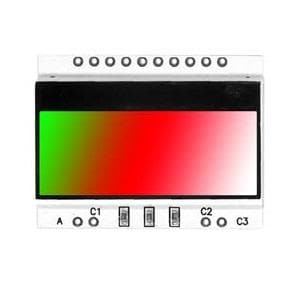
Where LED backlighting is commonly used
LED backlights are used in several different ways depending on the equipment architecture. In display assemblies, they provide the illumination needed to make characters, symbols, or graphical information visible on LCD modules and related interfaces. In machine vision systems, they are often placed behind a target to create a high-contrast silhouette that simplifies edge detection, presence verification, or dimensional inspection.
Compared with older lighting approaches, LEDs are widely chosen for their compact size, fast response, and straightforward electrical integration. For engineers working across broader illumination technologies, related categories such as CCFL fluorescent lamps may still be relevant in legacy systems, but LED solutions are typically preferred in newer designs where efficiency and service life are key considerations.
Two main product groups within this category
This category covers more than one use case, so it helps to think in terms of application type rather than part number alone. One group is made up of compact backlights intended for display modules, embedded HMIs, and electronic interfaces. These are typically selected by matching the backlight format to a compatible display family and choosing the illumination color that suits readability or product aesthetics.
The other group includes vision backlights for industrial imaging and inspection. These products are designed to deliver a more controlled lighting field for cameras and sensors, often with mechanical formats suited to conveyor lines, fixture-based inspection stations, or enclosed automation cells. If your project includes brand-specific imaging hardware, it can also be helpful to review suppliers such as Basler when planning the wider machine vision setup.
Examples of LED backlighting solutions in this range
For display-focused applications, several products in this category are intended as matched backlights for specific modules. Examples include the DISPLAY VISIONS EA LED36x28-ERW for EA DOGS104x-A, the EA LED78x64-W for DOG-XL Series, and the EA LED55X46-RGB for DOG-M Series. These parts illustrate a common selection pattern in embedded design: choose a backlight that aligns with the mechanical footprint and optical needs of the display already used in the product.
For larger-scale inspection lighting, Banner Engineering offers multiple formats and colors within its vision light range. Products such as the LEDWB150X150PW2-XQ, LEDBB225X150PW2-XQ, LEDBB300X150PW2-XQ, and LEDILB290XW6-XQ show how backlighting can vary by size, environmental rating, and illumination type, including white, blue, and infrared. A compact example from Banner Engineering can be suitable where installation space is limited, while larger panel-style backlights may fit inspection tasks that require broader, more even coverage.
How to choose the right backlight
The first practical decision is the application itself: display enhancement or machine vision. For display integration, compatibility with the target module is usually the main constraint. Mechanical dimensions, mounting arrangement, and intended light color should be checked before anything else. In this type of design, electrical simplicity and fit are often more important than high output.
For machine vision, selection is usually driven by the object being inspected and the imaging goal. A larger illuminated area may be needed for wide components, while linear backlights can work well for elongated targets or line-based inspection geometry. Color also matters. White light is a flexible starting point for general visibility, blue can improve contrast in some materials, and infrared may be useful when the inspection process benefits from reduced visible glare or application-specific optical behavior.
It is also worth checking the installation environment. Some products in this category are intended for harsher conditions and offer more robust housing or sealing, while others are better suited to enclosed cabinets or protected electronic assemblies. Power requirements, connector style, and the need for related accessories should be reviewed early to avoid integration issues later in the project.
Why illumination color and format matter
Backlighting performance is not only about brightness. In real applications, the shape of the light source and the selected wavelength or visible color can strongly affect what the camera or user actually sees. A panel-style backlight is often chosen to create a consistent silhouette, whereas a linear format may be better for narrow parts, moving web materials, or space-constrained installations.
Illumination color influences contrast, perceived readability, and interaction with the target material. For example, white backlighting is often used for general-purpose display and inspection work, while red, blue, yellow, or RGB options may be selected for visual emphasis or application-specific optical behavior. Infrared versions are particularly relevant when visible light is not ideal for the inspection task. In older or mixed-technology systems, supporting products such as EL/CCFL inverters and accessories may still appear elsewhere in the design, but they serve a different backlighting approach.
Manufacturers commonly considered in this category
This range includes solutions from established suppliers serving industrial automation, embedded electronics, and display integration. DISPLAY VISIONS is especially relevant for compact display backlights matched to specific module families, while Banner Engineering is a strong fit for industrial vision lighting where ruggedized formats and application-specific illumination are important.
Other manufacturers associated with the broader category context include Advantech and Lumex. The Advantech 9680012622 LED Backlighting part is an example of a compact backlighting component, while Lumex SSB-COB13340SYW-B represents another format aimed at backlight integration. Brand choice should usually follow application fit, mounting requirements, and system-level compatibility rather than name alone.
Selection tips for procurement and engineering teams
When sourcing LED backlighting for OEM builds, maintenance stock, or prototype work, it helps to confirm a few basics before ordering. Start with physical dimensions, intended illumination color, operating voltage, and whether the part is meant for a dedicated display family or a machine vision fixture. This reduces the risk of choosing a backlight that is electrically suitable but mechanically unusable.
For purchasing teams, standardizing on a small number of proven backlight formats can simplify replenishment and spare-part planning. For engineers, reviewing environmental fit, connector requirements, and inspection geometry upfront can shorten integration time and reduce adjustments during commissioning. A careful match between optical function and mechanical design usually delivers better results than selecting by output level alone.
Finding the right LED backlighting option
A well-chosen backlight supports more than visibility; it helps the whole system perform more predictably. Whether the goal is improving a compact display, building a cleaner HMI, or creating a stable machine vision inspection setup, the most effective choice usually comes from balancing format, color, compatibility, and operating environment.
Within this LED backlighting category, you can compare compact module-oriented parts and larger industrial lighting solutions side by side. That makes it easier to narrow the shortlist based on how the backlight will actually be used, not just on part description alone.
Get exclusive volume discounts, bulk pricing updates, and new product alerts delivered directly to your inbox.
By subscribing, you agree to our Terms of Service and Privacy Policy.
Direct access to our certified experts