LED Lighting Modules
When a lighting design needs predictable output, efficient thermal behavior, and straightforward integration, choosing the right module matters as much as the driver or housing around it. LED Lighting Modules are widely used as core light engines in commercial luminaires, linear fixtures, signage, display lighting, and custom industrial assemblies where consistency and serviceability are important.
On this page, you can explore module formats suited to different installation goals, from compact board-level light sources to longer linear solutions for even illumination. The category is especially useful for engineers, OEM buyers, and maintenance teams comparing light distribution, mounting style, color temperature, and operating conditions before moving into a full fixture design.
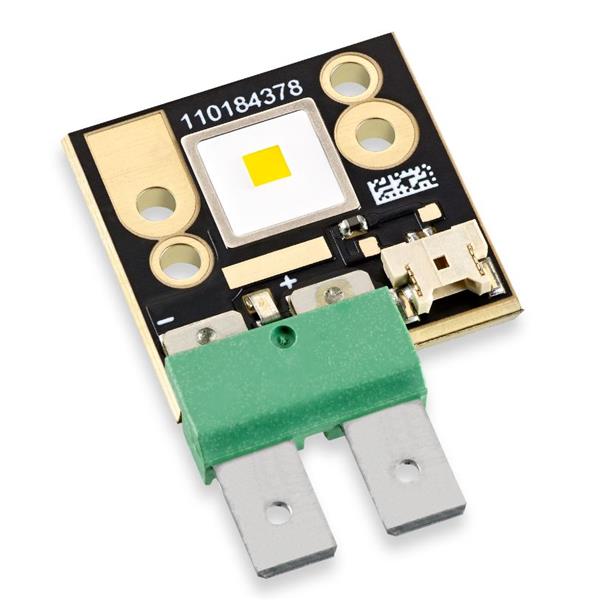
Where LED lighting modules fit in a lighting system
An LED module is typically the functional light-producing section of a larger assembly. Instead of sourcing individual emitters and building the optical and mechanical layout from scratch, designers can use modules to simplify integration, reduce development time, and improve repeatability across production batches.
This category covers solutions that can serve different roles in a lighting ecosystem. Some modules are optimized for high-output white lighting, while others support linear illumination over longer lengths. For projects focused on visual signaling rather than area lighting, related options in LED indication devices may be more appropriate.
Common module formats and typical use cases
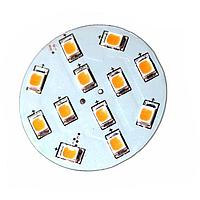
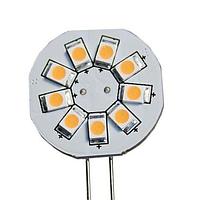
Not all LED modules are built for the same installation concept. Chip-on-board and high-output white modules are often selected when strong luminous flux is needed in a compact source, making them suitable for downlights, spot lighting, high-bay concepts, or architectural luminaires that depend on a concentrated light engine.
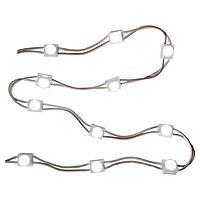
Linear modules and strips, by contrast, are usually chosen when the goal is more uniform coverage across a longer surface. They are frequently used in shelf lighting, cabinet systems, task lighting, troffers, and custom fixture builds. If your project requires complete assembled products rather than component-level light engines, it may also help to review LED lighting fixtures for comparison.
Representative products in this category
Several products in this range illustrate how varied LED lighting modules can be. The Bridgelux BXRC series includes high-output white chip LED options in color temperatures such as 3000 K, 3500 K, and 4000 K, with examples like the BXRC-35A10K1-B-73 and BXRC-40G10K0-C-72-SE showing how this format can address different brightness and light-color targets within a compact footprint.
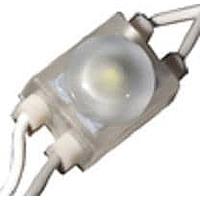
For longer layouts, the Bridgelux BXEB family demonstrates the advantages of linear LED modules. Products such as the BXEB-L1120Z-30E4000-C-B3 and BXEB-L0560Z-40G2000-C-C3 support screw-mount installation and are well suited to fixture designs that need continuous or semi-continuous illumination. In applications where preconfigured board modules are preferred, Kingbright BL0106-15-28 and BL0106-15-48 offer another integration approach, while the SamSung SI-B8T141600EU RAPSODY V2 M625 provides a multi-LED white module option for broader lighting assemblies.
Key selection criteria before you order
The first step is to define the lighting objective clearly: concentrated output, uniform linear light, warm or neutral appearance, and the expected operating environment. Color temperature affects the visual character of a space, while luminous flux helps estimate whether a module can support the target brightness once optical losses and thermal conditions are taken into account.
Mechanical integration is equally important. Buyers should check dimensions, mounting style, and orientation early in the design process, especially for retrofit or OEM production. For example, screw-mount linear modules can simplify assembly and maintenance, while compact high-output modules may be better suited to heat sink-based designs with dedicated optics.
Electrical matching should also be reviewed alongside thermal management. Forward voltage, current range, and ambient operating temperature all influence driver selection and long-term reliability. Modules intended for industrial or enclosed luminaires may need more careful heat dissipation planning than open, low-power installations.
Manufacturers commonly considered for LED module sourcing
This category includes products from recognized lighting component brands such as Bridgelux, Kingbright, and SamSung. Each can be relevant depending on the project type: Bridgelux is well represented here in both high-output white and linear formats, while Kingbright appears in module-style solutions that may fit compact integration requirements.
More broadly, buyers comparing component ecosystems may also look at manufacturers such as ams OSRAM, Lumileds, IDEC, or Banner Engineering depending on whether the need is illumination, indication, or automation-related visual signaling. The best fit usually comes down to the application, mounting constraints, light quality target, and how the module will be integrated into the final assembly.
How to choose between compact, linear, and application-specific modules
If the design needs a small light source with high output, a compact white module can make optical control easier and reduce the number of light-emitting points in the assembly. This is often useful in directional or high-intensity luminaires where beam shaping and thermal coupling to a heat sink are central design concerns.
If the priority is uniform illumination across a longer area, linear boards or strips are often the better route. They can reduce shadowing, support cleaner fixture geometry, and simplify the creation of continuous light lines. For builds that also require supporting hardware, connectors, or integration parts, related lighting fixture accessories may help complete the system.
Practical buying considerations for OEM and maintenance teams
For OEM procurement, repeatability matters just as much as headline performance. It is worth standardizing around module families that align with your preferred color temperatures, driver architecture, mounting process, and fixture dimensions. That can make future product revisions easier and reduce qualification work across multiple SKUs.
For maintenance and replacement planning, check whether the module must match an existing thermal interface, light distribution concept, and electrical operating point. Even when a replacement appears similar on paper, differences in board size, LED count, or color tone can affect the final result in the installed fixture.
Finding the right LED lighting module for your application
A well-chosen LED module supports more than illumination alone; it helps determine thermal stability, assembly effort, serviceability, and overall fixture performance. Whether you are comparing compact white light engines, longer linear boards, or module options for a custom luminaire, this category provides a practical starting point for narrowing down the most suitable format.
Use the available product details to compare light output, mounting approach, dimensions, and operating conditions against your application requirements. With the right balance of optical performance, mechanical fit, and electrical compatibility, selecting the appropriate module becomes much more straightforward.
Get exclusive volume discounts, bulk pricing updates, and new product alerts delivered directly to your inbox.
By subscribing, you agree to our Terms of Service and Privacy Policy.
Direct access to our certified experts