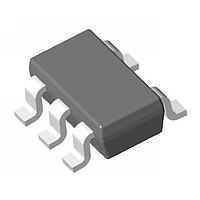
LED Lighting Driver ICs
Reliable LED performance depends on more than the light source itself. In practical lighting designs, the driver stage is what determines current stability, dimming behavior, efficiency, protection response, and how well the system performs over time. That is why engineers and sourcing teams often focus closely on LED Lighting Driver ICs when building luminaires, signage, architectural lighting, automotive-related subsystems, and other controlled illumination products.
This category brings together driver IC solutions used to regulate and control LEDs under different electrical and design requirements. Whether the goal is a compact board-level design, multi-segment control, or a higher-power constant-current lighting system, these devices support the core functions needed to manage LEDs safely and consistently.

What LED lighting driver ICs do in a design
An LED is a current-driven device, so stable operation requires more than simply applying a voltage rail. LED driver ICs are used to control current delivery, support brightness adjustment, and help protect the circuit against conditions that could reduce LED life or damage surrounding components.
In many applications, the driver IC also plays a role in overall system efficiency and thermal behavior. Depending on the design, it may support constant-current regulation, segmented LED control, fault handling, or coordination with a wider power stage. For projects that need broader display-oriented control rather than general illumination, it can also be useful to review related options such as LED display drivers.
Typical application scope across lighting systems
These components are widely used in products where predictable light output matters. Common examples include commercial lighting modules, backlighting sections within equipment, decorative or architectural lighting, indicator assemblies, and embedded lighting functions inside industrial electronics. Selection often depends on the number of LED strings, dimming requirements, input rail conditions, and thermal constraints of the final enclosure.
Some designs require fine channel or segment control, while others prioritize robust power conversion for higher-output fixtures. This is why the category includes both IC-level solutions and representative power-oriented products that illustrate the broader driver ecosystem, from compact integrated controllers to more application-specific constant-current devices.
How to evaluate the right driver architecture
A good starting point is to define whether the application needs constant current, segment-based control, or a more integrated dimming and protection approach. Constant-current operation is especially important in lighting systems where uniform brightness and LED longevity are critical. Engineers also need to consider available input voltage, target output range, PCB area, thermal budget, and whether analog or other dimming methods are preferred.
Protection behavior is another major factor. In real installations, over-voltage, short-circuit, and over-temperature conditions can occur during startup, field wiring, or abnormal load states. Devices intended for lighting applications often need to fit into a wider power design that balances efficiency, safety margin, and service life rather than focusing on one electrical parameter alone.
Examples from leading manufacturers
This category includes solutions from established suppliers such as Analog Devices, ams OSRAM, Allegro MicroSystems, Alpha and Omega Semiconductor, and Advanced Energy. Each serves slightly different design priorities, from compact LED control ICs to devices used in more demanding lighting power stages.
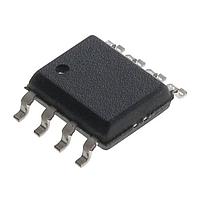
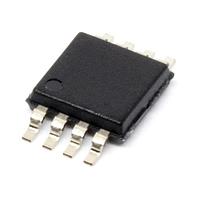
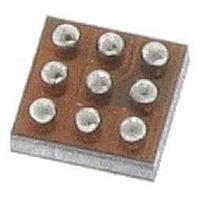
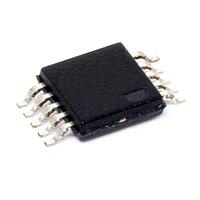
Representative parts in the range include Analog Devices LT3640EFE, LT3756IUDPBF, and LT3791EFE1PBF for LED driver functions in board-level designs, as well as the AD8240YRM-REEL7 for segmented LED control. From ams OSRAM, devices such as AS3696-ZQFM, AS3693C-ZTQT, and AS3823-ZQFT show the variety available for controlled LED applications. Allegro MicroSystems A6275SLWTR and A6276EA, along with Alpha and Omega Semiconductor AOZ1081AI and AOZ1935QI, further illustrate the breadth of options across different voltage rails and channel-control needs.
Power-oriented solutions for demanding lighting environments
Not every lighting project is limited to low-power board control. Some systems require a more rugged constant-current approach for higher-power LED loads and operation in challenging environments. A representative example in this category is the Advanced Energy LXD150-1400SH Constant Current unit, which reflects the type of solution used where output power, environmental protection, and stable current delivery are all important considerations.
When comparing such devices, buyers typically look beyond nominal output values and consider isolation, operating temperature range, installation environment, and protection features. That wider perspective is especially relevant for outdoor or industrial lighting assemblies, where electrical reliability and enclosure-level durability can influence total system performance as much as the LEDs themselves.
Choosing by control method, form factor, and integration level
Different projects call for different levels of integration. A compact IC may be the right fit for embedded electronics where the surrounding power design is already defined. In other cases, a design team may prefer a solution that simplifies the external circuit, supports multiple segments, or aligns with a specific package style for manufacturing and assembly constraints.
It is also useful to separate lighting control needs from adjacent product categories. For example, applications centered on panel management or multiplexed visual interfaces may be better aligned with display controllers and drivers, while illumination-focused systems should remain within the LED lighting driver IC scope. This distinction helps narrow the component shortlist more efficiently.
What procurement teams should check before selection
For B2B purchasing, technical compatibility is only one part of the decision. Teams usually need to confirm package type, voltage compatibility, expected control method, thermal behavior in the target assembly, and how the device fits the intended PCB or module design. If the product will be deployed across multiple variants, standardization around one driver family can also simplify qualification and inventory planning.
Manufacturer ecosystem matters as well. Sourcing from established suppliers can make it easier to compare alternatives across performance tiers and application needs. If your project sits closer to monitor, panel, or instrument interface design, exploring related categories such as LCD drivers may help clarify whether the requirement is truly illumination control or a display-drive function.
Find the right fit for your LED design
The best choice in this category depends on how the LEDs will be powered, controlled, and protected inside the final product. Some applications need compact driver ICs for integrated electronics, while others require more robust constant-current solutions for higher-power lighting assemblies. Looking at control topology, electrical range, dimming behavior, and protection needs together will usually lead to a more reliable shortlist.
By comparing proven options from recognized manufacturers and matching them to the real operating conditions of the project, buyers and engineers can select LED lighting driver ICs that support both performance and long-term design stability.
Get exclusive volume discounts, bulk pricing updates, and new product alerts delivered directly to your inbox.
By subscribing, you agree to our Terms of Service and Privacy Policy.
Direct access to our certified experts