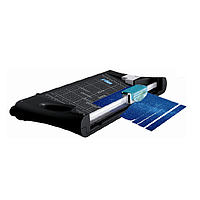
Paper Cutter
Clean, accurate cutting is a small but important part of everyday document handling. In offices, print rooms, schools, copy centers, and back-office operations, the right cutting tool helps keep forms, labels, handouts, and presentation materials consistent while reducing waste and rework. This is where a reliable Paper Cutter becomes a practical part of the workflow.
Whether the job involves trimming standard A4 sheets, preparing A3 materials, or making simple finishing cuts for routine office use, choosing the right format and cutting capacity can make day-to-day tasks faster and easier. This category brings together compact manual solutions designed for straightforward paper processing in professional environments.
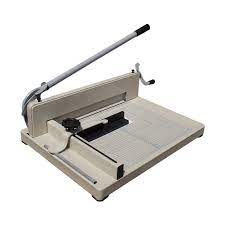
Designed for routine office and document finishing tasks
Paper cutters are commonly used when documents need to be resized, edges need to be cleaned up, or printed materials require a more finished appearance. Typical use cases include trimming reports, brochures, notices, educational materials, cards, and internal paperwork. In many settings, a manual cutter is preferred because it is simple to use, easy to place on a desk, and suitable for low to moderate cutting volumes.
Within this category, the focus is on portable models that fit well into general office environments rather than heavy industrial print finishing. That makes them suitable for administrative departments, reception areas, schools, retail back offices, and teams that need occasional to frequent paper trimming without moving to larger finishing equipment.
Common cutter types in this category
Not every paper cutter works in the same way. Some models are built around a guillotine cutting style, which is useful for quick straight cuts across a small stack of sheets. Others function more like a trimmer, guiding the cut for controlled straight finishing on standard paper sizes. Certain models also support additional cut patterns such as wave or perforation, which can be useful for presentation or light creative office work.
For users comparing options, the difference usually comes down to the paper size being handled, the number of sheets cut at one time, and whether the task is basic trimming or more varied document finishing. A lighter portable model may be ideal for occasional use, while a unit with multiple cutting modes can be more versatile for departments that prepare different document formats on a regular basis.
Representative DSB paper cutter options
This category includes solutions from DSB, a brand associated here with compact paper cutting tools for office use. The available range covers both A4 and A3 handling, giving buyers practical choices based on media size and daily workload.
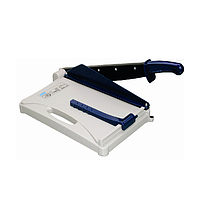
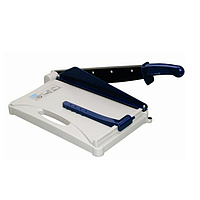
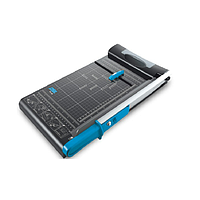
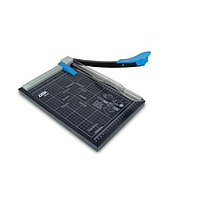
For example, the DSB GT-4 and DSB GT-4B are portable A4 paper cutters intended for standard document work, while the DSB GT-3 and DSB GT-3B extend the format to A3 for larger sheets. If higher A4 sheet capacity is important in a portable format, the DSB GT-4C is another relevant option. Meanwhile, the DSB DC-10 Paper Cutter and DSB DC-20 Paper Cutter are notable for combining different cutting functions, making them suitable for users who need more than a simple straight trim.
How to choose the right paper cutter
A practical starting point is the maximum paper size you work with most often. If your documents are mainly A4, a compact cutter is usually enough and helps save desk space. If you regularly handle posters, schedules, plans, or larger presentation sheets, an A3-capable model will be the better fit.
The next factor is cutting capacity. Some jobs involve trimming a few sheets at a time, while others benefit from models designed for larger small-batch cuts. Capacity should be matched to real usage rather than selected at the maximum possible level, since ease of handling and accuracy also matter. Weight and overall dimensions may also influence selection, especially for offices that need to move the cutter between workstations or store it when not in use.
It is also worth considering whether your team needs only straight cutting or would benefit from additional finishing styles. In environments where printed communication materials are prepared in-house, a multifunction model can reduce the need for separate tools and simplify routine document preparation.
Where these cutters fit in the office equipment workflow
Paper cutters are often part of a broader document handling setup. They may be used before filing, binding, packaging, or distributing printed materials, and they support a cleaner overall workflow when documents need consistent sizing. For businesses managing document batches, they can work alongside related equipment such as banding machines for organizing finished stacks.
In general office environments, cutters also complement everyday office supplies by helping staff prepare labels, inserts, notices, and internal communication materials more neatly. This makes them useful not just for print-heavy departments, but also for teams that occasionally need clean presentation-ready paper output.
Key considerations for safe and consistent use
To maintain clean results, users should match the cutter to the paper size and avoid forcing more sheets than the intended capacity. Overloading can reduce cut quality and may affect alignment. Consistent positioning of the paper, careful use of guides, and routine cleaning of the working surface all help improve accuracy over time.
For shared office use, portability and straightforward operation are also important. A model that is easy to place, carry, and store can be more practical than a larger unit when cutting is done across multiple desks or departments. In these cases, the balance between compact size, cutting length, and manageable sheet capacity becomes more important than simply choosing the largest tool available.
Finding the right fit for your application
The best choice depends on how often the cutter will be used, what paper sizes are involved, and whether the task is simple trimming or light finishing with multiple cut styles. A4 portable models can be a good match for standard office documents, while A3 versions are better suited to larger printed materials. Multifunction units can add flexibility where one tool needs to support several routine tasks.
By comparing size, capacity, portability, and cutting method, buyers can narrow the range to a model that fits their actual workflow instead of over-specifying. This category is built for that practical selection process, with DSB paper cutters covering common office requirements from compact daily trimming to more versatile document finishing.
Get exclusive volume discounts, bulk pricing updates, and new product alerts delivered directly to your inbox.
By subscribing, you agree to our Terms of Service and Privacy Policy.
Direct access to our certified experts