Mobile barcode reader
Fast-moving warehouse, retail, field service, and healthcare workflows often depend on scanning that can happen anywhere, not just at a fixed counter. When operators need to capture codes while walking aisles, handling inventory, picking orders, or moving between stations, mobile barcode readers help keep data collection close to the point of activity.
This category brings together portable scanning devices designed for flexibility in real operating environments. Depending on the task, that may mean a pocket-sized scanner, a wearable ring scanner, or a rugged handheld terminal that combines barcode capture with wireless communication and mobile computing.
Where mobile barcode readers fit best
Unlike fixed-position scanners, mobile devices are chosen for workflows where users move continuously and need to scan without returning to a workstation. Common use cases include stock counting, shelf replenishment, receiving, put-away, order picking, asset tracking, and on-site service activities. In these situations, portability and fast response are usually more important than desk-mounted convenience.
Mobile scanning can also reduce manual entry and improve traceability. By capturing data directly from 1D or 2D codes in the field, businesses can support more accurate inventory records, faster transaction confirmation, and smoother integration with WMS, ERP, POS, or mobile business applications.
Common device formats in this category
This category covers several portable form factors because mobility needs vary by operation. Some users want a lightweight companion scanner that pairs with a host device, while others need a full-function terminal with screen, keypad, wireless connectivity, and a more rugged housing.
For example, the Honeywell 1602g Pocket Scanner is suited to compact carry-and-scan tasks, while wearable options such as the Honeywell 8670 Wireless Ring Scanner, Unitech MS652 Wearable Ring Scanner, and Delfi B20-2D Bluetooth Ring Scanner are designed for hands-busy workflows. At the higher end of mobility, the Unitech HT730UHF RFID Rugged Handheld Terminal combines barcode capture with a rugged mobile computer platform, making it relevant for operations that need both scanning and broader data collection in one device.
What to consider when selecting a mobile scanner
The right choice usually starts with the working environment and the user’s scanning pattern. If operators scan intermittently and value low weight, a pocket or companion scanner may be enough. If they need hands-free scanning during picking or sorting, a ring scanner can improve comfort and throughput. If they also need application access, wireless connectivity, and a screen for task execution, a rugged handheld terminal is often the better fit.
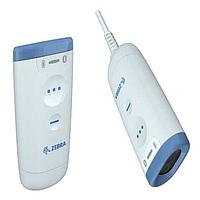
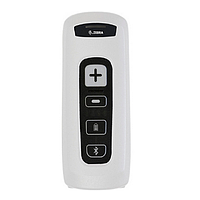
Barcode type is another key factor. Many applications now require support for both 1D and 2D symbols, and some workflows also benefit from OCR capability. Devices in this category include examples such as the Honeywell 3320GHD Barcode readers for 1D, 2D, and OCR, as well as Zebra CS4070-HC Companion Scanner and Zebra CS60-HC Companion Scanner models that support broader code-reading needs in mobile use.
It is also worth checking interface and connectivity requirements. Some mobile readers are intended to connect through USB, while others rely on Bluetooth to pair with Windows, Android, or iOS hosts. Battery capacity, drop resistance, IP protection, and operating temperature become increasingly important in logistics, industrial, and outdoor environments.
Wearable and companion scanners for high-mobility workflows
Wearable and companion devices are especially useful when workers need to keep one or both hands available for handling products. Ring scanners can reduce repetitive motion by placing scanning close to the user’s natural hand position, which is helpful in picking, packing, and replenishment tasks. Companion scanners offer a similar mobility benefit when users need a small portable scanner that can be carried in a pocket or clipped to a belt.
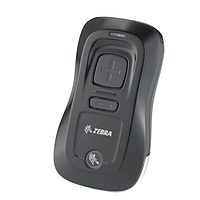
Examples in this category show the range of available approaches. The Zebra CS3000 Companion Scanner focuses on compact 1D data capture, while the Unitech MS652 and Delfi Delfiscan B10-Ring 1D Bluetooth Ring Scanner support wearable operation. These formats are often considered alongside a handheld barcode reader when businesses compare portability, ergonomics, and scan volume.
Rugged mobile terminals for data collection beyond scanning
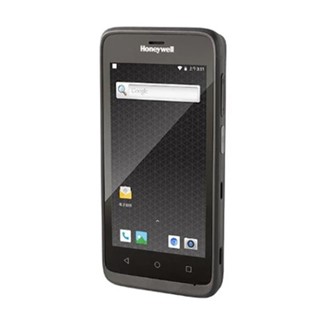
Some operations need more than a scanner alone. A rugged handheld terminal can combine barcode reading, wireless communication, onboard processing, and application support in a single device. That makes it suitable for workflows where users must not only scan items but also view tasks, confirm transactions, capture photos, or work with inventory software in real time.
The Unitech HT730UHF RFID Rugged Handheld Terminal is a good example of this broader role. In addition to barcode capability, it brings together Android-based mobile computing and UHF RFID support, which may be relevant for organizations handling mixed identification methods. For businesses comparing portable formats, it can be useful to review the wider ecosystem of industrial barcode reader solutions when durability and high-duty operation are central requirements.
Leading brands available in this range
Brand preference in mobile scanning is often linked to software compatibility, deployment scale, service requirements, and user familiarity. This category includes solutions from established manufacturers such as Honeywell, Zebra, Unitech, and Delfi, covering compact scanners, wearable models, and rugged mobile terminals.
Honeywell appears in both pocket and wearable examples, while Zebra offers companion scanners suited to mobile workflows where compact size matters. Unitech is relevant for wearable scanning and more advanced handheld terminal requirements, and Delfi provides practical ring-scanner options for Bluetooth-based mobility. Instead of choosing by brand alone, it is usually better to match the device form factor and scan environment to the actual workflow.
Integration and deployment considerations
Before purchase, it helps to confirm how the device will connect to the host system and how operators will use it over a full shift. Bluetooth range, host OS support, charging method, memory or offline storage, and accessory availability can all affect day-to-day usability. In distributed operations, device management and replacement logistics may also influence the final selection.
Application type matters as well. For POS or reception areas with occasional mobility, a portable unit may be enough, while warehouse execution typically requires better endurance and stronger environmental protection. If your workflow includes fixed stations as well as mobile tasks, it may be helpful to compare this range with a desktop barcode reader for counter-based scanning points and with barcode accessories for charging and deployment support.
Choosing the right mobile barcode reader for your operation
A suitable mobile scanner should match the way people actually work: how often they scan, how far they move, what types of codes they read, and what systems they need to connect to. Lightweight companion scanners are practical for occasional or portable use, ring scanners are effective for repetitive hands-on workflows, and rugged handheld terminals support more complex mobile data collection.
By comparing mobility, decoding needs, connectivity, and environmental requirements, it becomes easier to narrow the category to the right device type. Whether the priority is wearable efficiency, compact portability, or an all-in-one terminal, this range helps support faster and more reliable barcode capture across modern B2B operations.
Get exclusive volume discounts, bulk pricing updates, and new product alerts delivered directly to your inbox.
By subscribing, you agree to our Terms of Service and Privacy Policy.
Direct access to our certified experts