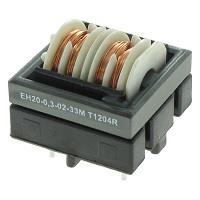
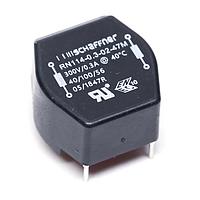
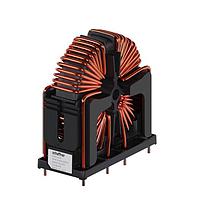
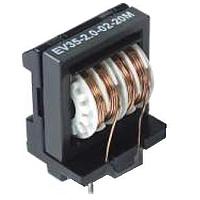
Chokes
Noise suppression and current smoothing are critical in power electronics, industrial control boards, and communication lines where stable operation depends on clean electrical performance. In these applications, chokes help limit unwanted high-frequency interference while allowing the required signal or power to pass, making them a practical choice for designers, maintenance teams, and sourcing specialists who need dependable passive components.
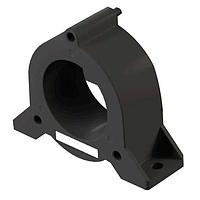
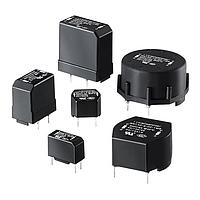
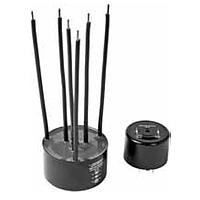
Within this category, buyers can find choke solutions used in power input stages, EMI control, DC-DC conversion, and data line protection. The selection includes both amorphous choke coils and common mode chokes, covering use cases where magnetic material, current handling, mounting style, and circuit configuration all influence long-term performance.
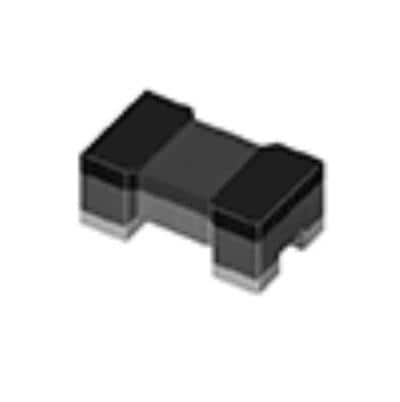
Where chokes fit in electronic and industrial designs
A choke is an inductive component designed to impede unwanted AC noise or ripple while passing useful current. In practical terms, it is often used to reduce conducted emissions, improve power quality, and protect downstream circuits from switching noise generated by converters, motors, inverters, or communication interfaces.
Because system requirements vary, this category sits naturally alongside other passive building blocks such as inductors, filters, and capacitors. In many designs, these parts work together to form input filters, noise suppression networks, and energy management stages rather than functioning as isolated components.
Main choke types covered in this category
One of the most common distinctions is between common mode chokes and power choke coils. Common mode chokes are widely used on signal and power lines to attenuate common mode noise without heavily affecting the desired differential signal. This makes them relevant in communication ports, interface boards, and power entry sections where electromagnetic compatibility is a concern.
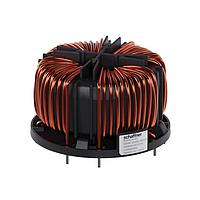
Power choke coils, including amorphous choke designs, are typically selected for current smoothing, ripple reduction, and magnetic performance in power conversion circuits. Amorphous core materials are often considered when engineers need a balance of low loss and good high-frequency characteristics, especially in systems that must manage switching noise efficiently.
Representative products in the range
The product mix in this category illustrates different application priorities. For example, the Bourns DR221-223AE Common Mode Chokes Dual 22uH is a compact SMD option intended for data line use, with dual configuration and operating values that support signal-line noise suppression in space-constrained assemblies.
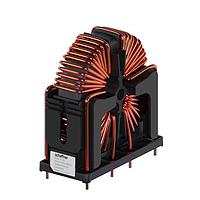
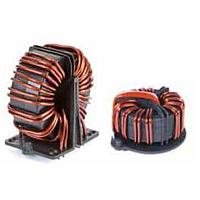
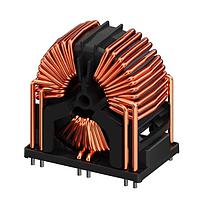
For power-related applications, several Chemi-Con amorphous choke coil models are available, including CM10700G6B, CM10501GKE, CM10501GKD, CM10121G7, and CM10500G6 series variants. These examples show how the category serves projects that require different choke constructions and model families without forcing buyers into a one-size-fits-all selection.
How to choose the right choke
The first step is to define the role of the component in the circuit. If the goal is EMI suppression on paired lines or interfaces, a common mode choke may be the better fit. If the need is energy storage support, current smoothing, or attenuation of switching ripple in a power path, a power choke coil is often more appropriate.
Next, review the electrical and mechanical constraints. Key factors usually include inductance, rated current, DC resistance, voltage environment, circuit configuration, package size, and mounting style. In compact assemblies, SMD parts may simplify automated production, while larger choke coils may be preferred in power stages that prioritize current handling and thermal stability.
Magnetic material also matters. Core technology affects losses, saturation behavior, and frequency response, so it should be matched to the converter topology or noise profile of the target system. When comparing options, engineers often evaluate not only the nominal value but also how the choke behaves under real load, temperature, and EMI conditions.
Typical applications across industries
Chokes are widely used in switch-mode power supplies, industrial automation equipment, telecom hardware, embedded control systems, and PCB assemblies that must meet stricter EMC expectations. They may appear at AC or DC inputs, near converters, on motor drive boards, or on communication interfaces where suppression of high-frequency noise helps maintain signal integrity and reduce system disturbances.
They are also relevant in designs that combine multiple passive technologies. A choke may be paired with resistors for damping or sensing networks, or integrated into broader filtering structures with capacitive elements. This makes proper component coordination just as important as selecting the choke itself.
Manufacturer focus and sourcing considerations
This category includes well-recognized names used in electronic component procurement, with Bourns and Chemi-Con especially relevant based on the representative products listed here. Depending on the application, buyers may also compare broader portfolios from manufacturers such as Coilcraft, Eaton, EPCOS, and Delta-related brands when looking for compatibility with existing design standards or approved vendor lists.
For procurement teams, choosing from an established category helps streamline cross-functional work between engineering, purchasing, and maintenance. Instead of searching only by part number, it becomes easier to review choke options by form factor, suppression method, and intended circuit role, which can reduce selection errors in both prototype and production stages.
Why category-level comparison matters
Many projects begin with a known model and later require alternatives within a similar functional range. Looking at the category as a whole can help identify whether a design calls for a data-line common mode choke, an amorphous choke coil for power conditioning, or a different passive approach altogether. That broader view is useful when redesigning assemblies, responding to availability changes, or refining EMI performance during testing.
It also supports better technical conversations between design engineers and sourcing teams. Rather than focusing only on a single stock reference, category-level evaluation helps clarify the actual electrical objective, expected environment, and acceptable trade-offs in size, current, and noise suppression behavior.
Final thoughts
Choosing the right choke starts with understanding what the circuit needs to block, smooth, or stabilize. Whether the requirement is EMI suppression on data lines or current conditioning in a power stage, this category provides a focused starting point for comparing suitable parts from trusted manufacturers and representative product families.
For more accurate selection, it is worth reviewing the circuit function, installation constraints, and surrounding passive network before narrowing down a specific model. That approach helps ensure the chosen choke supports both electrical performance and practical integration in the final design.
Get exclusive volume discounts, bulk pricing updates, and new product alerts delivered directly to your inbox.
By subscribing, you agree to our Terms of Service and Privacy Policy.
Direct access to our certified experts