EMI Kits
Early-stage EMC work often moves faster when engineers can compare multiple suppression options on the bench instead of ordering individual parts one by one. That is where EMI Kits are especially useful: they bring together selected ferrites, filters, absorber materials, or related suppression components so design teams can evaluate practical countermeasures before committing to production parts.
For prototype development, troubleshooting, and design validation, these kits help reduce iteration time across power, signal, and RF paths. They are commonly used in electronics design environments where noise reduction, compliance preparation, and circuit refinement all need to happen efficiently.
Why EMI kits are useful in real design work
Electromagnetic interference issues are rarely solved with guesswork alone. In many projects, engineers need to test different core materials, bead styles, absorber formats, or suppression approaches directly in the application. A well-structured kit supports that process by offering a practical range of sample components for design evaluation and lab-based comparison.
This is especially helpful during prototype tuning, pre-compliance investigation, and product updates where the source of unwanted emissions or susceptibility may not be fully isolated yet. Instead of sourcing each candidate separately, a kit provides a more efficient path to screening and selection.
What you can typically find in this category
This category covers kits intended for EMI and noise suppression work across several use cases. Depending on the design objective, that may include ferrite bead kits, snap-on suppression solutions, absorber sheet kits, flat ferrite core assortments, or filter-oriented evaluation sets.
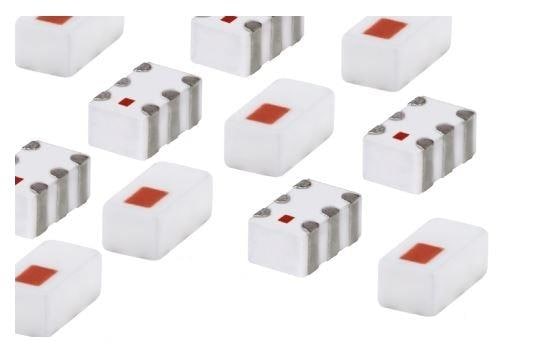
Some kits are aimed at broad electrical noise control, while others are more application-focused. For example, the Mini-Circuits K1-TCW+ EMI kit is positioned around balun and transformer evaluation for wireless-related applications, while engineering kits from KEMET and Wurth Elektronik can support ferrite or flex suppression exploration in different hardware environments.
Representative product types in the EMI kits range
Several products in this category illustrate the variety available for engineers and buyers. The Murata EKDMAT03A-KIT Filter Kits and Eaton MFBA3V-KIT Filter Kits are examples of filter-focused options that can support quick comparison during early circuit development.
For ferrite-based suppression, Fair-Rite offers multiple kit formats such as the 0199000033 Snap-It Kit, 0199000028 Bead on Lead Kit, and 0199000029 Rod Kit. Wurth Elektronik also appears with design-oriented assortments including the 742722 WE-FLAT Design Kit and the 782013 WE-AEFA axial suppression kit, each relevant to different mechanical and electrical constraints.
Where space, layout, or enclosure-level treatment matters, absorber-style solutions may be more appropriate. The KEMET FXS ENG KIT 03 Flex Suppressor Kit is one example that fits work involving noise suppression sheets and material evaluation, which can relate closely to broader shielding and absorber materials used in EMC design.
How to choose the right kit for your application
The best starting point is the type of interference you are trying to reduce. If the issue is conducted noise on cables or power lines, ferrite and filter-oriented kits are often the most relevant. If the challenge involves enclosure hotspots, coupling between assemblies, or localized RF noise, absorber materials or shielding-related samples may be more suitable.
It also helps to think about the stage of development. During concept and prototyping, broader kits with multiple values or formats can provide more flexibility. Later in the process, engineering teams may prefer narrower kits that reflect a more specific suppression method, such as ferrite cores, feedthrough-style filtering, or common-mode noise reduction. If your next step is to move from evaluation kits to installed line components, it may also be useful to review common mode filters and chokes for implementation options.
Common use cases across industries
EMI kits are widely used in industrial electronics, communications equipment, embedded systems, automotive-related development, and general electronic product design. They are particularly valuable where multiple noise paths must be checked quickly, such as power input sections, cable exits, switching stages, interface lines, or compact assemblies with mixed analog and digital circuitry.
In purchasing and engineering support workflows, these kits can also help standardize evaluation activity. A team may use them to create repeatable test setups, compare suppression strategies across multiple prototypes, or shortlist candidate parts before volume sourcing. That makes them useful not just for design engineers, but also for labs, NPI teams, and technical buyers supporting EMC-related projects.
Brands commonly selected for EMI evaluation kits
This category includes well-known manufacturers used across electronic component sourcing. Murata, KEMET, Mini-Circuits, Wurth Elektronik, Eaton, and Fair-Rite are all represented in the highlighted products, each with different strengths depending on whether the priority is filtering, ferrite suppression, RF matching-related evaluation, or material-based noise control.
Brand selection should generally follow the application rather than name recognition alone. Mechanical fit, frequency behavior, circuit topology, and testing method usually matter more than simply choosing the widest kit. For engineering teams, the most practical option is often the one that lets them test a realistic range of suppression approaches with minimal delay.
From kit evaluation to final EMI suppression design
An EMI kit is often the first step, not the final answer. Once the effective suppression method has been identified, the next stage usually involves selecting production-ready components with the right electrical, mechanical, and compliance characteristics for the target product.
That transition may lead to more specialized categories depending on the design outcome. For example, if testing points toward integrated filtering structures rather than assorted samples, dedicated EMI filter circuits may become the more relevant path for detailed sourcing.
Finding the right EMI kit for bench testing and prototype refinement
Choosing from this EMI kits category is easier when you begin with the actual noise problem, installation constraints, and development stage. Whether you are comparing ferrite options, evaluating absorber materials, or testing filter approaches for power and signal integrity, a well-matched kit can shorten troubleshooting cycles and support more confident component selection.
For B2B buyers and engineering teams, the real value of these kits is practical: faster evaluation, broader comparison, and smoother progression from lab testing to deployable suppression solutions.
Get exclusive volume discounts, bulk pricing updates, and new product alerts delivered directly to your inbox.
By subscribing, you agree to our Terms of Service and Privacy Policy.
Direct access to our certified experts