Inductor Kits & Accessories
When engineers need to evaluate multiple inductance values, compare package options, or speed up early-stage circuit tuning, having the right sample assortment can save significant development time. Inductor Kits & Accessories are especially useful in prototyping, lab validation, design optimization, and low-volume engineering work where flexibility matters more than ordering one fixed part number at a time.
Instead of building a temporary selection manually, these kits help organize commonly used components into a more practical workflow. For design teams working on power conversion, filtering, EMI control, or signal conditioning, a well-structured kit can simplify part selection before moving into volume sourcing.
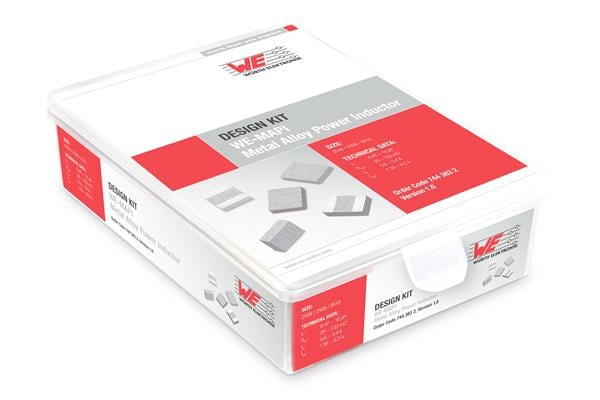
Where inductor kits fit in the design process
In many electronics projects, the final inductor value is confirmed only after simulation, bench testing, and layout review. A kit gives engineers access to a range of parts for practical comparison, making it easier to test current behavior, ripple response, impedance effects, or form factor trade-offs without repeated small-quantity purchases.
This makes the category relevant not only for component selection, but also for design verification, educational labs, maintenance environments, and evaluation builds. If your application later moves toward production sourcing, it is also useful to compare broader standalone inductor options once the preferred value range and package style are clearer.
Typical applications for Inductor Kits & Accessories
These kits are commonly used across power electronics and general circuit development. Engineers may use them while developing DC-DC converter stages, tuning switching power supply behavior, building filter networks, or validating new PCB designs where magnetic component choice influences efficiency, thermal performance, and noise.
They are also practical in RF-adjacent and signal integrity tasks where passive component interaction matters. In some projects, inductor selection is reviewed together with filter components and matching passive networks to achieve the desired electrical response with fewer design iterations.
What to look for when choosing a kit
The right selection depends on how the kit will be used. For bench development, engineers often look for a balanced spread of values and package types that support quick substitution during testing. For educational or lab environments, organization, labeling, and repeatability across samples may be equally important.
It is also worth considering whether the kit is intended for power applications, compact board-level work, or general-purpose evaluation. Some teams prefer kits focused on a narrower technology family, while others want a wider assortment for exploratory design. In either case, the main goal is to reduce friction between schematic intent and real-world component testing.
Because inductors interact closely with other passive devices, it can be helpful to review related capacitor selections during prototype planning, especially in power supply decoupling, resonant networks, and filtering stages.
Examples from leading manufacturers
This category includes solutions from established component suppliers such as Murata, KEMET, and Bourns. These brands are widely referenced in electronics development environments for passive component evaluation and board-level design support.
Representative options in this range include the Murata MDT-COIL-KIT Inductor Kits, Murata EKDMPIMTLS-V01-KIT Inductor Kits, KEMET MCI-ENG-KIT-05 Inductor Kits, KEMET MCI-ENG-KIT-01 Inductor Kits, and the Bourns SDR-LAB2 Inductor Kits. Products such as the Bourns CM252016-LAB1 Inductor Kit or KEMET UALM21V0415000 Inductor Kits can also support engineers who want a more application-oriented sampling approach rather than sourcing individual parts one by one.
These examples illustrate how kits can serve different engineering needs: broad evaluation, family-based comparison, package-level testing, or faster bench access to multiple inductor options. The exact fit depends on the circuit topology, board constraints, and the stage of your development cycle.
How accessories support lab efficiency
Within this category, accessories may play a supporting role in handling, organizing, or managing evaluation inventory around inductor sampling. While the main purpose remains component access, the accessory side of the category can help teams maintain a cleaner workflow, especially when multiple engineers share lab resources or when prototype activity spans several product lines.
This becomes more important in environments where passive parts are tested alongside other circuit building blocks such as resistors and capacitors. Clear organization helps reduce part mix-ups, shortens troubleshooting time, and supports more consistent documentation during development.
Who typically buys from this category
Inductor kits are relevant for design engineers, R&D teams, university laboratories, repair and maintenance groups, and purchasing teams supporting prototype builds. They are also useful for contract manufacturers or engineering service providers that need ready access to representative passive components during customer design support or pilot assembly preparation.
For B2B buyers, the value is often less about one single part and more about faster evaluation, reduced sourcing overhead, and improved prototype agility. A kit can help bridge the gap between concept and final bill of materials, especially when several inductor values or series are still under review.
Choosing the right path from prototype to production
A practical way to buy is to start with the intended use case. If the goal is quick experimentation, a broad assortment may be the better fit. If the design is already narrowing toward a certain footprint or inductor family, a more focused kit can make validation more efficient and more relevant to eventual production sourcing.
As the project matures, engineers can use insights from these kits to refine electrical performance targets, shortlist qualified part families, and move toward more precise sourcing decisions. That makes this category a useful step in the wider passive component workflow rather than just a convenience purchase.
For teams working on development, test, and pre-production builds, Inductor Kits & Accessories provide a practical way to compare options, organize evaluation work, and reduce delays during circuit tuning. A well-chosen kit supports better technical decisions early in the process and can make the transition to final component selection much smoother.
Get exclusive volume discounts, bulk pricing updates, and new product alerts delivered directly to your inbox.
By subscribing, you agree to our Terms of Service and Privacy Policy.
Direct access to our certified experts