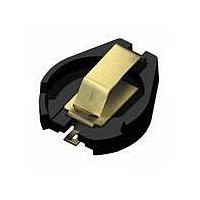
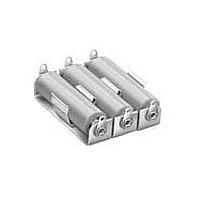
Battery Contacts
Reliable battery retention and electrical connection are small details that make a big difference in portable electronics, embedded systems, and serviceable industrial assemblies. When a design needs stable contact pressure, repeatable mating, and practical battery replacement, Battery Contacts become an important part of the overall power architecture rather than just a mechanical accessory.
This category brings together contact components used to connect battery cells or battery packs to a PCB, enclosure, or mating assembly. Whether the requirement is for a compact SMT battery interface, a simple holder-style contact, or a multi-position connector for a rechargeable pack, the right contact style helps reduce intermittent power issues and supports cleaner product integration.
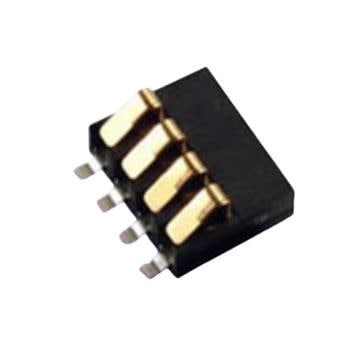
Where battery contacts are used
Battery contacts are commonly selected for handheld devices, IoT nodes, development platforms, diagnostic tools, and compact control equipment where batteries must be inserted, replaced, or reconnected without a hard-wired lead. In these applications, designers typically need a balance between electrical conductivity, mechanical durability, and available board or enclosure space.
They are also useful when a product must support service access or modular assembly. Compared with fixed soldered battery leads, a contact-based interface can simplify assembly, support easier maintenance, and improve consistency in repeated battery insertion cycles.
Common formats in this category
This range can include individual clips, spring contacts, multi-position battery connectors, and holder-related contact parts. Some options are intended for direct PCB mounting, while others are designed to mate vertically or at right angles depending on enclosure layout and how the battery pack approaches the board.
For example, compact SMT solutions such as the Molex 47286-1001 and KYOCERA AVX battery connector series are well suited to space-conscious electronic designs. Simpler holder-oriented parts like Adafruit 2089, Adafruit 653, Adafruit 783, or Hirschmann 930-317-801 can be relevant where quick prototyping, educational hardware, or straightforward replacement access is more important than a dense board-level interconnect.
If your application specifically needs discrete spring interfaces rather than integrated connector bodies, you may also want to review the broader range of battery contact solutions available across different mounting styles and mating directions.
What to consider when choosing battery contacts
The first step is to define the battery format and mating method. Cell size, number of positions, insertion direction, and whether the battery is user-replaceable or installed during manufacturing all influence the most suitable contact geometry. A low-profile PCB product may favor SMT battery connectors, while a serviceable enclosure may be better matched with spring clips or holder contacts.
Next, look at the mounting style and termination approach. In this category, some products are intended for SMD/SMT assembly, which can support automated placement and compact layouts. Others are better suited to manual assembly or lower-volume builds where accessibility and mechanical simplicity matter more than assembly-line efficiency.
Contact finish and materials also matter in real-world operation. Gold-plated interfaces, such as several KYOCERA AVX options in this category, are often chosen where stable low-resistance contact and reliable repeated mating are important. Mechanical retention, battery compression force, and tolerance to vibration should also be reviewed carefully in portable or field-used equipment.
Examples from leading manufacturers
Several established manufacturers appear prominently in this category, each supporting different design priorities. KYOCERA AVX offers compact battery connector options including multi-way configurations such as 009155004001016, 009155003541006, 009155005541006, 009155004851008, and 009155008851008, which are relevant for board-to-battery interfaces where controlled mating and compact packaging are important.
Molex is represented by the 47286-1001, a battery connector format suited to PCB-based power interconnection in smaller assemblies. For simpler battery contact and holder requirements, Adafruit and Hirschmann products in this category can be useful references, while 3M also appears with battery contact solutions for broader electronic integration needs.
Bourns is notable here for the H-843 Modular Contact Design Kit, which can be useful during concept development or when evaluating different modular battery contact arrangements before finalizing a production design.
Battery contacts vs. holders, snaps, and enclosures
Not every battery-powered design needs the same kind of accessory. Battery contacts are often selected when the goal is to create a controlled electrical and mechanical interface directly within the product, especially where custom packaging or PCB integration is required. In contrast, holders and enclosures are more about physically containing the cell and providing a more complete mounting structure.
If you are still deciding between direct-contact components and a more complete battery mounting solution, it can help to compare adjacent categories such as coin cell battery holders for compact round-cell designs or battery enclosures when greater mechanical protection and organized cell placement are needed. For legacy rectangular battery connections, 9V battery snaps and contacts may be the more appropriate path.
Design and sourcing tips for B2B buyers
For OEM, engineering, and maintenance teams, selection should go beyond basic fit. Review how the contact will behave across insertion cycles, vibration exposure, assembly tolerances, and service access requirements. In production environments, even a small change in contact geometry or mounting style can affect assembly speed, battery retention, and long-term reliability.
It is also useful to think in terms of the full battery interface, not just the individual part. Check whether the application needs a direct board connector, a holder-based contact, or a modular approach that can simplify future design revisions. Where multiple battery positions are required, compare positional count, mating orientation, and available board area early to avoid redesign later in the project.
Finding the right option for your application
The best choice depends on how the battery is installed, how often it will be replaced, and how much space the design can allocate to power interconnection. A compact rechargeable device may benefit from a multi-position battery connector, while a prototype or service-friendly assembly may be better served by a simpler clip or holder contact arrangement.
Within this category, products from Adafruit, Hirschmann, 3M, Bourns, KYOCERA AVX, and Molex provide a useful cross-section of battery contact solutions for different integration needs. By matching contact style, mounting method, and mechanical constraints to the real use case, buyers can narrow the range quickly and select parts that fit both the electrical design and the manufacturing process.
For projects where dependable battery connection matters as much as compact packaging, this category is a practical starting point. Reviewing the intended battery type, mating direction, replacement method, and board layout will usually lead to a more reliable and easier-to-maintain final design.
Get exclusive volume discounts, bulk pricing updates, and new product alerts delivered directly to your inbox.
By subscribing, you agree to our Terms of Service and Privacy Policy.
Direct access to our certified experts