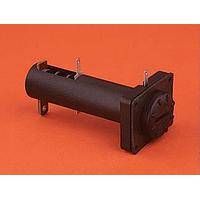
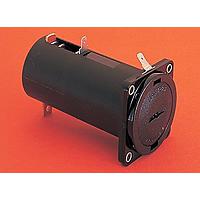
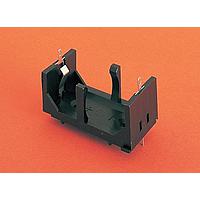
Cylindrical Battery Accessories
Reliable battery integration often depends on small mechanical and electrical parts that are easy to overlook during design. In products powered by AA, AAA, 18650, CR123A, or similar cells, the quality of the holder, clip, spring, or contact can directly affect retention, assembly time, and long-term electrical stability. This is where Cylindrical Battery Accessories become important for engineers, buyers, and contract manufacturers.
This category focuses on the hardware used to mount, secure, and connect cylindrical cells in electronic assemblies. Whether the goal is a simple board-level battery connection, a multi-cell holder for portable equipment, or a replacement contact for an existing design, the right accessory helps balance footprint, serviceability, and dependable power delivery.
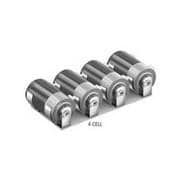
Where cylindrical battery accessories fit in a design
These components are typically used wherever battery-powered devices need a practical way to house removable cells. Common examples include handheld instruments, industrial sensors, portable test devices, embedded controllers, and low-power electronic products that rely on standard cylindrical batteries instead of soldered battery packs.
Depending on the design, the accessory may serve as a full battery holder, an individual clip, or a spring contact that completes the connection path. In some projects, engineers may also compare these options with dedicated battery contacts when they want more flexibility in custom housings or tighter control over the mechanical layout.
Typical product types in this category
The category includes a range of parts for different mounting and packaging needs. Some are intended as complete holders for one or multiple cells, while others are connector-style parts used as part of a larger battery compartment or enclosure assembly.
For example, Adam Tech BH-06-2 is a holder format intended for a 1x4 AA arrangement, while Adam Tech BH-145-1 is positioned as a battery clip suitable for cells such as 18650 or CR123A in DIP-style installation. Parts such as TE Connectivity 6337194-1 and Littelfuse LR4-970F illustrate how battery connector assemblies and contact elements can support more specialized mechanical designs where a full molded holder is not required.
Key selection factors for engineers and buyers
Choosing the right accessory starts with the battery format and the intended use environment. Cell size compatibility is the first filter, but it is rarely the only one. Mounting method, orientation, service access, replacement frequency, and board or chassis constraints all influence whether a clip, spring, or complete holder is the better fit.
It is also useful to review contact style and material considerations, especially in products exposed to vibration, repeated battery changes, or varying temperatures. Through-hole designs are often preferred where extra mechanical strength is needed, while compact layouts may call for other form factors depending on the surrounding assembly. If the application uses coin cells rather than cylindrical cells, a separate range of coin cell battery holders will usually be more appropriate.
Examples from leading manufacturers
Several established manufacturers appear in this category, including TE Connectivity, Adam Tech, and Littelfuse. Each may suit different sourcing and design preferences, from standard holder formats to connector-oriented battery interfaces.
Within the current selection, TE Connectivity 120591-1 and 2-1775485-1 show how battery holders can differ in geometry, material, and mounting style even when they serve a similar single-cell function. Adam Tech BH-74B-5-T/R demonstrates a compact holder approach for CR2032 applications, while parts such as Adam Tech BH-27-5 or BH-44C-5-T/R are relevant when the design requires dedicated connector-style battery interconnect components rather than a simple drop-in holder.
Mechanical and assembly considerations
In battery-powered equipment, mechanical details matter as much as nominal electrical connection. A holder that fits the cell correctly helps reduce movement, intermittent contact, and wear during insertion and removal. This becomes especially important in portable or field-deployed devices where shock, vibration, or frequent servicing can affect performance over time.
Assembly method should also match the manufacturing process. Through-hole parts can support stronger board retention and may be preferable in rugged applications. For designs where the battery is integrated into a custom case, engineers may instead combine clips or springs with dedicated battery enclosures to achieve the required accessibility and protection.
How to match the accessory to the application
A straightforward way to narrow the selection is to define the use case first: prototype, production device, replacement part, or custom battery compartment. For a compact PCB-based product, a single-cell or multi-cell holder may simplify assembly and maintenance. For custom mechanical packaging, separate clips and springs can provide more freedom in battery placement.
It also helps to think about whether the batteries are user-replaceable or intended for infrequent service. If field replacement is expected, choose an option that supports easy insertion and removal without damaging the contact structure. If the product shares battery-system requirements with related power accessories, browsing adjacent options such as other battery accessories can help complete the design.
Why this category matters in B2B sourcing
For OEMs, integrators, and procurement teams, these are not just small commodity parts. The right selection can reduce rework, improve assembly consistency, and help maintain dependable battery connection across production runs. Even a minor mismatch in holder style or contact format can affect mechanical fit, service access, or the durability of the end product.
This category is therefore useful not only for initial design-in, but also for maintenance sourcing, second-source evaluation, and updates to legacy battery-powered products. Reviewing suitable holders, clips, and contact parts at the category level makes it easier to compare formats before moving to individual product pages.
Final thoughts
When battery-powered equipment depends on removable cylindrical cells, the supporting hardware deserves careful attention. A well-matched accessory helps ensure secure retention, stable contact, and practical assembly throughout the product lifecycle.
Explore the range of cylindrical battery holders, clips, springs, and connector assemblies in this category to find a solution that fits your cell format, mounting preference, and service requirements. For engineering teams and industrial buyers alike, a clearer match at the accessory level can lead to a more robust and maintainable power design.
Get exclusive volume discounts, bulk pricing updates, and new product alerts delivered directly to your inbox.
By subscribing, you agree to our Terms of Service and Privacy Policy.
Direct access to our certified experts