
LDO Voltage Controllers
Clean, stable voltage rails are essential in embedded systems, industrial electronics, communication boards, and precision analog designs. When low noise, simple implementation, and predictable regulation matter, LDO Voltage Controllers are a practical part of the power management chain, especially in designs that need compact SMD solutions and controlled output behavior across varying loads.
This category brings together devices used to regulate output voltage in low-dropout power architectures, with options covering fixed and adjustable outputs, different current capabilities, and a range of input voltage conditions. For engineers comparing power-stage components, the key is not only output voltage, but also how each controller fits the wider system in terms of efficiency, thermal limits, startup behavior, and downstream load sensitivity.
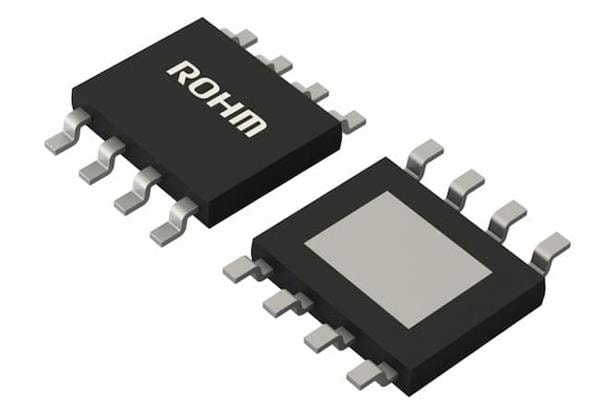
Where LDO voltage controllers fit in power system design
An LDO-based regulation stage is commonly selected when the voltage difference between input and output is moderate and the application benefits from low-noise regulation with relatively straightforward circuit implementation. These devices are often used to supply microcontrollers, sensors, communication ICs, memory rails, and analog front ends that require a cleaner output than many switching stages can provide on their own.
In broader power architectures, this category sits alongside products such as current and power monitoring devices and other control-oriented PMIC functions. In many designs, an LDO stage is not isolated; it supports a larger regulation strategy that may include conversion, monitoring, sequencing, or battery-powered operation.
Typical selection criteria for LDO voltage controllers
The first step in choosing an appropriate device is usually the electrical envelope: input voltage range, target output voltage, output current, and whether the design needs a fixed or adjustable output. A controller intended for low-voltage digital rails will be evaluated differently from one handling higher input voltages or supporting external transistor arrangements.
Beyond these fundamentals, engineers often compare quiescent current, load regulation, operating temperature range, and package style. In compact industrial and embedded boards, SMD/SMT mounting is frequently preferred for density and automated assembly, while thermal dissipation becomes increasingly important as current demand rises or input-to-output differential increases.
Examples from leading manufacturers
This range includes solutions from established suppliers such as Analog Devices, ROHM Semiconductor, Texas Instruments, and Nisshinbo. Each vendor contributes options suited to different design priorities, from compact low-current rails to higher-current regulated outputs and wider input operating windows.
For example, the ROHM Semiconductor BD00IA5WEFJ-E2 is an adjustable high-accuracy LDO regulator rated up to 500 mA, making it relevant for applications that need output flexibility within a low-voltage range. The ROHM BD15IC0WEFJ-E2 and BD50GC0WEFJ-E2 illustrate fixed-output approaches for 1.5 V and 5.0 V rails, while the BD90GA5WEFJ-E2 and BD60GC0WEFJ-E2 extend that concept to higher fixed outputs in designs where stable dedicated rails are required.
On the low-voltage side, the Texas Instruments TPS72011DRVR is positioned for single-output regulation with very low operating supply current, which can be useful in power-sensitive circuits. Analog Devices parts such as the ADP7142ACPZN3.8-R7 and MAX8564AEUB+T show how the category also includes devices with different voltage handling profiles, including higher input tolerance or dual-output-oriented regulation concepts depending on system architecture.
Fixed-output and adjustable-output options
Fixed-output devices are often chosen when the target rail is already defined by the design, such as 1.5 V, 3.3 V, 5 V, 6 V, or 9 V. They can simplify component selection and reduce design effort in production builds where repeatability and straightforward validation are important. Products such as the ROHM BD15IC0WEFJ-E2, BD50GC0WEFJ-E2, BD60GC0WEFJ-E2, and BD90GA5WEFJ-E2 fit this kind of requirement.
Adjustable-output devices are useful when engineers need more flexibility during development or when one platform supports multiple variants. The ROHM BD00IA5WEFJ-E2 provides an adjustable output range, while parts like the Texas Instruments UC2836D represent a different controller-oriented approach where wider output setting behavior may be relevant within a more complex regulation design.
Application contexts across industrial and embedded electronics
LDO voltage controllers are widely used in boards that serve industrial control, instrumentation, communication modules, edge devices, and embedded computing. Their role is often to provide a quiet local rail after a primary conversion stage, helping protect sensitive loads from ripple and maintaining voltage stability for signal-processing and logic sections.
They are also relevant in portable and battery-backed systems, where overall power architecture may involve charging, protection, and rail regulation working together. In those cases, related categories such as battery management ICs can be part of the same design flow, especially where engineers are balancing runtime, protection, and rail integrity across multiple subsystems.
Points to review before finalizing a device
When narrowing down options, it helps to review the expected input source, normal and peak load current, thermal environment, and whether the rail powers digital, analog, or mixed-signal circuitry. A device that looks suitable by voltage and current alone may still require closer evaluation if standby current, temperature range, or package heat dissipation is critical in the final application.
It is also worth checking how the regulator interacts with the broader control loop and upstream conversion stage. In systems that begin with mains or higher-voltage conversion, engineers may also compare related solutions such as AC/DC converters before finalizing the downstream LDO stage. Looking at the full power path often leads to a better component choice than selecting the regulator in isolation.
Comparing devices in this category
This category includes products with notable variation in input range, output current, and intended use. Some parts are optimized for compact, low-current rails with low operating current, while others support higher current outputs or higher input voltages. Nisshinbo devices such as the RN5RF16BA-TR-FE and RN5RF40BA-TR-FE add further options for designs where external transistor support or a specific CMOS regulator structure is relevant.
Rather than focusing only on one headline parameter, a better comparison approach is to match the part to the rail’s function in the system. A quiet analog rail, a general logic supply, and a post-regulation stage after a switching converter can all lead to different selection priorities even when nominal output voltages appear similar.
Finding the right LDO controller for your design
If your application needs a dependable low-dropout regulation stage, this category provides a useful starting point for comparing fixed and adjustable solutions from recognized semiconductor manufacturers. Reviewing input range, output requirement, current demand, temperature conditions, and board-level constraints will usually identify the most appropriate shortlist quickly.
For design teams building complete power architectures, LDO voltage controllers are best evaluated as part of the overall PMIC ecosystem rather than as standalone parts. A well-matched device can improve rail quality, simplify power distribution, and support more stable performance across industrial and embedded electronic systems.
Get exclusive volume discounts, bulk pricing updates, and new product alerts delivered directly to your inbox.
By subscribing, you agree to our Terms of Service and Privacy Policy.
Direct access to our certified experts