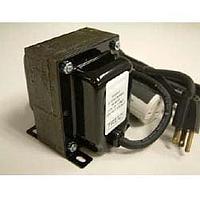
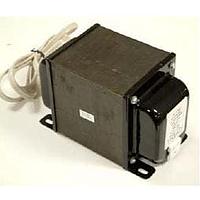
Autotransformers
Voltage conversion is a common requirement in industrial panels, laboratory setups, service benches, and OEM equipment builds. When the application calls for a compact and efficient way to adapt between common mains voltages such as 115 V and 230 V, autotransformers are often the practical choice for reducing size, weight, and installation complexity.
This category brings together chassis-mount autotransformers for step-up and step-down use in power distribution, machine integration, and equipment support applications. You will find models suited to different VA ratings, wiring preferences, and mounting needs, making it easier to match the transformer to the electrical load and installation environment.

Where autotransformers fit in power conversion
An autotransformer uses a single winding with taps to provide voltage conversion, rather than separate primary and secondary windings as found in many conventional transformer designs. This approach can be advantageous when the input and output voltages are closely related, especially in 115/230 VAC conversion tasks commonly seen in imported equipment, test stations, and industrial retrofits.
Because of this construction, autotransformers are widely selected where users need straightforward line-voltage adaptation without moving into a more complex power conditioning solution. For buyers comparing related options, it can also be useful to review broader power transformer products when isolation or different transformer architectures are required.
Typical applications in industrial and technical environments
In B2B purchasing, autotransformers are often chosen to support equipment relocation, export and import machine compatibility, and facility voltage standardization. They can be used when a device designed for 115 VAC must operate from a 230 VAC supply, or when the reverse conversion is needed for service, maintenance, or system integration.
These products are commonly considered for control cabinets, bench equipment, light industrial assemblies, and support power circuits where the load is well understood. If your project also involves signal handling rather than line-voltage conversion, a separate category such as audio and signal transformers may be more relevant.
How to choose the right autotransformer
The first selection factor is usually the required VA rating. The transformer should be sized to handle the connected load with appropriate margin for startup conditions, operating duty, and system design practice. In this category, available examples range from compact 100 VA units for smaller loads up to 1.5 kVA models for heavier equipment demands.
Mounting and termination style also matter. Chassis-mount formats are well suited to panel and equipment integration, while connection styles such as plug-in, wire leads, and quick connects affect assembly time, maintenance access, and wiring preference. Buyers should also confirm whether the application needs step-up, step-down, or bidirectional 115/230 VAC use before finalizing the part choice.
Representative products in this category
For lower-power applications, the Hammond Manufacturing 170AE provides a 100 VA option in a hard-wired format for 115/230 VAC step-up or step-down use. Moving upward in capacity, the Hammond Manufacturing 170C and 170CE offer 300 VA solutions that can fit a range of panel and equipment conversion tasks.
For applications centered on step-down conversion from 230 VAC to 115 VAC, several Bel Signal Transformer models are relevant examples, including the 120, 125, and 130 series in plug-in styles, as well as wire-lead versions such as the 120-0F and 130-0F. Where higher capacity is needed, the Bel Signal Transformer 1150 and the Hammond Manufacturing 170GE extend the range to 1.5 kVA.
Another useful reference point is the Triad Magnetics N-6U, a chassis-mount auto-transformer with wire leads for 115 V and 230 V conversion scenarios. These examples illustrate the range of physical formats and connection methods available across the category without forcing buyers into a one-size-fits-all selection process.
Understanding autotransformer limitations and system context
A key point in specification review is that an autotransformer does not provide galvanic isolation in the same way a traditional isolated transformer does. That makes it important to evaluate the wider electrical design, compliance requirements, grounding strategy, and safety expectations of the end equipment before choosing this type of transformer.
In many projects, autotransformers are ideal for efficient voltage adaptation, but they are not a universal substitute for all transformer types. If the design requires measurement-related functions rather than supply conversion, users may want to compare with current transformers or other specialized transformer categories depending on the application.
Comparing manufacturers and build styles
Hammond Manufacturing and Bel Signal Transformer are two of the most visible names in this category, with product examples covering multiple VA ratings and connection approaches. Hammond Manufacturing appears strongly in hard-wired autotransformer options, while Bel Signal Transformer offers several dedicated step-down models with plug-in or wire-lead terminations.
Triad Magnetics adds another practical option for buyers who need a compact chassis-mount format with leaded termination. The best choice typically comes down to matching electrical rating, mechanical envelope, wiring style, and installation method rather than focusing on brand alone.
Practical buying considerations for OEMs, integrators, and maintenance teams
When sourcing autotransformers for production or maintenance, it helps to confirm a few project basics early: input voltage, required output voltage, continuous load, peak load behavior, available panel space, and preferred termination style. This avoids overbuying on size while also reducing the risk of selecting a transformer that is too small for the actual operating condition.
For repeat builds and standardization programs, consistent mechanical dimensions and wiring practices can be as important as electrical performance. Reviewing a short list of suitable products across the required VA range can simplify future replacement planning and make documentation more consistent across equipment platforms.
FAQ
When should I use an autotransformer instead of a standard power transformer?
An autotransformer is typically considered when you need efficient conversion between related line voltages, such as 115 VAC and 230 VAC, and isolation is not required by the application.
What does the VA rating mean?
The VA rating indicates the apparent power the transformer is designed to handle. It should be selected based on the connected load and appropriate engineering margin.
Are these products suitable for panel installation?
Many products in this category are chassis-mount designs, which makes them suitable for integration into equipment enclosures, cabinets, and industrial assemblies, provided the electrical and mechanical requirements are met.
For voltage conversion tasks in machinery, service equipment, and technical installations, autotransformers offer a focused solution that balances compact construction with practical power handling. By selecting the right VA rating, wiring style, and installation format, buyers can narrow the category quickly and choose a product that fits the electrical design with fewer compromises.
Get exclusive volume discounts, bulk pricing updates, and new product alerts delivered directly to your inbox.
By subscribing, you agree to our Terms of Service and Privacy Policy.
Direct access to our certified experts