Current Transformers
Accurate current measurement is a basic requirement in power distribution, protection circuits, energy monitoring, and many electronic designs. When isolation, signal scaling, and safer interfacing are important, Current Transformers remain a practical choice for converting primary current into a proportional secondary signal that can be measured or processed more easily.
On this category page, buyers can explore current transformers suited to different installation styles, current ranges, and circuit environments. The selection includes compact SMT parts for embedded current sensing as well as panel-mount options used in larger electrical systems, making the range relevant for both electronics design and industrial applications.
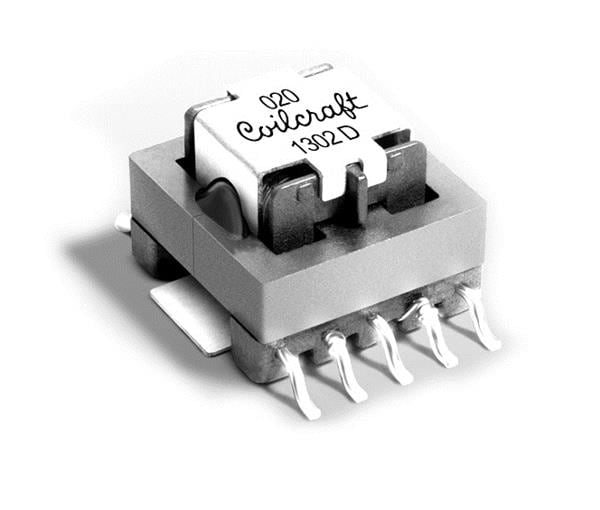
Where current transformers are used
A current transformer is typically chosen when a system needs to monitor AC current without connecting measurement electronics directly to the full primary current path. This helps support electrical isolation, improves safety for downstream circuitry, and enables signal conditioning for monitoring, control, or protection functions.
Typical use cases include power supplies, motor control, energy metering, residual or zero-sequence detection, industrial panels, and current-sense stages in high-frequency switching designs. For engineers comparing transformer families, it can also be useful to review related options such as pulse transformers or power transformers when the application involves signal transfer or power conversion rather than current measurement.
Different formats for different design priorities
This category covers more than one physical format, which matters because mounting style often drives the selection as much as the electrical ratio. Compact surface-mount devices are well suited to dense PCBs, switch-mode power electronics, and space-constrained sensing stages, while panel-mount models are more common in cabinets, switchgear, and distribution assemblies.
For example, the Coilcraft CST2010-070LD, Coilcraft CST2010-060LD, and Coilcraft CST2010-040LD illustrate SMT current transformers designed for current sensing in compact electronic assemblies. By contrast, the Eaton C311CT1 represents a panel-mount approach for zero-sequence current detection, where physical window size and installation method are often key considerations.
What to compare when selecting a current transformer
The right part is rarely chosen by current rating alone. Buyers usually compare a combination of turns ratio, mounting style, frequency range, insulation requirements, secondary resistance, and the surrounding circuit conditions. In practical terms, these factors affect measurement sensitivity, burden compatibility, PCB layout, and how well the device fits the intended operating environment.
For higher-density electronics, SMT options such as the EPCOS B82801B0305A125 or Eaton ECST1V0504-1150-R may be evaluated for compact footprint and switching-frequency compatibility. In other designs, engineers may prioritize broader current handling or automotive-oriented robustness, as seen in parts such as the Coilcraft CST7030-150LC or Eaton ECSTA1V1308-1080-R, both of which are presented as examples within this category.
It is also worth checking whether the application is focused on measurement, protection, leakage detection, or feedback control. The same transformer family can behave differently in a metering circuit than in a fast-switching converter, so the intended operating frequency and signal-processing method should be considered early in the selection process.
Representative manufacturers in this range
This category includes products from established manufacturers used widely in electronics and electrical integration. Brands such as Coilcraft, Eaton, EPCOS, Bourns, and Legrand appear in the current selection, giving buyers options across compact PCB-level sensing and larger installed electrical systems.
Examples include the Legrand 4 121 54 Current Transformers for broader electrical applications, Bourns 055664 and Bourns 055651 for transformer-based sensing roles, and the Bourns PCS040-EF13340S current sense transformer for compact electronic designs. Looking across manufacturers can be useful when projects need a specific ratio, package style, or installation method rather than a single brand preference.
SMT current transformers for embedded electronics
Many current transformers in this category are intended for modern PCB-based designs, where size, repeatability, and switching-frequency behavior are important. These parts are often selected for power conversion stages, control boards, and monitoring circuits that need isolated current feedback without adding excessive board area.
Models such as the Coilcraft CST2010 series and EPCOS B82801B0305A125 show how compact devices can support current sensing across different ratios and current levels. In these applications, designers usually pay close attention to frequency range, secondary resistance, and the expected signal level at the measurement interface to ensure stable conversion and reliable downstream processing.
Panel and system-level applications
Not every project is built around PCB-mounted electronics. In panel-based installations, the mechanical form of the current transformer can be just as important as the electrical characteristics, especially when conductors must pass through a sensing window or where fault and leakage monitoring are part of the system design.
The Eaton C311CT1 is a relevant example for zero-sequence sensing, where the detection method differs from standard line-current measurement. In building power systems, distribution boards, or energy-monitoring installations, products such as Legrand 4 121 54 Current Transformers may be considered when the priority is straightforward integration into electrical infrastructure rather than miniature board-level assembly.
How current transformers fit into the wider transformer ecosystem
Current transformers serve a focused role: measuring or monitoring current while maintaining separation between the primary conductor and secondary circuitry. That makes them distinct from categories built for signal coupling or voltage conversion. If your project involves low-level signal transfer, browsing audio and signal transformers may be more relevant; if the requirement is direct voltage transformation for supply design, other transformer types will usually be the better fit.
Understanding that distinction helps buyers narrow the shortlist faster and avoid comparing parts that solve different problems. It also makes it easier to align the transformer choice with the end application, whether the goal is metering accuracy, circuit feedback, isolation, or protective detection.
Choosing with application context in mind
A good shortlist starts with the real operating scenario: primary current level, available space, mounting preference, frequency behavior, and the type of output signal needed by the rest of the system. Once those basics are clear, it becomes easier to compare whether a compact SMT option from Coilcraft, EPCOS, or Eaton is more suitable than a panel-oriented solution from Eaton or Legrand.
This current transformer range is intended to support practical sourcing for engineers, panel builders, and B2B buyers who need components matched to real electrical design constraints. Reviewing the available products by format, ratio, and application style is usually the fastest path to selecting a part that fits both the circuit and the installation environment.
Get exclusive volume discounts, bulk pricing updates, and new product alerts delivered directly to your inbox.
By subscribing, you agree to our Terms of Service and Privacy Policy.
Direct access to our certified experts