RF Switch ICs
Routing high-frequency signals cleanly is a core requirement in wireless design, whether the application is a handset front end, a test path, a receiver chain, or a compact RF control board. RF Switch ICs help engineers direct signals between antennas, filters, amplifiers, and measurement paths while balancing insertion loss, isolation, switching speed, power handling, and board space.
On this category page, you can explore RF switch devices used in a wide range of wireless and microwave designs. The portfolio spans common configurations such as SPDT, SP3T, SP4T, SP6T, and SP7T, with options suited to low-voltage integrated designs as well as higher-power or wider-frequency signal routing needs.
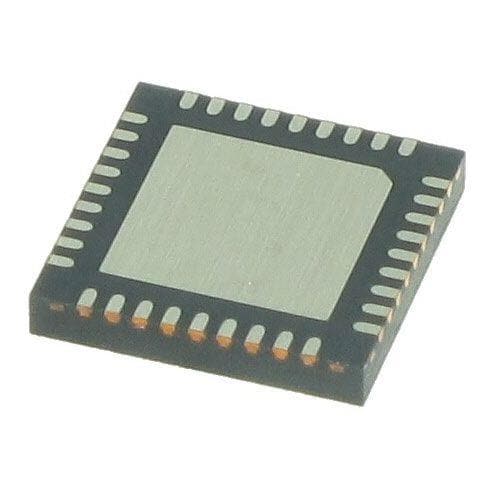
Where RF switch ICs fit in modern signal chains
In practical RF systems, a switch is rarely an isolated part. It usually works alongside filters, LNAs, PAs, matching networks, control logic, and antenna paths to select the right signal route at the right time. This makes RF switches important in cellular, IoT, instrumentation, wireless infrastructure, and embedded communication products.
Depending on the architecture, a switch may be used for transmit/receive path selection, antenna diversity, band selection, signal multiplexing, or test access. In many designs, engineers also compare switches with related signal-routing devices such as RF multiplexers when deciding how to manage multiple paths efficiently.
Common switch configurations and selection logic
A good starting point is the switch configuration. SPDT devices are often chosen for straightforward path selection, while SP3T, SP4T, SP6T, or SP7T options support more complex routing where one signal must connect to several possible outputs. The right choice depends on how many bands, antennas, or test nodes need to be managed in the design.
Frequency range is equally important. Some parts in this category are intended for sub-3 GHz applications, while others extend to 6 GHz or even 12 GHz in specific implementations. Engineers should also review whether the switch behavior is reflective or absorptive, especially when return loss, unused-port behavior, or measurement-path integrity matters.
Electrical parameters that matter in real designs
When comparing devices, most buyers focus first on insertion loss, isolation, switching speed, supply requirements, and package style. Lower insertion loss helps preserve signal strength, while higher isolation reduces leakage into unused paths. These two parameters often drive performance in receivers, front-end modules, and automated RF test setups.
Control voltage and supply voltage are also part of the decision. Some integrated switches are optimized for low-voltage portable electronics, while others are better suited to systems where higher control levels or stronger power handling are acceptable. Package and mounting style matter as well, particularly in dense SMT designs where layout, thermal behavior, and manufacturability must be considered early.
Examples from leading manufacturers
Several widely used suppliers are represented in this category. Solutions from Analog Devices, Mini-Circuits, Qorvo, Renesas Electronics, Infineon, and Skyworks Solutions Inc. illustrate the range of available approaches, from compact integrated switching for wireless front ends to broader-band devices used in signal routing and evaluation environments.
For example, the Analog Devices HMC536MS8GE is a dual SPDT T/R switch covering DC to 6 GHz, while the HMC546MS8GE is positioned for applications that need a failsafe switching function over lower microwave frequencies. In designs requiring multiple output paths, devices such as the Mini-Circuits JSW6-23DR-75+ or the Qorvo QM12156TR13-10K show how multi-throw architectures can simplify routing inside more complex RF subsystems.
Application-oriented product comparison
Portable and battery-powered wireless products often favor compact, low-voltage silicon-based switches with fast switching and efficient control. A device such as the Infineon BGS17GA14E6327XTSA1, with SP7T functionality across a broad operating band, is an example of the kind of part engineers may evaluate when several RF paths must be handled within tight space constraints.
Other projects prioritize bandwidth or mechanical robustness over integration density. The Mini-Circuits MSP6TA-12+ is a useful example of an absorptive SP6T mechanical switch for DC to 12 GHz applications, which may be more relevant in lab setups, signal routing assemblies, or specialized equipment where frequency coverage and routing behavior are key considerations.
For handset and LTE-oriented designs, parts such as the Qorvo RF1628TR13-5K and QM12113TR13 highlight the role of compact multi-throw switching in front-end control. In receiver-side routing, reflective switch options like the Renesas Electronics F0452BLEGK and F0453CLFGK8 may be relevant where the signal-chain behavior aligns with that switching method.
Integration with the wider RF IC ecosystem
RF switches are usually selected as part of a larger signal-conditioning and routing strategy. In some designs, they work closely with directional signal components such as a coupler for monitoring or feedback functions. In others, they sit near shielding structures, matching circuits, and phase-control elements to maintain stable RF performance across the operating band.
If your design involves phase management or beam-steering-related functions, it may also be useful to review phase detectors and shifters alongside switch devices. Looking at these categories together often gives a more realistic view of how the complete RF chain will behave in the final product.
How to narrow down the right RF switch IC
For most B2B sourcing and engineering teams, the fastest way to shortlist parts is to define the signal-path requirement first: number of throws, operating frequency, control voltage, and whether the switch must be reflective, absorptive, failsafe, or optimized for T/R operation. After that, compare insertion loss, isolation, package type, and environmental limits against the actual use case rather than a generic target.
It is also worth checking whether the part is intended for handset front ends, broadband routing, receiver switching, or bench/instrumentation use. That context helps avoid choosing a device that looks suitable on headline specifications but is less aligned with the architecture, control scheme, or physical integration needs of the project.
Choosing with confidence
This RF switch IC category is designed to support practical component selection across wireless and microwave applications. Whether you need a compact SPDT for a front-end path, a multi-throw switch for band selection, or a broader-band solution for routing and test, the available range helps engineers compare architectures and manufacturers in a more focused way.
By reviewing configuration, frequency coverage, switching behavior, and integration requirements together, buyers can build a more reliable shortlist and move faster from design concept to qualified part selection.
Get exclusive volume discounts, bulk pricing updates, and new product alerts delivered directly to your inbox.
By subscribing, you agree to our Terms of Service and Privacy Policy.
Direct access to our certified experts