
RF Wireless Misc
Designing or sourcing RF signal-chain components often means dealing with functions that do not fit neatly into standard device groups. That is where RF Wireless Misc becomes useful: it covers specialized RF integrated circuits and supporting devices used for signal conditioning, frequency handling, and circuit-level optimization in wireless and high-frequency designs.
For engineers, buyers, and technical sourcing teams, this category is especially relevant when a project requires a specific RF building block that supports conversion, multiplication, division, or other niche signal-processing tasks. Instead of treating these parts as generic components, it helps to evaluate them in the context of frequency plan, signal integrity, package constraints, and the surrounding RF architecture.
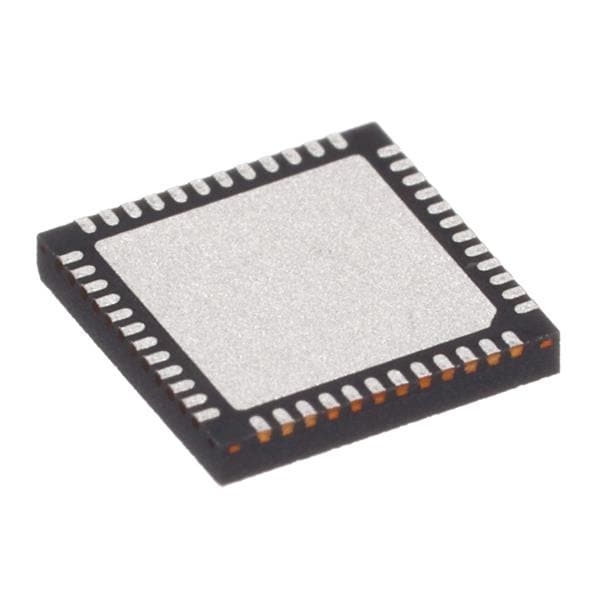
Where this category fits in RF design
Within modern wireless hardware, many circuits rely on more than amplifiers, filters, and switches. Specialized RF ICs are often used to support local oscillator generation, harmonic conversion, signal scaling, and frequency-related processing inside transceivers, test systems, microwave modules, and communication equipment.
This category includes devices that may be selected when the application calls for analog dividers, analog multipliers, or RF frequency multipliers. In practical design work, these parts can help extend available frequency ranges, support mixer and synthesizer paths, or enable signal-chain functions that are not covered by more common catalog groups.
Typical device types you may find here
A large share of the featured products in this category relates to analog dividers and multipliers as well as RF multipliers. These devices are commonly considered when a designer needs to manipulate signal frequency or amplitude relationships as part of a broader RF or microwave subsystem.
Examples in this range include parts such as the Analog Devices HMC204MS8GETR, AD834AQ, HMC917LP3E, and HMC156A, along with RF-focused multiplier options like the HMC188MS8ETR and HMC1105. The catalog also includes representative parts from other established suppliers, such as Broadcom AMMP-6120-TR2, Maxim Integrated MAX2047ETJ+T, and Qorvo TGA4040, which helps buyers compare solutions across different performance targets and integration approaches.
How RF multipliers and dividers are used
RF multipliers are often used to generate higher-frequency outputs from a lower-frequency source. This can be useful in microwave and millimeter-wave designs where direct generation at the target frequency may be less practical or where a stable lower-frequency source is easier to implement.
Analog multipliers and dividers can also appear in modulation, measurement, signal conversion, and control paths. Depending on the system architecture, they may support level processing, frequency planning, or intermediate signal functions inside communication modules, instrumentation, and specialized RF front ends.
In many cases, these parts are selected together with related building blocks such as modulator / demodulator devices or phase detectors and shifters, especially when the design needs controlled signal conversion and phase-aware processing.
Selection factors that matter in procurement
When comparing parts in this category, the first consideration is usually the intended operating frequency range. Some devices are aimed at relatively lower RF bands, while others are designed for microwave or much higher-frequency operation. A part such as HMC188MS8ETR is presented as a passive RF multiplier for GHz-range output, while HMC1105 addresses far higher frequency territory, showing how widely requirements can vary.
Beyond frequency, buyers should also review whether the design calls for an active or passive architecture, what conversion behavior is needed, and how packaging affects assembly. Die form factors, MSOP packages, and SMD options can imply very different integration paths, from lab evaluation and module development to volume production.
It is also worth checking how the selected device interacts with adjacent RF ICs. In some signal chains, functions in this category are paired with a coupler for signal monitoring or distribution, or with RF multiplexers when routing multiple signal paths within a compact wireless design.
Manufacturer landscape and sourcing considerations
Several well-known semiconductor suppliers are relevant in this space, with Analog Devices standing out strongly in the currently highlighted products. Broadcom, Maxim Integrated, and Qorvo also appear in representative listings, reflecting the fact that specialized RF functions are often sourced from vendors with strong microwave and high-frequency design portfolios.
For B2B purchasing teams, this matters because availability, package style, lifecycle status, and project qualification requirements can differ significantly between product families. Even when two parts appear similar at a high level, the best fit may depend on assembly method, target frequency band, board technology, and whether the application is a prototype, test fixture, or production system.
Who typically shops this category
This category is useful for RF design engineers, system architects, and technical buyers working in wireless communications, radar-related development, instrumentation, broadband infrastructure, and high-frequency embedded hardware. It is also relevant for teams maintaining legacy platforms where a specific RF function must be replaced without redesigning the entire signal chain.
Because many of these parts serve a narrow but critical role, sourcing usually starts with a clear electrical objective rather than broad browsing. Buyers often know they need a frequency doubler, an analog multiplier, or a divider function, and then narrow the shortlist based on frequency range, package, and compatibility with surrounding circuitry.
Choosing the right part for your RF signal chain
A practical way to evaluate this category is to begin with the system-level requirement: what signal transformation is needed, at what frequency, and in what package format. From there, it becomes easier to compare whether a device such as AD834AQ suits an analog processing function, or whether an RF-specific multiplier like HMC448, HMC188MS8ETR, or TGA4040 is more appropriate for the intended frequency plan.
Looking at the broader RF IC ecosystem also helps reduce design risk. If the project involves switching, routing, shielding, conversion, or phase management in addition to frequency multiplication or division, reviewing adjacent categories can provide a more complete sourcing path and simplify BOM planning.
Final thoughts
Specialized RF components often make the difference between a workable design and a well-optimized one. This RF Wireless Misc category is best approached as a source for targeted, high-value RF functions that support signal generation, conversion, and control across a wide range of wireless and microwave applications.
By matching the device role to the actual signal-chain requirement, engineers and procurement teams can narrow options more effectively and select parts that fit both electrical goals and production constraints. If your project depends on a specific RF multiplier, divider, or related niche function, this category provides a practical starting point for comparison and sourcing.
Get exclusive volume discounts, bulk pricing updates, and new product alerts delivered directly to your inbox.
By subscribing, you agree to our Terms of Service and Privacy Policy.
Direct access to our certified experts