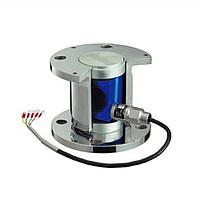
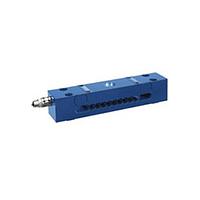
Load cell
Accurate force and weight measurement is critical in packaging, material handling, industrial automation, laboratory systems, and machine design. When an application needs a reliable way to convert mechanical load into an electrical signal, load cell technology is often the preferred sensing method because it supports precise monitoring, control, and data collection across a wide range of operating conditions.
On this category page, buyers and engineers can explore load cell options for integration into weighing equipment, test rigs, process machinery, and OEM assemblies. Whether the goal is stable measurement, repeatable control feedback, or compact sensor integration, the right selection depends on mechanical design, required output, installation constraints, and the broader sensing environment.
Where load cells are typically used
Load cells are used anywhere a system must detect force, tension, compression, or weight with dependable electrical output. Common examples include platform scales, hopper and tank weighing, assembly verification, force monitoring in production lines, and mechanical testing setups. In many B2B environments, they are part of a larger measurement chain that also includes signal conditioning, controllers, displays, PLCs, and data acquisition hardware.
These sensors are also important in automated equipment where consistent process feedback matters. A load cell can help detect overload conditions, confirm applied force during a production step, or support closed-loop control in machinery that handles filling, pressing, lifting, or dispensing operations.
How load cell measurement supports industrial systems
A load cell works by converting a mechanical load into a measurable electrical signal. In practical terms, this allows machines and operators to track what is happening at the point of force application rather than relying on indirect estimation. That is especially valuable in systems where product consistency, safety margins, and process repeatability depend on real measurement rather than approximation.
In modern equipment design, load cells are often considered alongside other sensing technologies. For example, a machine may combine force measurement with environmental sensors to account for ambient conditions, or use pressure and temperature feedback in parallel depending on how the process is controlled. This broader sensor context helps engineers build more stable and better-monitored systems.
Key selection factors before choosing a load cell
The most suitable device is not determined by capacity alone. Buyers usually need to evaluate the measurement range, the type of force involved, mounting arrangement, expected overload conditions, and how the sensor will interface with the rest of the system. Mechanical fit is just as important as electrical compatibility, especially in OEM and retrofit projects.
Other practical considerations include installation space, required accuracy, expected duty cycle, and environmental exposure such as vibration, dust, humidity, or temperature variation. In compact electronics or embedded designs, engineers may also compare load cells with related sensing approaches such as board mount pressure sensors when the application is measuring fluid pressure instead of direct force.
Integration considerations in automation and test applications
In automation projects, a load cell rarely operates as a standalone component. It typically connects to amplifiers, transmitters, indicators, PLC input systems, or dedicated weighing controllers. This means the selection process should include signal handling requirements, calibration workflow, and the level of measurement stability needed in the final machine or instrument.
For test benches and quality systems, engineers may prioritize repeatability and controlled force measurement over simple weight indication. In production automation, response behavior and long-term reliability may carry more weight. Manufacturers such as Honeywell, OMEGA, TE Connectivity, and SIEMENS are often considered in industrial sourcing discussions because they are associated with broad sensing and measurement ecosystems relevant to these applications.
Fit within the wider sensor landscape
Load cells serve a distinct role, but they are often specified as part of a complete sensor strategy. In some systems, force data complements flow, pressure, or temperature measurement to provide a more complete picture of process conditions. For example, dosing or dispensing equipment may combine weighing feedback with flow sensors & pitot tubes when both mass and flow behavior need to be monitored.
Likewise, applications involving thermal drift, compensation logic, or electronics located close to the sensing point may also require supporting devices such as board mount temperature sensors. Thinking in terms of system-level measurement rather than a single component often leads to better long-term performance and easier troubleshooting.
Manufacturer ecosystem and sourcing context
This category may be relevant to buyers working across industrial automation, embedded sensing, process control, and instrumentation projects. Depending on the design approach, sourcing teams may look at brands with established positions in sensors and automation, including OMEGA, Honeywell Test & Measurement, Omron Automation and Safety, Panasonic Industrial Automation, Qorvo, Alps Alpine, and TE Connectivity. The best fit will depend on the application context, not simply brand preference.
When evaluating options, it is useful to align procurement criteria with engineering requirements. That includes checking whether the selected part family supports the intended mounting method, electrical interface, environmental tolerance, and system architecture. For B2B purchasing, this helps reduce redesign risk and supports more efficient qualification.
What to review before ordering
Before shortlisting a load cell, it is worth confirming a few fundamentals: what force needs to be measured, how that force is applied, where the sensor will be mounted, and what output signal the receiving system expects. A clear review of these points can prevent common issues such as undersizing, poor installation geometry, signal mismatch, or unstable readings in the field.
Application requirements, mechanical integration, and signal path should be reviewed together rather than separately. That approach is particularly important in industrial and OEM settings where the sensor must work reliably within a larger machine, test fixture, or control system over time.
Choosing the right path for your project
A well-matched load cell supports more than measurement alone; it contributes to process visibility, equipment protection, and consistent production results. The most effective choice usually comes from balancing capacity, installation method, environmental conditions, and integration requirements instead of focusing on one specification in isolation.
If you are comparing solutions for automation, weighing, or force-monitoring applications, this category is a practical starting point for narrowing down suitable options. Reviewing the broader sensor ecosystem at the same time can also help identify complementary technologies and simplify system design as project requirements become more specific.
Get exclusive volume discounts, bulk pricing updates, and new product alerts delivered directly to your inbox.
By subscribing, you agree to our Terms of Service and Privacy Policy.
Direct access to our certified experts