Heat Exchangers
When enclosure temperatures rise, cooling strategy becomes a reliability issue rather than a convenience. In control cabinets, power electronics, automation panels, and other industrial assemblies, a well-matched heat exchanger helps remove excess heat while supporting stable operation and longer service life for sensitive components.
This category brings together heat exchanger solutions used in thermal management applications where passive transfer and fan-assisted air movement are preferred over more complex cooling methods. It is especially relevant for engineers and buyers looking to manage internal cabinet temperature, reduce thermal stress, and build a more controlled environment around electrical and electronic equipment.
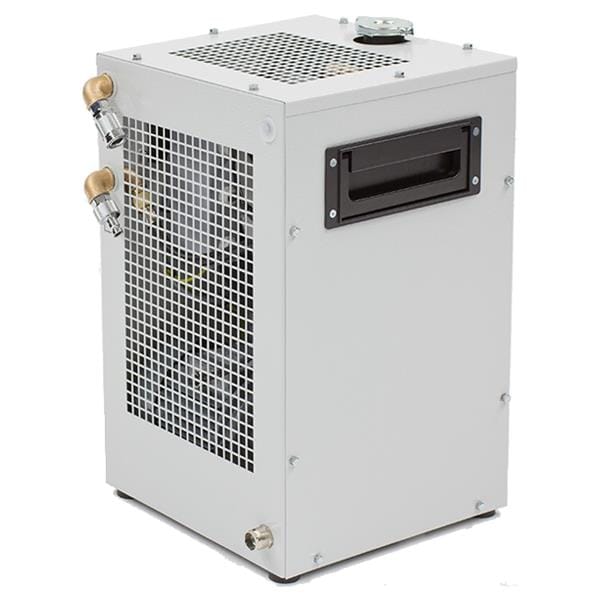
Where heat exchangers fit in thermal management
In many industrial systems, heat does not come from a single source. Drives, power supplies, PLC hardware, communication equipment, and other mounted devices all contribute to a rising internal temperature. A heat exchanger helps move that heat away from the enclosed space without relying on an open-air path that may introduce dust or ambient contamination.
This makes the category useful in projects where temperature control must be balanced with enclosure protection. In broader thermal design, heat exchangers are often selected alongside supporting devices such as fans and blowers or sensing components that monitor temperature behavior over time.
Why heat pipe heat exchangers are commonly selected
A common approach in this category is the heat pipe heat exchanger, which transfers heat efficiently between two separated air paths. In practical terms, this allows heat to leave the enclosure while helping maintain isolation between inside and outside air. That can be valuable in industrial environments where airborne particles, humidity, or process contamination need to be kept away from control electronics.
Compared with simpler airflow-only strategies, this approach is often considered when thermal loads are too high for basic ventilation but the application still benefits from a compact and enclosure-friendly cooling method. It is a practical middle ground for many OEM panels, machine cabinets, and electrical enclosures.
Representative product range in this category
The product selection shown here includes multiple Habor models across different heat dissipation levels, giving buyers a clearer path from small panel cooling needs to larger enclosure loads. Examples include the compact Habor HPW-05A for lighter duty requirements and higher-capacity options such as HPW-50A, HPW-70A, and HPW-100A for applications with greater thermal demand.
The range also includes HPC-series models such as HPC-35A, HPC-50A, HPC-70A, and HPC-100A. Across these examples, the category covers different physical sizes, fan arrangements, and cooling capacities, helping engineers align enclosure space, power availability, and target heat dissipation with the installation requirement.
For buyers evaluating supplier options, Habor is one of the relevant manufacturers represented in this category. The broader thermal ecosystem may also include brands such as Laird Thermal Systems for related cooling and heat transfer needs, depending on the application context.
How to choose the right heat exchanger
The first step is to estimate the enclosure heat load realistically. Oversizing can increase footprint and power consumption, while undersizing may leave hot spots or unstable operating temperatures. Capacity figures such as 5 W/°C, 35 W/°C, 70 W/°C, or 100 W/°C provide a useful starting point, but the final choice should also consider ambient temperature, internal component layout, airflow restrictions, and duty cycle.
Physical dimensions matter just as much as nominal capacity. Some applications need a narrow, tall form factor for side-mount installation, while others can accommodate deeper or wider units. Input voltage options, fan quantity, and service access should also be reviewed early, especially when the exchanger will be installed in a compact cabinet with limited clearance.
It is also good practice to think beyond cooling hardware alone. Thermal control becomes easier when paired with monitoring devices such as industrial temperature sensors, allowing users to verify actual cabinet conditions and improve preventive maintenance planning.
Typical applications and engineering considerations
Heat exchangers in this category are well suited to electrical enclosures, automation cabinets, machine control panels, telecom housings, and other closed compartments where heat buildup can affect reliability. They are particularly useful when the design goal is to reject internal heat while minimizing direct exchange between contaminated ambient air and sensitive electronics.
In real installations, performance depends not only on the exchanger itself but also on enclosure layout. Component spacing, cable routing, obstruction near intake or exhaust areas, and mounting orientation can all influence effective heat transfer. Good thermal design usually combines the exchanger with sensible airflow planning and temperature verification during commissioning.
Related components that support a complete thermal strategy
Heat exchangers rarely work in isolation within a finished system. Designers often combine them with protective and sensing components that help manage thermal events more predictably. For example, thermistors can support temperature feedback and control logic in equipment that must respond dynamically to changing thermal conditions.
Depending on system architecture, engineers may also evaluate thermal cutoffs, board-level sensing, or cabinet airflow accessories as part of the same project. This broader perspective helps ensure the selected heat exchanger supports the full reliability target rather than solving only one part of the heat problem.
Finding a practical match for your enclosure
This category is designed for buyers who need a clearer path from thermal requirement to product shortlist. Whether the project calls for a compact unit like the HPW-05A, a mid-range model such as the HPW-35A or HPC-35A, or larger-capacity options in the 70 to 100 W/°C range, the key is to match cooling capacity, installation space, and operating conditions with the actual enclosure environment.
A well-chosen enclosure cooling solution helps protect electronics, reduce thermal drift, and support more stable day-to-day operation. Reviewing capacity, dimensions, voltage compatibility, and system layout together will make it easier to identify the right industrial heat exchanger for your application.
Get exclusive volume discounts, bulk pricing updates, and new product alerts delivered directly to your inbox.
By subscribing, you agree to our Terms of Service and Privacy Policy.
Direct access to our certified experts