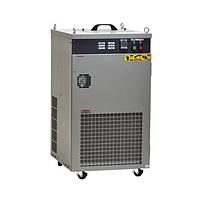
Recirculating Chillers
Stable liquid temperature control is often critical when cooling analytical instruments, process equipment, laser systems, or laboratory setups that cannot rely on simple ambient air cooling. In these environments, recirculating chillers help remove heat from the load, circulate conditioned fluid, and maintain repeatable operating conditions across longer production or test cycles.
This category focuses on recirculating cooling and temperature-control equipment used in thermal management applications where flow, cooling capacity, temperature range, and system protection matter as much as the refrigeration unit itself. The range here includes compact and higher-capacity models, options for wider temperature control, and supporting pump-related components for compatible systems.
Where recirculating chillers fit in thermal management
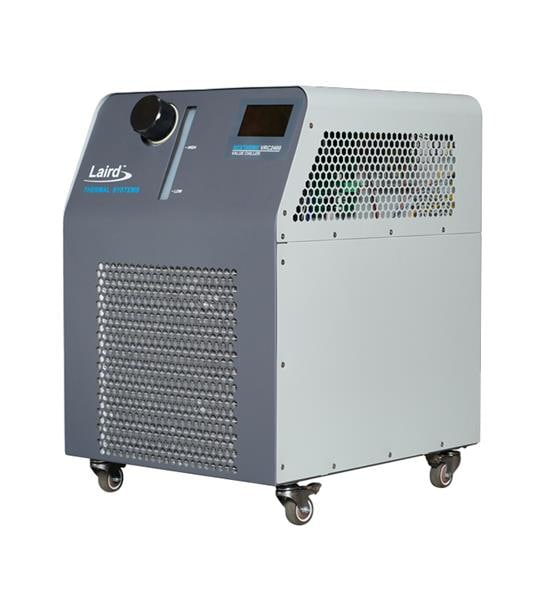
A recirculating chiller is designed to cool and move a heat-transfer fluid through external equipment, then bring the warmed fluid back for temperature reduction before recirculation. This makes it suitable for applications that need more controlled and consistent cooling than passive heat sinks or forced air can provide.
Compared with simpler thermal hardware such as fans and blowers, these systems are better suited to enclosed processes, higher heat loads, or installations where the heat source is physically separated from the cooling unit. In many setups, fluid temperature feedback may also be monitored with industrial temperature sensors to improve process visibility and control.
Available cooling and temperature-control profiles
The products in this category cover several operating windows. Some models are intended primarily for cooling around the +5℃ to +25℃ or +7℃ to +25℃ range, which is common for equipment cooling, circulation loops, and general process stabilization. Other units support lower or broader ranges such as -10℃ to +25℃ or even -10℃ to +80℃, making them relevant where both cooling and elevated temperature control are needed.
Control performance also varies by model. Certain units are based on compressor On-Off control with typical accuracy around ±2.0℃, while others use PID heater control to achieve tighter control such as ±0.5℃. For buyers comparing models, that difference can be more important than nominal cooling power alone, especially when process repeatability or sample temperature stability is a priority.
Representative TAITEC models in this category
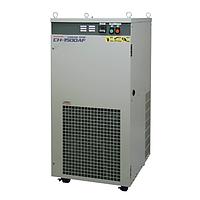
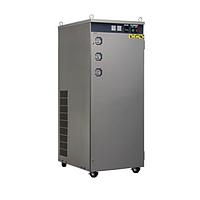
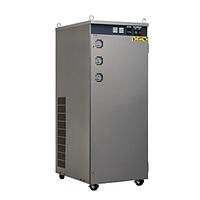
Several listed products come from TAITEC, covering a useful spread of cooling capacities and installation types. For example, the TAITEC CHA-900, CHA-1500, and CHA-2200 illustrate a progression from smaller to higher-capacity circulation cooling, while the CHW-1500 and CHW-2200 provide alternatives for systems that require primary cooling water in addition to the circulating loop.
For applications needing a wider temperature band, models such as the TAITEC CH-151BF and CH-802B extend operation from -10℃ to +80℃. If the requirement is focused on low-temperature cooling, the TAITEC CH-601A provides a range down to -10℃. At the larger end of the category, units such as the TAITEC CH-6000W and CH-7500W are positioned for heavier thermal loads, with substantially higher cooling capacity and flow performance than compact benchtop-style systems.
How to choose the right recirculating chiller
The first selection point is the actual temperature range required by the application. A system intended only to hold coolant near room temperature has different needs from one that must support sub-ambient cooling or combined heating and cooling. It is also important to consider ambient installation conditions, because chiller performance depends in part on surrounding temperature and available heat rejection.
Next, evaluate cooling capacity at the relevant circulation temperature, not just the compressor rating. A model may have enough nominal power on paper but still fall short at the operating point that matters in practice. Flow rate, discharge pressure, tank volume, and pipe connection size should also be matched to the external load, tubing layout, and pressure drop of the whole loop.
Finally, check utility requirements and protection features. Power supply format, current demand, and space constraints can affect installation planning. Built-in alarms for water shortage, overload, abnormal temperature, or refrigerant-related conditions are also valuable because they help protect both the chiller and the connected process equipment.
System components and supporting equipment
Not every cooling loop is built around a standalone refrigeration unit alone. Some systems use compatible pump modules or external accessories as part of the final configuration. A product such as the TAITEC P-320, for example, is better understood as a pump unit for specific compact models rather than a complete chiller by itself.
This category also includes equipment that supports broader thermal process control. The TAITEC TEX-25A, listed as a heat exchanger, is relevant for applications involving high-temperature circulating fluid management rather than conventional low-temperature cooling alone. In more instrumented systems, temperature feedback may be paired with sensing devices such as thermistors when designers need additional monitoring points within the thermal loop.
Typical application considerations for engineers and buyers
In laboratory and industrial settings, recirculating chillers are often selected to protect temperature-sensitive equipment, improve process consistency, and reduce thermal drift over time. Common considerations include whether the load is continuous or intermittent, how quickly the system must recover after heat spikes, and whether the process requires a stable reservoir or more dynamic circulation performance.
Maintenance planning is also part of proper selection. Buyers should review the circulating fluid path, water tank size, service access, and safety notifications that may simplify routine operation. For water-cooled models, the availability and quality of primary cooling water should be confirmed early, since that directly affects whether a water-cooled design is practical for the facility.
Choosing within this category with more confidence
If you are comparing recirculating chillers for equipment cooling, process stabilization, or broader thermal control, the best approach is to start with the operating temperature window, then narrow the list by cooling capacity, flow characteristics, installation utilities, and protection functions. That usually leads to a better fit than choosing by size or compressor output alone.
This category brings together compact, mid-range, and higher-capacity options, along with compatible supporting components, so it is easier to compare solutions for different thermal loads and control requirements. When the application has strict temperature stability, unusual fluid routing, or utility constraints, reviewing the detailed product pages is the most practical next step before final selection.
Get exclusive volume discounts, bulk pricing updates, and new product alerts delivered directly to your inbox.
By subscribing, you agree to our Terms of Service and Privacy Policy.
Direct access to our certified experts