RF Test Cables
Reliable signal measurements depend on more than the instrument itself. In RF and microwave setups, cable performance has a direct impact on amplitude stability, phase behavior, repeatability, and overall confidence in the result. That is why selecting the right RF Test Cables matters in laboratory validation, production testing, antenna measurement, and high-frequency system troubleshooting.
This category brings together cable assemblies designed for measurement environments where impedance control, connector quality, mechanical durability, and frequency range all need careful attention. Whether the priority is routine bench testing, ruggedized use, or higher-frequency microwave applications, the right cable helps preserve measurement integrity from the instrument port to the device under test.
Where RF test cables fit in a measurement setup
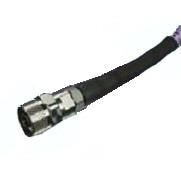
RF test cables are used to connect instruments such as network analyzers, spectrum analyzers, signal generators, and related test ports to fixtures, adapters, or DUT interfaces. Unlike general-purpose coaxial leads, these assemblies are typically chosen with tighter attention to impedance consistency, frequency capability, connector interface, and handling stability.
In practical terms, the cable can influence insertion loss, return loss, and repeatability during reconnection or repeated flexing. This becomes increasingly important as test frequencies move from standard RF ranges into microwave and millimeter-wave applications, where even small mechanical or interconnect variations can affect the measurement chain.
Key selection points before you buy
A useful starting point is the required frequency range. In this category, representative options span common RF and microwave test needs, from 18 GHz assemblies up to very high-frequency solutions such as 70 GHz or even 110 GHz models. Matching the cable to the actual instrument and DUT bandwidth helps avoid unnecessary cost while still supporting the required measurement margin.
Connector interface is equally important. Different applications may call for N, 3.5 mm, 2.92 mm, 2.4 mm, 1.85 mm, 1 mm, or triaxial terminations depending on the instrument port and test objective. Length, flexibility, and cable construction also matter: shorter cables can help reduce loss, while ruggedized or armored constructions are often preferred where cables are moved frequently or used in harsher environments.
Examples across frequency ranges and cable styles
For general high-frequency bench use, products such as the Gore 0SZKUZKU024.0 support measurements up to 18 GHz with N male connectors, while the Gore 0RD01D01012.0 provides a 3.5 mm to 3.5 mm option up to 26.5 GHz. These kinds of assemblies are commonly considered when users need a practical balance between frequency capability and everyday lab handling.
When the application moves higher, cables such as the Gore 0K0CJ0CQ036.0 and HUBER+SUHNER PMASF550S/11SK/11SK/24in illustrate 40 GHz-class solutions using precision 2.4 mm or 2.92 mm interfaces. For more demanding environments, the HUBER+SUHNER ST18A/11N468/11N468/3000mm is notable for heavy-duty outdoor or harsh-environment measurement use, while the Rosenberger APSK-0F-00305-A9-1P represents an armored, phase-matched style suited to applications where cable robustness and consistency are important.
High-frequency and precision measurement considerations
As frequency increases, cable and connector quality become more critical. Interfaces such as 2.92 mm, 2.4 mm, 1.85 mm, and 1 mm are commonly selected for microwave and millimeter-wave work because they support higher operating ranges than larger connector families. In these environments, users often pay close attention not just to frequency rating, but also to repeatable mating, reduced mechanical stress, and stable behavior under movement.
Examples in this category reflect those needs. The HUBER+SUHNER ST110/11PC10/21PC10/18in reaches 110 GHz in a Sucotest configuration, and selected Rosenberger and Gore models support 40 GHz, 50 GHz, or 70 GHz operation. For specialized instrument connections, the KEYSIGHT 16494A-002 triaxial cable is relevant where DC bias and triaxial interfacing are part of the test arrangement rather than standard coax-only measurement.
Choosing by application instead of only by specification
For routine bench verification, users often prioritize manageable length, stable 50 Ohm performance, and connector compatibility with common instrument ports. In these cases, a standard or ruggedized cable may be sufficient if the setup is not repeatedly flexed or exposed to demanding conditions. If you are comparing broader cable options for non-RF systems, related categories such as computer cables or Ethernet and networking cables serve very different connectivity requirements.
For production fixtures, calibration workflows, or repetitive mating cycles, users may look for ruggedized, armored, or phase-matched constructions to improve consistency over time. Outdoor test work or harsher industrial conditions may also justify heavier-duty designs. The right choice depends on how the cable will actually be handled, not just the maximum frequency printed on the datasheet.
Manufacturers commonly considered in this category
This range includes well-known names used in RF and microwave interconnect applications. Gore is often associated with ruggedized high-frequency test assemblies, while HUBER+SUHNER is frequently specified for precision microwave and harsh-environment test leads. Rosenberger also appears in this category with standard and armored test cable options suited to precision connector systems.
In addition, KEYSIGHT is relevant where the cable is part of a broader instrument-specific measurement setup. Other manufacturers listed within the wider catalog may support adjacent interconnect and test needs, but selection should always start with the actual interface type, frequency range, and mechanical demands of the application.
Common questions when selecting RF test cables
Do higher-frequency cables always improve measurement quality?
Not necessarily. A higher-frequency cable may be appropriate for future margin or specialized setups, but the best choice is usually the one that matches the instrument interface, required bandwidth, handling conditions, and accuracy expectations without adding unnecessary complexity.
Why does connector type matter so much?
Connector family affects frequency capability, mating precision, and compatibility with test ports and adapters. Choosing the wrong interface can limit performance or create avoidable mismatch and wear issues in the measurement chain.
When should ruggedized or armored cable designs be considered?
They are often useful in production environments, mobile test setups, repeated flexing applications, or outdoor measurements where mechanical protection and more stable long-term handling are important.
For RF measurement work, cable selection is part of the test strategy, not just an accessory choice. Reviewing frequency range, connector style, cable construction, and application conditions together will help narrow the most suitable RF test cable for your setup and support more dependable results over time.
Get exclusive volume discounts, bulk pricing updates, and new product alerts delivered directly to your inbox.
By subscribing, you agree to our Terms of Service and Privacy Policy.
Direct access to our certified experts