
Magnet Wire
Reliable winding performance starts with the right conductor. In transformers, motors, coils, relays, solenoids, and other electromechanical assemblies, magnet wire plays a direct role in insulation integrity, thermal endurance, and overall manufacturability. Choosing the right wire type is not only about conductor size, but also about temperature capability, insulation material, spool length, and how the wire will behave during winding and termination.
This category focuses on single-conductor magnet wire options suited for precision winding and general electrical manufacturing. With a range of AWG sizes and insulation systems, these products support applications where compact coil design, stable electrical performance, and dependable insulation are important throughout production and service life.
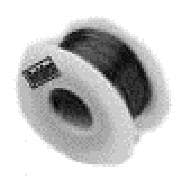
Where magnet wire is commonly used
Magnet wire is typically selected for components that require tightly wound conductive turns in a limited space. Common use cases include motor windings, transformer coils, inductors, solenoids, voice coils, and other wound devices where copper conductor and thin insulation help maximize the number of turns within a defined geometry.
Because these applications often combine electrical, thermal, and mechanical demands, buyers usually compare more than just gauge. Insulation chemistry, conductor diameter, winding flexibility, and operating temperature all affect how well the finished assembly performs over time. For broader cabling needs outside winding applications, related categories such as hook-up wire and temperature wire and cable may also be relevant depending on the installation environment.
Key characteristics to evaluate before buying
A practical starting point is wire gauge. Smaller gauges such as 34 AWG or 36 AWG are often considered when space is limited and a high turn count is needed, while larger sizes such as 14 AWG, 16 AWG, 18 AWG, or 20 AWG may be more suitable when higher current handling and stronger mechanical robustness are priorities.
Temperature rating is another major factor. In this category, available products include options rated up to +130 C and others up to +200 C, which can be important in heat-generating assemblies or in applications with elevated ambient temperatures. Buyers should also pay attention to insulation material, since PUR/Nylon and Polyester constructions can influence processing, abrasion resistance, and thermal suitability.
Product range in this category
The listed range includes solid copper magnet wire from Belden, covering a broad span of conductor sizes and spool lengths. Examples include finer wire such as Belden 8057 Class 200 34AWG 1C 4060ft 1/2 POUND SPOOL and Belden 8058 Class 200 36AWG 1C 6400ft 1/2 POUND SPOOL, both useful when compact winding layouts call for very small outside diameters.
For heavier winding needs, options such as Belden 8073 Class 200 14AWG 1C 80FT 1 POUND SPOOL, Belden 8074 Class 200 16AWG 1C 126FT 1 POUND SPOOL, and Belden 8075 Class 200 18AWG 1C 199FT 1 POUND SPOOL provide larger conductor sizes with higher-temperature insulation systems. Mid-range selections like Belden 8049 18AWG, Belden 8050 20AWG, and Belden 8052 24AWG help cover more general coil and winding requirements across prototyping, maintenance, and production work.
How insulation system and temperature class affect performance
The insulation layer on magnet wire is thin compared with many general-purpose cable types, but it is critical to long-term reliability. It helps maintain turn-to-turn insulation while still allowing dense winding. In practice, the insulation system needs to match both the electrical stress and the thermal conditions of the finished equipment.
Within this category, some products use PUR/Nylon insulation, while others use Polyester insulation. Without overgeneralizing beyond the product data, this gives buyers useful flexibility when comparing winding processes and thermal requirements. If your application involves sustained elevated temperatures, repeated thermal cycling, or compact coil packing, the insulation and temperature class should be checked as carefully as the conductor size.
Choosing the right spool and conductor size for production
Spool length matters more than it may appear at first glance. Shorter lengths can be practical for repair work, sampling, prototype builds, or low-volume assembly, while longer spools are often preferred in repetitive manufacturing to reduce changeovers and handling interruptions. For example, a product like Belden 8083 Class 200 34AWG 1C 7860FT 1 POUND SPOOL may fit high-turn applications where long continuous wire runs are useful.
By contrast, larger gauges naturally come on shorter lengths because of conductor size and spool mass. That makes products such as Belden 8076 Class 200 20AWG 1C 315FT 1 POUND SPOOL or Belden 8074 Class 200 16AWG 1C 126FT 1 POUND SPOOL more aligned with designs that prioritize conductor cross-section over very high turn counts. For installations that require a different cable construction rather than winding wire, you may also want to review specialized cables for adjacent application needs.
What to consider for sourcing and compatibility
When selecting magnet wire for OEM production, maintenance stock, or engineering builds, it helps to review the complete electrical and mechanical context of the assembly. Typical checkpoints include AWG, conductor material, insulation type, outside diameter, thermal class, and the intended winding method. Even small differences in diameter can affect slot fill, bobbin capacity, and final coil resistance.
It is also useful to think beyond the wire itself. Storage conditions, handling during winding, stripping or termination method, and how the wound component will be secured in the final assembly all influence results. Related accessories such as cable ties may be part of the broader assembly process, although the wire selection itself should remain driven by the winding application.
Finding a suitable magnet wire option
This category is structured to help buyers compare magnet wire by gauge, insulation material, spool length, and temperature capability without having to sort through unrelated cable types. Whether the requirement is fine-gauge wire for compact coils or heavier conductors for more demanding electrical loads, the available Belden range provides a practical starting point for technical evaluation.
If you are narrowing down options, begin with the winding geometry and operating temperature, then confirm the AWG and insulation system that best fits the design. A well-matched magnet wire choice supports easier processing, more predictable coil construction, and better alignment with the thermal and electrical demands of the final equipment.
Get exclusive volume discounts, bulk pricing updates, and new product alerts delivered directly to your inbox.
By subscribing, you agree to our Terms of Service and Privacy Policy.
Direct access to our certified experts