Board Mount Motion & Position Sensors
Precise movement feedback is essential in embedded control, industrial electronics, robotics, and compact equipment design. When position, angle, speed, or directional change must be detected directly on a PCB, Board Mount Motion & Position Sensors provide a practical way to bring sensing closer to the control logic while keeping the system compact and responsive.
These components are commonly selected for applications where space, signal integrity, and integration matter as much as the sensing function itself. On this page, buyers and engineers can explore board-level sensor options for motion and position monitoring, along with a clearer view of how to compare device types, integration roles, and application fit.
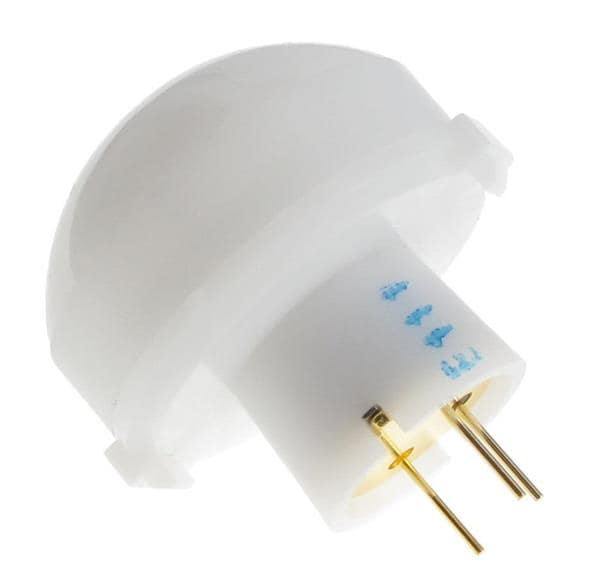
Where board-mount sensing fits in modern designs
Board-mount devices are used when motion or position information needs to be captured directly within an electronic assembly rather than through a larger standalone sensor package. This is common in control boards, handheld instruments, smart devices, compact industrial nodes, and embedded monitoring systems.
Depending on the design, these sensors may support angular detection, movement tracking, orientation awareness, limit monitoring, or signal conditioning between a sensing element and a processor. For projects that need broader motion measurement options, it can also be useful to compare adjacent technologies such as distance sensors or gyroscopes as part of the overall sensing architecture.
Typical functions within a board-level motion and position system
This category can support more than one sensing role. In some circuits, the device directly detects position or movement. In others, it works as a sensor interface, translating, conditioning, or managing the signal from a detector before that data reaches the MCU, processor, or control IC.
That distinction matters in engineering and procurement. A board-level motion design may require the sensing element itself, a dedicated interface IC, and supporting processing hardware. Several listed products from Maxim Integrated, including the MAX9925AUB+ and MAX31914AUI+T, illustrate the interface side of the ecosystem, where signal handling and integration are often just as important as the detector.
How to evaluate device selection
The right part depends on the job the circuit must perform, not just the product title. Engineers usually start by defining what must be measured: linear position, rotation, orientation, presence of motion, or a derived signal from another transducer. From there, interface requirements, package constraints, supply rails, and controller compatibility become the next filters.
Power conditions are also relevant in compact electronics. For example, the Maxim Integrated MAX6691MUB+ is listed with a 3.3|5V supply range, which reflects the kind of practical compatibility engineers often need when integrating with mixed-voltage embedded systems. In other cases, application-specific interfaces matter more, such as the Microchip Technology RE46C165S16F, identified here as a photoelectric smoke detector interface, showing how detector-interface devices can serve specialized monitoring functions in broader sensing and safety designs.
Manufacturer landscape and design preference
Supplier choice often reflects existing platform standards, qualification history, and preferred integration style. In this category, recognized manufacturers such as Analog Devices, Honeywell, Infineon, Allegro MicroSystems, ams OSRAM, Bourns, Diodes Incorporated, Maxim Integrated, and Microchip Technology help define the available design approaches across board-level sensing and interface electronics.
Some buyers prioritize long-term industrial familiarity, while others focus on package density, mixed-signal integration, or embedded algorithm support. Within the listed products, Maxim Integrated appears prominently with parts such as MAX32664GWEC+T, MAX32664GTGD+T, and MAX32664GTGB+, which can be useful references when evaluating sensor-interface and processing-oriented solutions for compact electronic assemblies.
Related device types in the same sensing workflow
Board-level motion and position monitoring is rarely isolated. Many systems combine multiple sensing technologies to improve reliability or enrich the data available to the controller. A motion-sensitive PCB may work alongside inertial, positional, or vibration-related devices depending on whether the goal is stability monitoring, user interaction, machine state detection, or predictive diagnostics.
For that reason, engineers comparing this category may also review industrial accelerometers for vibration and dynamic movement analysis, or inclinometers when tilt and angular reference are more important than linear displacement. Looking across these related categories helps avoid selecting a part that solves only one layer of the measurement problem.
Applications that benefit from compact board integration
Board-mount integration is especially useful where wiring must be reduced, response time must stay low, or the sensing electronics need to remain inside a protected enclosure. Typical use cases include embedded control modules, user-interface hardware, appliance electronics, portable instrumentation, smart building devices, and compact industrial controllers.
In many of these applications, motion or position data is only one part of a larger signal chain. Interface-focused devices such as the MAX31785ETL+T or MAX31850TATB+T may be considered when the design needs reliable communication between sensing points and the main control platform. The result is a cleaner architecture in which sensing, conversion, and supervisory functions are handled close to the board.
What B2B buyers should check before ordering
For purchasing teams, a successful selection process usually starts with matching the electrical and application requirements to the actual system role of the part. Confirm whether the item is a direct sensing device, an interface IC, or a specialized detector-support component. This avoids common sourcing issues where a product appears to belong to a sensor family but actually serves a conditioning or protocol role.
It is also worth reviewing operating voltage, target application, assembly format, and expected integration path with the host controller. When comparing products across manufacturers such as Maxim Integrated and Microchip Technology, the most useful evaluation criteria are often system compatibility and design intent rather than brand preference alone.
Choosing the right board-level solution
The most effective board-level motion and position design comes from selecting parts that match the measurement task, the PCB environment, and the rest of the signal chain. Whether the requirement is direct movement detection, position feedback, or an interface stage that supports a detector elsewhere in the design, this category helps narrow the field to solutions intended for compact electronic integration.
As you compare options, focus on how each device contributes to the full sensing architecture rather than viewing it as an isolated component. That approach makes it easier to choose a part that supports stable performance, cleaner integration, and a more scalable design for industrial and embedded applications.
Get exclusive volume discounts, bulk pricing updates, and new product alerts delivered directly to your inbox.
By subscribing, you agree to our Terms of Service and Privacy Policy.
Direct access to our certified experts