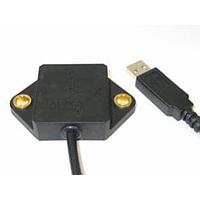
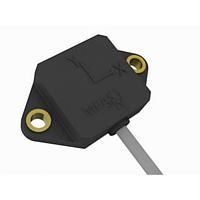
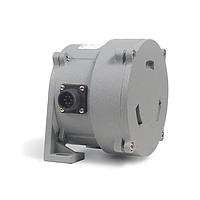
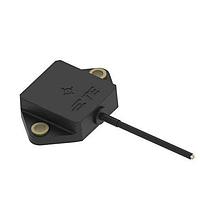
Inclinometers
Reliable angle measurement is essential in machines that must stay aligned, level, or safely positioned during operation. In industrial environments, inclinometers are used to monitor tilt and angular position so control systems, operators, and maintenance teams can detect movement early and keep equipment working within the intended range.
On this category page, you can explore inclinometer solutions used in automation, mobile equipment, material handling, and position monitoring applications. These sensors are typically selected when a system needs stable feedback on inclination relative to gravity, whether for single-axis or multi-axis measurement, safety interlocks, or continuous machine condition monitoring.

Where inclinometer sensors are used
Inclinometers are common in equipment where tilt directly affects performance, stability, or process accuracy. Typical use cases include lifting systems, mobile machinery, platforms, conveyors, structural monitoring, and industrial assemblies that must maintain a known angular position during movement or setup.
Compared with devices that focus on speed, vibration, or linear distance, an inclinometer is designed specifically for tilt measurement. That makes it useful when the key question is not how fast something moves, but whether it is level, within a permitted angular window, or drifting away from its expected position over time.
How inclinometers fit into a motion and position sensing system
In many applications, angle data is only one part of a broader sensing architecture. Engineers often combine inclinometer feedback with other technologies depending on the machine design, control logic, and operating environment. For example, systems that also need rotational behavior analysis may be evaluated alongside gyroscopes, while applications requiring range detection may also involve distance sensors.
This broader context is important during specification. A tilt sensor can provide highly relevant position information, but the best result usually comes from matching the sensing principle to the real operating requirement: static angle, dynamic motion, vibration exposure, mounting orientation, and the way the signal will be used inside the PLC, controller, or monitoring system.
What to consider when selecting an inclinometer
The first selection step is defining the measurement task clearly. Buyers typically compare axis configuration, mounting constraints, required output type, environmental robustness, and whether the application involves slow static positioning or more dynamic motion. Installation space, connector preferences, cable routing, and system integration requirements also influence the final choice.
It is also worth considering the operating conditions around the sensor. Industrial installations may expose the device to shock, vibration, dust, washdown, or temperature variation, so the mechanical design and housing style matter as much as the sensing function itself. In projects where machine movement includes vibration monitoring or shock analysis, related technologies such as industrial accelerometers may also be relevant during system design.
Representative products in this category
This range includes industrial models from established manufacturers used across automation and sensing applications. Examples include Pepperl+Fuchs devices such as the INX360D-F99-I2E2-V15-EX, INY030D-F99-B20-V15, INY360D-F99-B16-V15, and INY120D-F99-B20-V15, which illustrate the variety of configurations available for different installation and interface requirements.
Other notable options in the category include SICK 1123685 and SICK 1094488 inclinometers, as well as the Kubler 8.IN81.1811.121. These product examples help show the breadth of the category rather than implying a single universal fit; the right selection depends on how the sensor will be mounted, what type of signal the control system expects, and how demanding the application environment is.
Leading manufacturers and technology landscape
This category brings together solutions from well-known industrial and electronic sensing brands. Depending on the application, buyers may encounter manufacturers such as Pepperl+Fuchs, SICK, Kubler, Analog Devices, Murata Electronics, Sensata, STMicroelectronics, TE CONNECTIVITY SENSORS, and Amphenol Piher. Some suppliers are more visible in rugged industrial sensing, while others are also recognized for sensor technologies used in embedded or board-level designs.
That distinction matters when comparing products for OEM equipment, machine retrofits, or integrated control assemblies. If your project requires compact embedded sensing rather than a finished industrial housing, it can also be useful to review adjacent options like board mount motion & position sensors as part of the evaluation process.
Typical buying priorities for B2B applications
For most industrial buyers, inclinometer selection is less about browsing a long list of models and more about reducing integration risk. Key priorities often include signal compatibility, mounting practicality, repeatable measurement behavior, and confidence that the sensor can operate reliably in the target environment. This is especially important in machinery where angle data feeds into alarms, safety logic, or automatic positioning functions.
Procurement and engineering teams also tend to look for consistency across the wider sensor ecosystem. Choosing from established manufacturers can simplify documentation, support, and long-term sourcing, particularly when the inclinometer is only one element in a machine that also uses other motion or position feedback devices.
Finding the right inclinometer for your application
If you are comparing products on this page, start with the application itself: what needs to be measured, how the sensor will be installed, and how the output will be used. From there, it becomes easier to narrow the range to products that match the mechanical layout and control strategy of the equipment.
This category is intended to support that process with a focused selection of industrial tilt sensors from recognized manufacturers. Whether you are specifying a new machine, replacing an installed device, or building out a broader position monitoring system, reviewing the available inclinometer options in context will help you identify a more suitable and practical fit.
Get exclusive volume discounts, bulk pricing updates, and new product alerts delivered directly to your inbox.
By subscribing, you agree to our Terms of Service and Privacy Policy.
Direct access to our certified experts