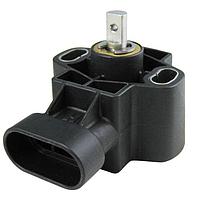
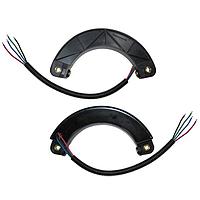
Industrial Motion & Position Sensors
Precise machine movement depends on reliable feedback. In industrial automation, that feedback often comes from Industrial Motion & Position Sensors that help control systems track orientation, acceleration, angular rate, displacement, and position changes in real operating conditions.
This category brings together sensing technologies used in motion monitoring, machine control, embedded navigation, and equipment diagnostics. Whether the goal is improving stability in a mobile platform, measuring dynamic behavior in a mechanism, or integrating motion awareness into an electronic design, these devices support more accurate and responsive systems.
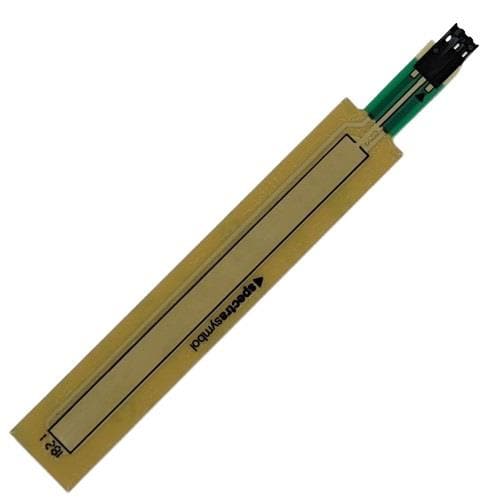
Where these sensors fit in industrial systems
Motion and position sensing is important anywhere a system needs to understand how something moves or how it is oriented. In industrial environments, this can include robotics, machine tools, automated handling equipment, vibration monitoring, mobile machinery, and control electronics that must react to changing movement conditions.
Some applications require a single sensing principle, while others benefit from combining multiple inputs. For example, systems that need richer motion feedback may use solutions related to gyroscopes or complementary sensor technologies to improve measurement quality and support more stable control behavior.
Common device types in this category
This category covers products used to detect or evaluate motion-related variables in industrial and embedded designs. Depending on the application, engineers may look for IMUs, accelerometer-based devices, or evaluation platforms that make it easier to test sensing performance before full integration.
Representative products in this range include Honeywell 3010H20 IMUs, Honeywell M3024 IMUs, Honeywell 724382 IMUs, Analog Devices ADIS16228CMLZ IMUs, and the Analog Devices ADIS16228/PCBZ evaluation board. These examples illustrate the variety of integration levels available, from ready-to-use inertial sensing components to development-oriented hardware for validation and prototyping.
In applications focused more specifically on acceleration measurement, products such as the Analog Devices ADXL001-70BEZ also help show how industrial motion sensing can extend beyond one device format. For buyers comparing adjacent technologies, it can also be useful to review dedicated industrial accelerometers when acceleration is the primary variable of interest.
Why IMUs are widely used in motion monitoring
An inertial measurement unit combines multiple sensing functions to provide a broader picture of motion. In practical terms, IMUs are often selected when a system needs to track dynamic behavior rather than a single static parameter. This makes them relevant for stabilization, navigation support, movement analysis, and feedback loops that depend on more than one axis of information.
Within this category, Honeywell and Analog Devices are notable names because the listed products include multiple IMU options and related evaluation hardware. Devices such as Honeywell M3050A20, Honeywell 727603-03, Honeywell 726324, and Analog Devices ADXRS453XBRGZ show the range of motion-sensing solutions engineers may consider when balancing integration needs, development workflow, and system architecture.
How to choose the right sensor for your application
The best starting point is the measurement objective. Some projects need to detect acceleration, shock, tilt, or angular movement, while others require combined motion data for control or analysis. Clarifying whether the system needs continuous feedback, event detection, orientation awareness, or prototype evaluation helps narrow the product type quickly.
It is also useful to consider the installation environment, electrical interface, packaging constraints, and whether the design team needs a production component or a board for testing. If the application is strongly tied to angle and tilt measurement, related technologies such as inclinometers may offer a better fit for that specific use case.
- Measurement target: acceleration, angular rate, orientation, or combined inertial data
- Integration stage: evaluation, prototyping, or production deployment
- Mechanical constraints: mounting style, space, and environmental exposure
- System requirements: signal compatibility, power conditions, and control response needs
Examples from leading manufacturers in this range
Honeywell appears prominently in this category with several IMU references, including 3010H20, 724382, 725782, 726324, 727603-03, M3024, M3050A20, and 031-00445-0000. These products are relevant for buyers looking at established inertial sensing options for industrial and embedded applications.
Analog Devices is also well represented, with parts such as ADIS16228CMLZ, ADXRS453XBRGZ, ADXL001-70BEZ, and the ADIS16228/PCBZ evaluation board. Together, these examples highlight a mix of deployable sensors and development tools that can support both design validation and final system integration.
Understanding the broader motion sensing ecosystem
Industrial motion sensing rarely exists in isolation. Engineers often compare several sensor categories before finalizing a design, especially when they need to distinguish between translational movement, angular rotation, tilt, proximity-based position detection, or board-level embedded sensing.
That is why this category is often reviewed alongside related solutions such as board-level motion devices, gyroscopic sensing, and dedicated acceleration technologies. A broader comparison can help buyers avoid over-specifying an IMU when a simpler device is enough, or under-specifying a project that actually needs more complete multi-axis feedback.
Practical buying considerations for B2B procurement
For engineering teams and industrial buyers, selecting the right product is not only about sensing principle. It also involves availability, design compatibility, validation effort, and how easily the part can be integrated into the wider control or monitoring system. Evaluation boards can be especially useful when teams need to shorten development cycles and verify behavior before committing to a production design.
When comparing options in Industrial Motion & Position Sensors, it is worth reviewing whether the requirement is for a focused sensor, a broader inertial module, or a category adjacent to motion monitoring. Taking that structured approach usually leads to better component selection and fewer redesign issues later in the project.
Final thoughts
Choosing motion feedback components starts with understanding the behavior you need to measure and the level of sensing complexity the application actually requires. This category is designed to support that process, with industrial motion and inertial sensing options from recognized manufacturers and product examples suited to both evaluation and deployment.
If you are comparing IMUs, accelerometer-based devices, or related motion sensing technologies, reviewing the sensing objective, integration path, and operating environment will make selection more efficient. A well-matched sensor can improve control accuracy, system visibility, and long-term reliability across a wide range of industrial designs.
Get exclusive volume discounts, bulk pricing updates, and new product alerts delivered directly to your inbox.
By subscribing, you agree to our Terms of Service and Privacy Policy.
Direct access to our certified experts