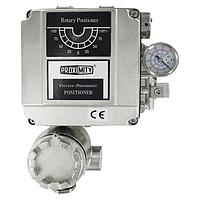
Other Motion and Position Monitor
In many industrial systems, the hardest devices to source are not the standard sensors everyone searches for first, but the specialized components that complete a reliable monitoring setup. This category brings together other motion and position monitor products used to detect travel, confirm equipment status, and provide clear position feedback in applications where valves, actuators, and moving assemblies must be monitored accurately.
These products are especially useful when a project requires a compact switch output, a rugged visual indicator, or a position-monitoring device designed for weatherproof or hazardous locations. Rather than serving as a single narrow product type, this category supports the broader motion and control ecosystem with devices that help translate mechanical movement into usable status information for operators, control panels, and automation systems.
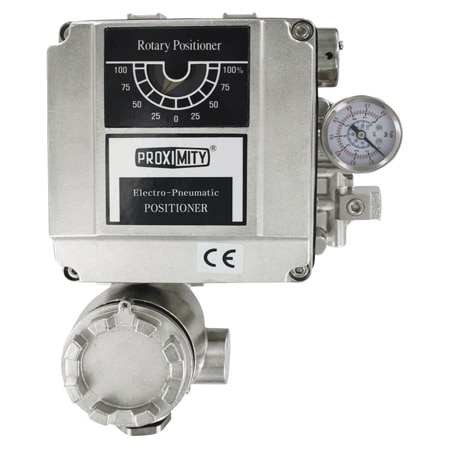
Where these devices fit in industrial monitoring
Position monitoring is a practical requirement across process plants, utilities, OEM machinery, and automated handling systems. Operators often need to know whether a valve is open or closed, whether an actuator has reached its intended travel, or whether a moving part has entered a defined sensing zone. In those cases, specialized monitors fill the gap between the mechanical asset and the control system.
This category is relevant for users who may also be comparing products from related groups such as motion and position sensors or application-specific feedback hardware. The difference is that the products here often focus on status indication, switch-based confirmation, or environmental durability rather than only continuous position measurement.
Typical product types included in this category
A common example is the hazardous-area position sensor, such as the Dwyer DT1060 and DT1160. These units are built for short-range sensing and are suited to installations where sealed construction, repeatable switching, and compatibility with demanding environments matter as much as the sensing function itself. Their role is straightforward: detect a defined position and provide a switch output that can be used for interlocks, alarms, or machine state confirmation.
Another important group is weatherproof position indicators for rotary and linear valves and actuators. Models such as the Dwyer 12VD0-J1, 14VD0-J1, 42VD0-J1, and 44VD0-J1 illustrate how these devices combine local visual indication with switch functions and, in some versions, transmitter or potentiometer-based output options. That makes them useful in installations where both local visibility and integration with a control system are required.
Key applications for other motion and position monitors
These devices are often selected for valve automation, damper position confirmation, actuator feedback, machine guarding status, and end-of-travel verification. In a process environment, a position indicator can help maintenance teams confirm whether a rotary or linear valve has actually moved to the commanded state. In a packaged system, a compact position sensor can verify that a mechanical element has reached the correct position before the next process step begins.
They are also valuable in installations exposed to washdown, outdoor weather, vibration, or classified areas. When the application is not well served by a general-purpose sensor, products in this category provide a more targeted way to monitor movement and position without overcomplicating the control architecture.
How to choose the right device
The first step is to define what kind of feedback is actually needed. Some applications only require a simple switch output to indicate presence or end-of-travel. Others need local indication plus multiple switch points, while more advanced installations may benefit from a 4 to 20 mA signal for remote monitoring. Products such as the Dwyer 45VD0 and 15VD0 show how a single device family can support both switching and analog feedback requirements.
Next, consider the motion type and mounting arrangement. Rotary valves, linear actuators, and short-range target sensing all call for different device formats. It is also important to review enclosure needs, operating temperature range, connection style, and whether the equipment must be suitable for weatherproof, washdown, or hazardous-location installation. If your application centers on valve packages and final control elements, browsing actuators and positioners alongside this category can help narrow the best fit.
Why environmental ratings matter
For industrial buyers, enclosure and area classification are often just as important as the sensing principle. Several featured Dwyer products in this category are built with rugged housings and are intended for use in environments where exposure to moisture, dust, or hazardous atmospheres must be considered early in the selection process. That is particularly relevant for chemical processing, energy, water treatment, and heavy industrial sites.
Devices such as the DT1060 and DT1160 are notable because they address short-range position detection in hazardous areas, while the valve and actuator indicators are designed for tough field conditions with weatherproof construction and long operational life. Choosing a device with the right protection level can reduce nuisance failures, simplify compliance decisions, and improve confidence in position feedback over time.
Examples from the Dwyer range
Dwyer is the primary manufacturer represented in this category, and the listed products show a useful spread of monitoring approaches. The DT series focuses on compact position sensing with switch output, making it suitable for discrete detection tasks. By contrast, the 12VD0-J1, 14AD0, 42AD0, and 44AD0 families are more aligned with valve and actuator indication, where visual feedback and configurable switch arrangements are often part of the requirement.
Where an application calls for both indication and signal transmission, models such as the 45VD0 and 15VD0 add another layer of flexibility through analog output capability. This can be useful when local status must also be communicated to a PLC, DCS, or supervisory monitoring system. For projects needing more measurement-oriented feedback, related options in displacement transducers may also be worth comparing.
Selection considerations for B2B buyers and integrators
For OEMs, panel builders, maintenance teams, and plant engineers, the right choice usually depends on the full operating context rather than a single headline specification. It helps to verify the monitored movement, required output type, number of switch points, environmental exposure, and whether local visual indication is needed for operations or maintenance. Cable entry style and installation method can also affect commissioning time and field serviceability.
When comparing products in this category, it is often more useful to think in terms of the complete feedback function than the device alone. A monitor may be part of a broader chain that includes valves, actuators, controllers, and interlocks. Looking at it this way helps ensure the selected product supports the actual control objective, whether that is confirmation, indication, or continuous feedback.
Final thoughts
Specialized monitoring devices play an important role in making motion systems more visible, safer, and easier to control. Whether the need is hazardous-area position sensing, weatherproof valve indication, or switch and analog feedback for actuated equipment, this category helps cover the applications that fall outside more conventional sensor groups.
If you are narrowing down options for a machine, process line, or field installation, focus on the movement being monitored, the type of output required, and the environmental demands of the site. That approach makes it easier to identify a practical solution from this category and build a more dependable motion and position monitoring system overall.
Get exclusive volume discounts, bulk pricing updates, and new product alerts delivered directly to your inbox.
By subscribing, you agree to our Terms of Service and Privacy Policy.
Direct access to our certified experts