Interlock Switches
Machine guarding is only effective when the control system can reliably detect whether a door, cover, or access point is open or closed. In many industrial environments, that task falls to interlock switches, which help stop hazardous motion or prevent restart until guarding is returned to a safe position. They are widely used on production equipment, automated cells, packaging lines, and access panels where operator safety and process control need to work together.
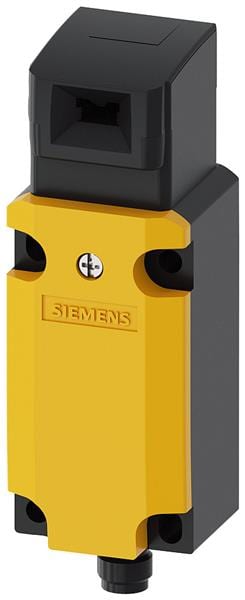
Where interlock switches fit in industrial systems
An interlock switch is typically installed at a movable guard, gate, or enclosure door so the machine can monitor access status as part of its safety circuit. When the guard changes position, the switch changes state and sends a signal used by the control system to stop movement, inhibit operation, or confirm that a protective barrier is correctly closed before operation resumes.
This category is especially relevant for machine builders, maintenance teams, panel integrators, and OEM buyers looking for dependable components for guard monitoring. If your application requires a broader range of protective switching devices, it can also be useful to review related safety switches for other machine protection requirements.
Common applications for interlock switches
Interlock switches are commonly used wherever access to moving parts, energized sections, or automated mechanisms must be controlled. Typical examples include safety doors on robotic workcells, hinged covers on conveyors, removable panels on packaging equipment, and service access points on process machinery.
In practice, the right device depends on how the guard is designed, how often it is opened, and how the machine is wired. Some installations prioritize compact mounting and simple integration, while others focus on tamper resistance, alignment tolerance, or compatibility with modern safety architectures. In systems with a clear isolation step during servicing, interlocks may be selected alongside disconnect switches to support a more complete lockout and machine access strategy.
Product types and examples in this category
This category includes a mix of interlock solutions suited to different guard designs and installation constraints. Examples from the range include the OMRON D3D-121, a panel-mount snap-in style unit with momentary operation characteristics, as well as models such as the OMRON D40P-MPC-21-10-R, OMRON D40ML-SS2-B-M12, OMRON D41D-2CD-025N2, and OMRON D41G series variants for applications that require guard position detection as part of a safety system.
There are also Schneider Electric Relays options such as XY2CE1A590 and XY2CE4C010TK, which illustrate that interlock selection often depends on machine layout and safety circuit design rather than on one single device format. Some model families are chosen for compact doors and covers, while others are better suited to more demanding guard arrangements or specific wiring preferences.
How to choose the right interlock switch
Selection starts with the mechanical arrangement of the guard. Consider whether the device will be mounted on a hinged door, sliding gate, removable cover, or fixed access panel. Alignment conditions, available mounting space, connector preference, and environmental exposure all influence whether a compact body, plunger style, coded actuator arrangement, or prewired version makes the most sense.
Electrical and functional requirements are just as important. Buyers typically check contact configuration, switching behavior, rated current and voltage, ingress protection, and operating temperature range before moving to system-level questions such as compatibility with the safety relay or controller. If you also need mounting parts, adaptors, or supporting hardware, related switch accessories may help complete the installation without sourcing from multiple categories.
Manufacturers commonly considered for this category
Among the brands represented here, OMRON stands out with multiple interlock switch series appearing in the listed products, including D3D, D40, and D41 families. These examples are useful for buyers comparing different form factors, connection methods, and guard monitoring approaches within a single manufacturer ecosystem.
Schneider Electric Relays is also relevant in this category, with XY2CE models included among the representative products. Beyond the listed examples, buyers may compare availability, preferred wiring style, and compatibility with their existing control standards when narrowing down options between manufacturers.
Practical buying considerations for OEMs and maintenance teams
For OEM design work, consistency across machine platforms can be as important as the switch itself. Standardizing on a smaller number of interlock styles can simplify panel design, spare parts planning, wiring practices, and documentation. It can also reduce commissioning time when similar guard circuits are repeated across multiple machines.
For maintenance and replacement purchasing, the priority is often faster cross-checking of mounting method, terminal or connector style, and switching function. Reviewing the intended role of the device in the safety circuit helps avoid replacing an interlock with a part that fits mechanically but does not match the required operating logic. In more advanced control systems, some users also compare interlocks with alternatives such as solid state switching devices in adjacent control functions, even though the safety role remains application-specific.
Why this category matters in machine safety planning
Interlock switches are not just replacement parts; they are part of the broader logic that helps separate normal machine operation from safe operator access. A well-matched device supports guard monitoring, reduces integration issues, and makes it easier to maintain predictable machine behavior over time.
When comparing options in this category, focus on the real operating conditions of the guard, the control method used in the machine, and the practical needs of installation and maintenance. That approach will usually lead to a more suitable selection than choosing by model family alone, whether you are specifying new equipment or replacing an installed switch in an existing system.
Get exclusive volume discounts, bulk pricing updates, and new product alerts delivered directly to your inbox.
By subscribing, you agree to our Terms of Service and Privacy Policy.
Direct access to our certified experts