Limit Switches
In motion control and machine safety, reliable position detection is often a small component with a very large impact. When equipment needs to confirm end-of-travel, detect the presence of a moving part, or trigger a control response at a defined mechanical point, Limit Switches remain a practical and widely used solution across industrial systems.
This category brings together mechanically actuated switches used in automation, material handling, industrial equipment, vehicles, and heavy-duty installations. Whether the application calls for a compact plunger style, a rotary actuator, or a sealed enclosure for harsher environments, the right device depends on how motion is transferred to the switch, the required contact arrangement, and the surrounding operating conditions.
Where limit switches fit in industrial systems
A limit switch is typically used to convert mechanical movement into an electrical signal. In practice, that signal may be used to stop a motor, indicate position, open or close a control circuit, or provide confirmation that a machine element has reached a defined point. This makes limit switches common in conveyors, doors, lifts, packaging equipment, actuators, and machine tools.
Compared with non-contact sensing methods, mechanical switches are often selected when the actuation point is clear, the motion is repeatable, and a direct physical interface is acceptable. They are also useful where designers want a straightforward switching element that can be integrated into interlock logic, machine sequencing, or control panels alongside related products such as safety switches.
Common configurations and actuator styles
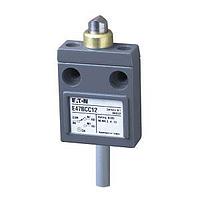
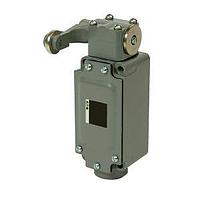
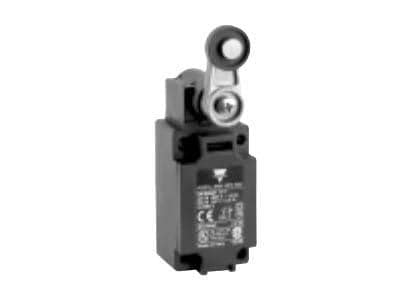
One of the main selection factors is the actuator type. Top plunger and pin plunger designs are often used where motion approaches the switch in a straight line. Roller plunger versions can reduce wear in applications with sliding contact, while side rotary designs are helpful where the target moves through an arc or where mounting space favors lateral actuation.
Contact configuration also matters. Depending on the control logic, engineers may need SPDT, DPDT, or higher pole arrangements, with normally open and normally closed combinations chosen to match the circuit design. In many applications, snap action behavior is important because it provides a fast and repeatable change of state even when the actuator movement is relatively slow.
Selection points that influence service life and reliability
Choosing a limit switch is not only about mounting dimensions. The expected mechanical force, travel characteristics, electrical load, wiring method, and environmental exposure all affect long-term performance. Cable lead, screw terminal, plugin, or conduit-style connection options may each be more suitable depending on installation practice and maintenance access.
Ingress protection, enclosure design, and operating temperature range are also important in industrial settings. Dust, moisture, vibration, and washdown exposure can quickly separate a suitable switch from one that is only acceptable on paper. For higher-risk disconnect or isolation functions, users may also need a different product family such as disconnect switches, since the application intent is different from position detection.
Example product types in this category
The product range represented here includes several established mechanical formats. For example, the Honeywell 14CE118-6 is an explosion-proof top plunger model suited to applications where enclosure integrity is a key concern. The Honeywell 14CE18-1L and Honeywell 14CE18-1AN63 illustrate enclosed limit switch options used for dependable position sensing in demanding equipment layouts.
For rotary actuation, models such as the Honeywell LSYMC6D-1B, Honeywell LSYMC4N, and Honeywell LSYMC4NXB-FP show how side rotary mechanisms can be applied when machine movement does not align with a vertical plunger approach. Other examples, including the Honeywell LSB5A-2D, Honeywell LSQ300, Honeywell GLZ1AJ, and Honeywell 25EN96, reflect the variety available in actuator geometry, contact arrangement, and installation style.
Brands and sourcing considerations
Industrial buyers often look for consistency across multiple machines or maintenance programs, so manufacturer choice can be part of the specification process. This category includes products from Honeywell, a widely recognized name for industrial switching and sensing components, with examples that cover enclosed, rotary, plunger, and heavy-duty limit switch formats.
Depending on system design preferences, users may also compare options from brands such as Eaton, Banner Engineering, Fuji Electric, Littelfuse, C&K, and Alcoswitch - TE Connectivity where relevant product compatibility or platform standardization matters. In broader switch selection work, it can also be useful to review related technologies like solid state switches when the application may benefit from non-mechanical switching behavior.
How to narrow down the right limit switch
A practical starting point is to define the motion first: linear push, side contact, cam-driven rotary movement, or roller engagement. From there, confirm whether the circuit requires SPDT, DPDT, or another contact form, and check how the switch will be wired into the machine. This usually eliminates many unsuitable options early in the selection process.
Next, review the installation environment and service expectations. If the switch will operate outdoors, near fluids, or in exposed industrial zones, enclosure type and sealing become more important. If the device is part of a repetitive machine cycle, actuation force and travel characteristics should be considered carefully to avoid premature wear or inconsistent switching over time.
Support for maintenance, retrofit, and new equipment builds
Limit switches are frequently sourced for three different reasons: replacement during maintenance, retrofit of older equipment, or specification into a new design. In maintenance scenarios, buyers usually prioritize matching actuator style, mounting arrangement, and contact behavior to the installed part. In retrofit work, the goal may be improving durability, sealing, or wiring convenience without redesigning the machine.
For new builds, engineers often have more flexibility to optimize the switching method around the motion path and control architecture. That can include selecting enclosed or heavy-duty formats, choosing cable versus terminal connections, and aligning the switch with other panel and field devices used across the machine platform.
Finding the right fit for your application
The most effective limit switch is the one that matches the motion, environment, and control requirement without adding unnecessary complexity. A well-chosen device can improve repeatability, simplify maintenance, and provide dependable position feedback across a wide range of industrial applications.
If you are comparing actuator styles, contact arrangements, or enclosure types, this category is a useful starting point for evaluating practical options. Reviewing the application details first will make it easier to shortlist the right models and choose a switch that fits both the machine design and the operating conditions.
Get exclusive volume discounts, bulk pricing updates, and new product alerts delivered directly to your inbox.
By subscribing, you agree to our Terms of Service and Privacy Policy.
Direct access to our certified experts