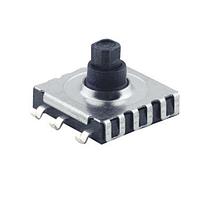
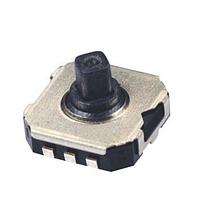
MultiDirectional Switches
Precise directional input matters in many electronic and industrial control designs, especially where space is limited and the operator needs fast, intuitive movement in more than one axis. MultiDirectional Switches are widely used for compact navigation, coordinate control, and interface functions in equipment ranging from operator panels to embedded electronic assemblies.
Within this category, buyers typically look for a balance of mechanical feel, mounting style, switching positions, and application fit. Some devices are suited to PCB-level human-machine interface designs, while others are more appropriate for panel control or selector-style operation in broader control systems.
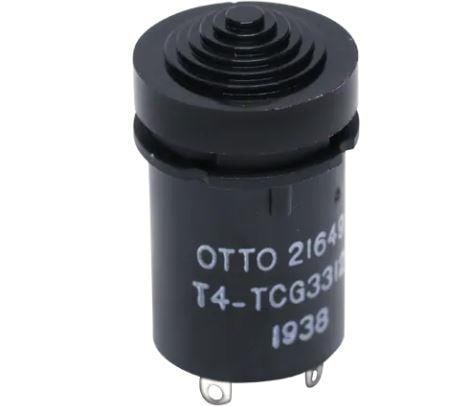
Where multi-directional switches fit in control systems
A multi-directional switch is designed to register movement in several directions rather than just a simple on/off action. In practical use, this makes it suitable for cursor movement, menu navigation, coordinate input, jog control, and compact directional commands where separate pushbuttons would take up more panel or board space.
These components can appear in different forms, such as tact-style directional switches for electronics, coordinate switches for control functions, and mono-lever or selector-style devices for more defined operating positions. In applications where the switching method must match broader control architecture, buyers may also compare them with solutions such as solid state switching devices or conventional mechanical switch families.
Common product styles in this category
The product mix here shows that this category spans more than one design approach. Compact PCB-mounted tact switches are represented by APEM models such as the ATLL62ABV, ASRM8R7GVTR, and MJTP series including MJTP1101BAU, MJTP1141S, and MJTP1137AE. These are relevant where board-level integration, directional tactile feedback, and compact form factor are key requirements.
For more defined positional control, SIEMENS entries such as A6X30143525 and A6X30143615 are described as coordinate switches with 2 switch positions, while A6X30145885 is presented as a selector switch with I-O-II marking. IDEC ARNL2-2222-10.10.10.10, identified as a mono-lever switch with 4 positions, illustrates how this category also supports operator control concepts that go beyond miniature tact input devices.
Diptronics models including PLJG-GH-V-T/R and PLJG3-K-V-T/R further reinforce the compact multi-direction input side of the category. This variety is important for engineers and procurement teams because the correct choice depends less on the category name alone and more on the intended user interaction, mounting environment, and switching logic.
How to choose the right switch for your application
The first selection factor is interface type. If the switch is part of a PCB-based user interface, tact and PCB-mount options are often the starting point. If it will be operated on a machine panel or integrated into a more visible manual control point, lever or selector-style products may be more appropriate.
The next factor is movement and position behavior. Some designs need simple directional actuation for navigation, while others need clearly defined operating positions such as 2-position or 4-position control. This distinction directly affects usability, operator confidence, and signal interpretation in the connected electronics or automation logic.
It is also important to check termination and installation requirements. For example, some APEM products in this category are specified as PCB mount with solder pin termination, which is relevant for assembly planning and maintenance strategy. In industrial environments, buyers should also consider actuator feel, panel layout, environmental exposure, and whether additional protective or mounting parts from switch accessories may be required.
Manufacturer options and sourcing context
This category includes products from established switch and control component brands, with particular visibility for APEM, SIEMENS, Diptronics, and IDEC in the featured product set. Each brand is typically associated with different strengths in the market, such as compact HMI components, industrial selector devices, or directional PCB input solutions.
The broader manufacturer landscape for this category also includes names such as Alps Alpine, C&K, Crouzet, E-Switch, Grayhill, and Industruino. For B2B buyers, this wider context is useful when standardizing by approved vendor list, comparing mechanical formats, or aligning with long-term platform availability across multiple projects.
Typical applications for multi-directional input devices
These switches are commonly selected for control interfaces where a compact operator input can replace multiple single-direction buttons. Examples include embedded equipment front panels, menu navigation modules, compact controller interfaces, and directional command points in electronic assemblies.
In industrial or semi-industrial environments, they may also be used in operator stations, subsystem control panels, and machine interface sections where movement, selection, or coordinate input must be intuitive and repeatable. In systems with stronger emphasis on operator protection or isolation, directional switches may be used alongside dedicated safety switch solutions rather than as a substitute for them.
Practical buying considerations for B2B customers
For engineering, purchasing, and maintenance teams, the main objective is not just finding a compatible switch, but choosing a device that fits the product lifecycle and operating environment. That includes confirming the number of switch positions, mounting concept, form factor, and the intended operator action before comparing part numbers.
When reviewing options, it helps to separate compact tact-style components from lever and selector-style devices, because they solve different interface problems. APEM tact switch variants such as ATLL62ABV or ASRM8R7BVTR may fit dense electronic assemblies, while SIEMENS and IDEC examples may better match applications requiring clearer positional control and more deliberate manual operation.
Procurement teams should also consider whether the application needs spare components, accessory parts, or adjacent switch technologies elsewhere in the system. Looking at the full control architecture early can reduce redesign risk and simplify sourcing over time.
Finding the right fit within this category
This category supports a wide range of directional input needs, from miniature PCB-mounted tact switches to more structured selector and mono-lever devices. The most effective way to narrow the selection is to start with the required motion behavior, installation method, and operator interface context rather than focusing on one form factor alone.
By comparing switch style, number of positions, and mounting approach, buyers can identify components that integrate more cleanly into both electronic and industrial control designs. Whether the priority is compact directional navigation or defined multi-position manual control, this range of multi-directional switches provides practical options for modern B2B applications.
Get exclusive volume discounts, bulk pricing updates, and new product alerts delivered directly to your inbox.
By subscribing, you agree to our Terms of Service and Privacy Policy.
Direct access to our certified experts