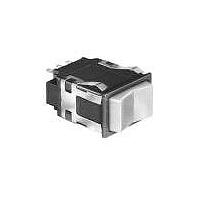
Rocker Switches
Panel control often comes down to one simple requirement: operators need a switch that is easy to see, easy to actuate, and dependable over repeated use. That is why rocker switches remain a practical choice across industrial equipment, control panels, power distribution assemblies, and OEM machine interfaces. Their familiar rocking motion supports quick on/off control while fitting neatly into a wide range of panel layouts.
Within this category, buyers typically look for the right balance of circuit configuration, mounting style, environmental protection, and actuator design. Whether the application is a compact control interface or a more rugged panel installation, the right switch helps improve usability, serviceability, and long-term reliability.

Where rocker switches fit in industrial and OEM design
A rocker switch is commonly used when the user needs a clear mechanical action and a stable panel-mounted control point. Compared with more specialized switching technologies, this format is straightforward for operators and technicians, making it suitable for power control, mode selection, enable/disable functions, and general interface tasks.
In many systems, rocker switches are selected not just for electrical switching but also for human-machine interaction. The shape of the actuator makes it easy to operate with a finger, even in fast-paced working environments. Depending on the design, they may also support momentary or maintained operation, illuminated status indication, or more complex pole and throw arrangements.
Typical selection criteria for this category
When comparing parts in a rocker switch range, the first step is usually the switching function. Buyers often check whether the application needs a simple on/off action or a more specific arrangement such as (ON)-OFF-(ON), DPDT, or multi-pole configurations. This is especially important in equipment where the switch controls multiple circuits or requires a temporary actuation state.
Mounting and termination also matter. Chassis mount and panel-oriented designs are common in industrial assemblies, while PC pin terminations are relevant for boards or integrated operator interfaces. For harsher environments, ingress protection can be a deciding factor. For example, the Honeywell GKSA46LA2 Rocker Switch includes an IP67-rated design in the provided product data, which may be relevant where dust resistance and water exposure are part of the operating conditions.
Product examples in this range
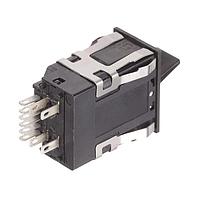
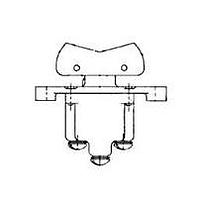
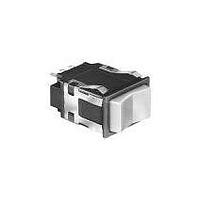
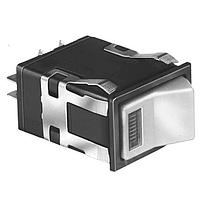
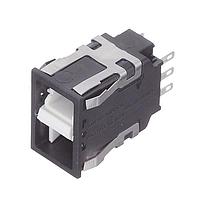
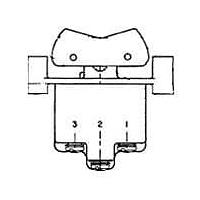
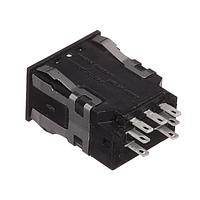
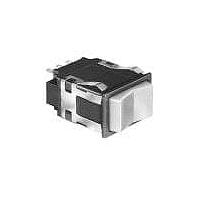
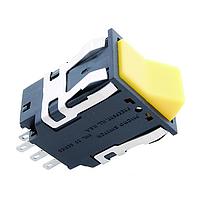
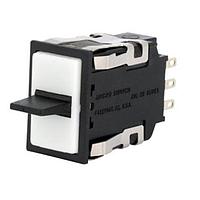
This category includes multiple Honeywell configurations that illustrate the variety available within rocker-operated control components. The Honeywell lineup shown here includes models such as the Honeywell MML23KA3AC05K-001 Switch Rocker (ON) OFF (ON) DPDT PC Pins Paddle, along with several AML-series options including AML26GBC8DA01RG, AML26GBE8AA06GR, AML26GBB2DA05RG, AML24GBC2BA01, and AML24GBE2BA06.
These examples suggest a category that serves more than one design priority. Some models are relevant for compact panel controls, while others fit modular interface assemblies where actuator style, circuit behavior, and termination format must align with the overall control architecture. Rather than choosing by part number alone, it is usually more effective to match the switch function and physical integration requirements to the target assembly.
How to choose the right rocker switch for your application
A practical selection process starts with the load and control logic. Engineers and buyers should confirm the required circuit type, voltage and current range, and whether the switch is expected to provide maintained or momentary action. If the switch is user-facing, actuator feel and visibility may also influence the final choice, especially for equipment with frequent manual operation.
The next step is to review the installation environment. Indoor control cabinets, portable instruments, and exposed machine panels do not place the same demands on the switch body and seal design. In applications with stricter operator protection requirements, it may also be worth reviewing related categories such as safety switches for functions that go beyond standard panel actuation.
Relationship to other switch categories
Rocker switches are often part of a broader switching ecosystem rather than a standalone purchasing decision. In industrial control systems, they may appear alongside disconnect devices, accessory hardware, and specialized switching technologies used for different electrical or operational purposes.
For example, if the project involves isolation at the panel or equipment level, it can be useful to compare related options in disconnect switches. If the build requires mounting components, covers, or interface-related parts around the switch assembly, other switch accessories may also be relevant. Viewing rocker switches in this broader context helps streamline sourcing for complete control assemblies.
Manufacturer context and sourcing considerations
Although the featured products in this category are centered on Honeywell models, buyers may also evaluate switch solutions from established manufacturers such as C&K, Eaton, Alps Alpine, Alcoswitch - TE Connectivity, and Banner Engineering when building or standardizing a control platform. Different manufacturers may align better with specific panel standards, operator interface preferences, or sourcing strategies.
For B2B procurement, consistency is often just as important as the individual part itself. Factors such as footprint compatibility, series continuity, and ease of replacement can affect maintenance planning and long-term equipment support. This is especially relevant for OEMs and panel builders that need repeatable component selection across multiple machine variants.
Common use cases for rocker-operated controls
Rocker switches are frequently used in power entry panels, local control stations, machine interface panels, test fixtures, mobile equipment controls, and auxiliary control functions inside larger electrical assemblies. Their format supports intuitive operation, which is useful when the switch is handled by operators, field technicians, or maintenance personnel rather than only by design engineers.
They are also a good fit where a compact, front-panel control element is preferred over more complex input devices. Depending on the system, a rocker switch may serve as a primary power command, an enable function, a direction or mode selector, or part of a grouped operator panel that combines several manual inputs in a limited space.
Final thoughts
This rocker switch category is best approached as a functional selection problem, not just a list of part numbers. Circuit behavior, actuator style, mounting method, and environmental demands all play a role in finding a switch that fits the real operating conditions of the equipment.
By reviewing representative models such as the Honeywell MML23KA3AC05K-001 and GKSA46LA2 alongside the wider AML series, buyers can narrow choices more efficiently and identify options that make sense for both design integration and long-term maintenance. A well-matched panel switch supports reliable operation, clearer user control, and smoother sourcing across industrial projects.
Get exclusive volume discounts, bulk pricing updates, and new product alerts delivered directly to your inbox.
By subscribing, you agree to our Terms of Service and Privacy Policy.
Direct access to our certified experts