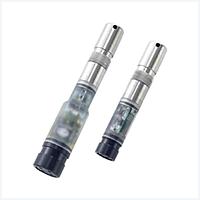
Pressure Datalogger
When pressure must be tracked over time rather than checked at a single moment, a dedicated logger becomes far more useful than a spot-reading instrument. In field inspection, water depth monitoring, process verification, and long-duration testing, a Pressure Datalogger helps capture changing conditions continuously so engineers can review trends, identify anomalies, and document performance with greater confidence.
This category focuses on pressure logging devices designed for unattended measurement, stored data review, and practical deployment in demanding environments. It is especially relevant where compact size, stable sensing, and reliable data retention matter more than simple live indication.
Why pressure logging matters in real applications
Pressure rarely stays constant in real operating conditions. Systems can experience gradual drift, short transients, cyclic loading, or environmental variation that may not be visible during a quick manual check. A logger makes it possible to capture these changes over minutes, hours, or longer monitoring intervals.
This is useful in applications such as water depth observation, tank and pipeline studies, leak investigation, equipment validation, and environmental measurement. In some projects, users may also compare pressure records with other logged variables from categories such as level data loggers or humidity and temperature dataloggers to build a broader picture of operating conditions.
Typical characteristics of pressure dataloggers
A pressure datalogger combines a pressure sensor, memory, power source, and data transfer method in one compact unit. Many models in this category are built for continuous recording, allowing users to set measurement intervals and store a large number of samples for later download and analysis.
Important selection points usually include measuring range, resolution, accuracy, response time, housing material, and communication method. In pressure or depth monitoring, these factors affect whether the logger is suitable for shallow measurement, long-duration deployment, or applications where small pressure changes must be resolved clearly.
Range and accuracy selection for depth and pressure monitoring
Choosing the correct range is one of the most important steps. A logger with an oversized range may still work, but lower-range models often provide finer resolution for applications where small changes matter. On the other hand, a higher-range unit is necessary when the measurement environment can reach greater pressure or depth.
For example, the JFE DEFI2 series includes options covering 0 to 0.5 MPa, 0 to 1 MPa, 0 to 2 MPa, and 0 to 5 MPa. That makes it easier to match the instrument to conditions ranging from relatively shallow depth monitoring up to deeper deployments. For users who need tighter performance, high-accuracy versions such as the JFE DEFI2-D20HG and JFE DEFI2-D50HG offer improved accuracy compared with standard models, which can be helpful in validation work or trend analysis where smaller deviations are significant.
Examples available in this category
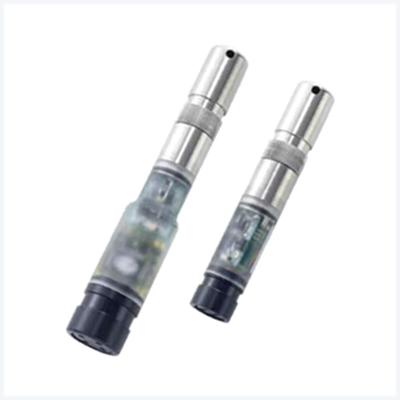
Among the representative products, JFE pressure loggers stand out for compact construction and pressure-to-depth monitoring capability. The JFE DEFI2-D10 is suited to applications up to 1 MPa, while the JFE DEFI2-D20 and JFE DEFI2-D50 extend the range for deeper or higher-pressure conditions. These models use semiconductor sensing, support continuous measurement, and are built with compact dimensions for easier deployment.
Where higher measurement precision is needed, the JFE DEFI2-D5HG, DEFI2-D20HG, and DEFI2-D50HG provide high-accuracy alternatives. Their specifications indicate a stronger fit for applications where logged data may be used for detailed comparison, process studies, or reporting. Instead of selecting only by maximum range, it is often better to balance range, required resolution, and expected pressure variation during the logging period.
How to choose the right logger for your application
The first question is what you are really trying to observe: maximum pressure, depth change over time, short response events, or long-term stability. A logger intended for depth monitoring should be matched to the expected immersion range, while process pressure studies may prioritize faster response and accuracy over extended depth capability.
Next, consider the deployment environment. Compact, durable bodies and practical battery operation can be important for field work, temporary installation, or difficult access points. Memory capacity and logging interval settings also matter, because they determine how long the device can record before data retrieval is required. If your project also involves electrical signals or multi-parameter data collection, related categories such as electric dataloggers or Ethernet and wireless data loggers may be relevant for broader monitoring architectures.
Where these devices fit in a measurement ecosystem
Pressure logging is often one part of a larger instrumentation workflow. The recorded data may be used for troubleshooting, preventive maintenance, laboratory testing, environmental observation, or performance verification during commissioning. Because the logger stores data locally, it is well suited to points where continuous manual observation is not practical.
In B2B environments, this also supports traceability. A stored record can help maintenance teams compare operating cycles, verify whether a pressure event occurred, or document system behavior over time. That makes pressure dataloggers valuable not only as measuring devices, but also as tools for evidence-based analysis and decision-making.
Focus on practical fit rather than feature overload
Not every application needs the same level of accuracy, memory usage, or pressure range. In many cases, the best choice is the model that fits the expected operating window with enough margin, while still providing the resolution and logging duration required for the job. Compact units can be especially useful for temporary deployment, repeated inspections, or distributed monitoring points.
If you are comparing options in this category, start with the pressure or depth range, then review accuracy, interval settings, physical size, and data transfer method. That approach usually leads to a more suitable selection than choosing by model name alone.
A well-matched pressure datalogger gives you more than isolated readings; it provides a usable record of how a system behaves over time. Whether the goal is depth observation, process analysis, or field data collection, selecting the right range and accuracy level will make the recorded data more meaningful and easier to act on.
Get exclusive volume discounts, bulk pricing updates, and new product alerts delivered directly to your inbox.
By subscribing, you agree to our Terms of Service and Privacy Policy.
Direct access to our certified experts