Photovoltaic energy storage test equipment
Reliable commissioning and maintenance in solar and storage projects depend on more than basic voltage checks. Field teams often need to verify insulation, continuity, open-circuit voltage, short-circuit current, and broader system behavior before a photovoltaic installation or energy storage system can be documented as ready for operation. That is where photovoltaic energy storage test equipment becomes essential for installers, service engineers, and technical procurement teams.
This category brings together instruments used for practical testing across PV strings, modules, electrical installations, and selected energy storage diagnostics. The range is especially relevant for applications where traceable measurements, safer workflows, and more complete reporting are part of commissioning or periodic inspection routines.
Where this equipment fits in PV and storage workflows
In photovoltaic systems, test work typically covers checks such as string voltage, current, insulation resistance, polarity, protective conductor continuity, and earth fault conditions. These measurements help confirm whether a system has been installed correctly and whether it aligns with the expected electrical behavior before handover or troubleshooting begins.
For energy storage applications, the scope can extend further into system performance verification, power-related measurements, and inspection records. In many projects, test equipment is selected not only for measurement range, but also for how well it supports real field conditions, data handling, and repeatable procedures across multiple sites.
Typical instrument types in this category
This category includes portable testers for PV modules and strings, installation simulators, and specialized diagnostic tools for energy storage systems. Some models are optimized for routine PV verification up to 1000 V DC, while others support higher-voltage work up to 1500 V DC and higher current ranges suited to larger or newer solar installations.
There are also instruments designed for broader electrical system evaluation. For example, simulation-based tools can support training, testing of installation procedures, or verification of specific fault scenarios, while storage-focused platforms may combine multiple inspection functions in one device.
Representative solutions from leading manufacturers
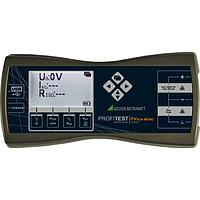
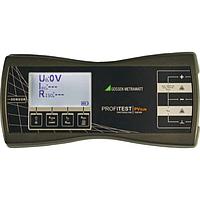
Gossen Metrawatt is strongly represented in this category with instruments tailored to PV inspection and electrical installation testing. Models such as the PROFITEST PVSUN and PROFITEST PVSUN MEMO are designed for photovoltaic modules and strings up to 1000 V DC and 20 A DC, supporting tasks such as insulation measurement, ground fault checks, and protective conductor continuity testing. For higher-capacity applications, the PROFITEST PV1500 and PROFiTEST PV1540 extend coverage to 1500 V systems, making them relevant for modern utility-scale or large commercial solar environments.
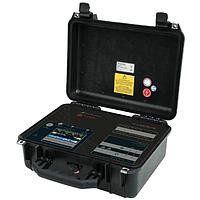
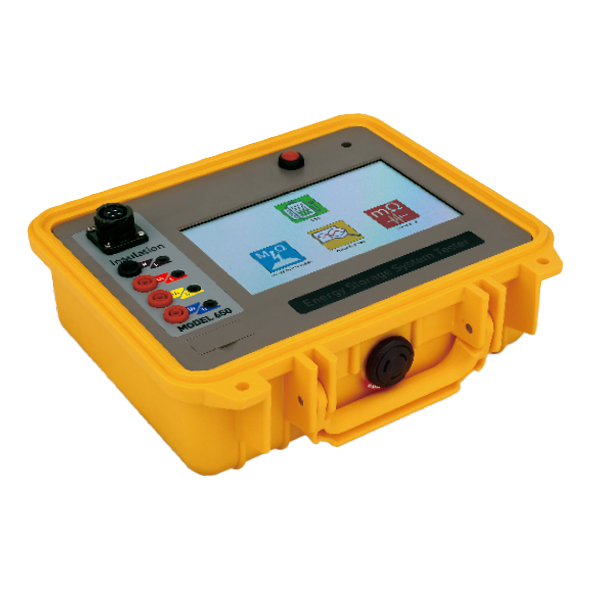
Seaward also appears with the PV:1525 and PV:1525 Kit, which are positioned for PV testing up to 1500 V DC and 25 A. These instruments are suitable where users need core field measurements such as open-circuit voltage, short-circuit current, insulation resistance, and low-resistance continuity in a portable format. For broader storage-related diagnostics, TEKON 650 provides a different angle by addressing energy storage system diagnostics with functions that include power measurement and inspection-oriented reporting.
How to choose the right test equipment
A practical starting point is the electrical range of the system you need to inspect. For standard PV commissioning and maintenance, instruments covering up to 1000 V DC may be sufficient. If your projects involve newer string architectures or larger installations, a tester rated for 1500 V DC becomes more appropriate. Current range matters as well, especially when measuring short-circuit current or validating string behavior under field conditions.
The second consideration is the test workflow itself. Some teams need a straightforward handheld tester for site verification, while others benefit from onboard memory, USB connectivity, or bundled kits that simplify documentation and repetitive testing. If reporting and data retention are important, models with memory and communication interfaces can save time in both commissioning and after-service analysis.
It is also worth considering the surrounding electrical infrastructure. In some labs, service workshops, or validation benches, test procedures may be supported by controlled sources such as an AC power supply or a high voltage DC power supply, depending on the application environment.
Key functions that matter in field use
The most useful features are often the ones that reduce repeat visits and make results easier to trust. In PV work, common priorities include insulation resistance measurement, continuity testing, open-circuit voltage measurement, and short-circuit current measurement. These functions support both safety checks and basic performance verification.
Display readability, enclosure protection, memory capacity, and interface options also matter in day-to-day use. A portable tester with backlit display and onboard storage can be easier to operate on rooftops or outdoor sites, while data export can support documentation requirements across contractors, EPC teams, or maintenance providers.
Where test setups require stable external electrical support, some organizations also review related source equipment such as high power DC supply systems for bench validation or controlled simulation tasks.
Examples of equipment roles within the category
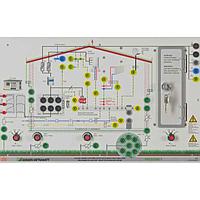
The Gossen Metrawatt PROFiSIM 1 is a good example of equipment that supports testing of electric installations and systems through simulated installation conditions and fault scenarios. It plays a different role from a handheld PV string tester, but it can still be relevant in broader electrical validation workflows connected to solar infrastructure.
By contrast, instruments such as the PROFITEST PVSUN, PROFITEST PVSUN MEMO, and Seaward PV:1525 are closer to direct field inspection tools for photovoltaic arrays. Meanwhile, the TEKON 650 reflects the growing need for storage-focused diagnostics, where inspection may include power measurement, system evaluation, and report generation rather than only basic pass/fail checks on PV strings.
Who typically buys this category
This category is relevant to EPC contractors, solar installers, O&M service providers, industrial maintenance teams, technical schools, and engineering departments responsible for electrical verification. Procurement teams often compare products here based on voltage class, current capability, portability, data handling, and alignment with site procedures.
It is also useful for organizations working across both generation and supporting electrical test infrastructure. In those cases, buyers may evaluate this category alongside adjustable source equipment such as a DC power supply adjustable up to 1KW when building a more complete test environment.
Final considerations before selection
Choosing photovoltaic and storage test equipment is ultimately about matching the instrument to the site voltage, expected current, inspection scope, and reporting needs. A compact PV tester may be enough for routine field service, while larger projects or mixed solar-storage environments may require broader functionality and higher electrical ranges.
Within this category, users can compare proven options from Gossen Metrawatt, Seaward, and TEKON depending on whether the priority is PV string verification, installation simulation, or energy storage diagnostics. A careful review of workflow requirements usually leads to a more efficient choice than focusing on measurement range alone.
Get exclusive volume discounts, bulk pricing updates, and new product alerts delivered directly to your inbox.
By subscribing, you agree to our Terms of Service and Privacy Policy.
Direct access to our certified experts