UPS
Power disturbances rarely arrive with warning. A brief outage, voltage sag, or unstable mains supply can stop production PCs, interrupt network equipment, reset controllers, or corrupt critical data. In these situations, a UPS helps maintain continuity by supplying backup power for a limited period and by improving power stability for connected loads.
For B2B environments, selecting the right uninterruptible power supply is not only about backup time. It also involves load type, installation method, power quality, communication options, and how the UPS fits into the wider power infrastructure alongside solutions such as AC power supplies or dedicated DC supply systems.
How a UPS supports critical equipment
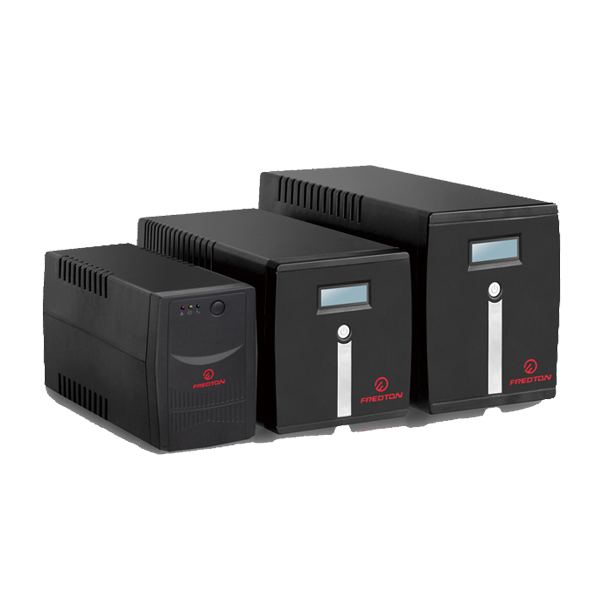
A UPS stores energy in its internal battery system and automatically switches to backup operation when the input source fails or moves outside an acceptable range. This transition is designed to keep connected devices running long enough for short-term continuity, controlled shutdown, or transfer to another power source.
In practice, a UPS is commonly used to protect servers, industrial PCs, communication devices, point-of-sale systems, workstations, and automation equipment. Beyond simple backup, it can also help reduce the impact of unstable input conditions that may otherwise shorten equipment life or cause intermittent faults.
Main UPS types and where they fit
The most common architectures are offline, line-interactive, and online double-conversion. Each type addresses a different balance of cost, power conditioning, and protection level. For general office electronics or light commercial loads, basic backup may be sufficient, while more sensitive or mission-critical systems often require a higher grade of power conditioning.
Line-interactive designs are widely used where voltage fluctuations are common, because they can regulate input variation more effectively than basic standby designs. Online UPS systems are typically chosen for demanding applications because they continuously condition the incoming power before delivering it to the load, helping isolate connected equipment from a broader range of electrical disturbances.
If your application includes highly sensitive electronics or continuous operation requirements, it may also be useful to compare the UPS approach with related power solutions such as adjustable DC power supplies or other regulated sources used in testing and control environments.
Selection criteria that matter in industrial and commercial use
The first step is to size the UPS correctly. Buyers often look at VA and watt ratings together, because the real load is determined by the actual power consumption of the equipment being protected. A unit that appears suitable by VA alone may still be undersized if the connected devices have higher watt demand or startup peaks.
Runtime is equally important. Some applications only need a few minutes to save data and shut down safely, while others require longer support for networking, monitoring, or continued operation through short utility interruptions. Input and output voltage, installation format, and available communication interfaces should also be checked carefully, especially when the UPS must integrate with monitoring software or site management procedures.
Physical deployment also affects the choice. Rackmount models are often preferred for server rooms and structured cabinets, while compact units may suit distributed office loads or local machine-level protection. For larger energy systems or mixed AC/DC environments, users may also review options such as high power DC supplies when designing the broader power architecture.
Representative products in this category
This category includes a range of solutions for different protection levels and installation needs. For example, the APC Smart SMC1500IC Uninterruptible Power Supply (1500VA/900W) represents a practical line-interactive option for protecting office systems, network hardware, and other moderate loads where controlled runtime and communication connectivity are useful.
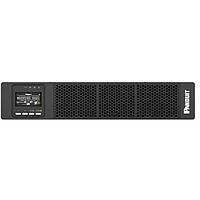
For users evaluating rack-based installations, models such as the American Power Conversion SURTA2200RMXL2U UPS Online Rackmount 120V 1600W 2200VA and the American Power Conversion SURTD5000RMXLP3U UPS Online Rackmount 120V/208V 4000W 5000VA illustrate how online UPS systems can address higher-capacity and more demanding applications. At the compact end, products like the American Power Conversion BK500EI Uninterruptible Power Supplies(UPS) may fit smaller loads that still require basic backup protection.
The category also includes specialized formats such as the MEAN WELL DRUPS40 Uninterruptible Power Supplies(UPS), which is relevant when a UPS function needs to fit into a broader industrial power design. Depending on the application, buyers may explore solutions from American Power Conversion or consider power-related products from MEAN WELL for system-level integration.
Typical use cases across B2B environments
In offices and IT spaces, UPS systems are often installed to keep PCs, network switches, storage devices, and servers online during short outages. This reduces the risk of data loss, sudden restarts, and service interruption. In edge cabinets and small server rooms, rackmount units are especially common because they simplify structured installation.
In industrial settings, the role of a UPS can be broader. It may support HMIs, industrial computers, communication gateways, measurement systems, and selected automation components that need clean, uninterrupted power for safe operation. The exact requirement depends on whether the goal is graceful shutdown, short-term process continuity, or protection from unstable utility power.
What to review before ordering
A good selection process usually starts with a realistic load list rather than a rough estimate. Check the total watt demand, expected runtime, supply voltage, and whether the load includes equipment that is sensitive to transfer time or waveform quality. It is also worth identifying whether future expansion is likely, as this can change the preferred UPS size or topology.
Buyers should also consider maintenance and installation context. Battery replacement planning, cabinet space, ambient temperature, and communication ports can all affect long-term usability. If the protected application is especially sensitive to input quality, reviewing adjacent categories such as high voltage DC power supply solutions may help when building a more complete power strategy across test, control, and backup functions.
Choosing a UPS with the right balance of protection and practicality
The right UPS is the one that matches the actual operating risk of your system. Small office loads may only need short runtime and basic regulation, while server racks, network infrastructure, and industrial electronics often justify a more robust design with stronger power conditioning and monitoring capability.
By comparing topology, capacity, runtime expectations, and installation requirements, it becomes much easier to narrow down the suitable options in this category. A well-matched UPS helps improve power continuity, protects connected assets, and supports safer operation when the mains supply becomes unreliable.
Get exclusive volume discounts, bulk pricing updates, and new product alerts delivered directly to your inbox.
By subscribing, you agree to our Terms of Service and Privacy Policy.
Direct access to our certified experts