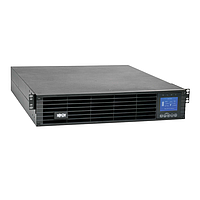
UPS online
Power continuity matters most when even a short interruption can stop servers, disrupt control systems, reset network equipment, or affect sensitive electronics. In these environments, UPS online solutions are often selected for their ability to deliver stable output power while isolating critical loads from many common utility disturbances.
For industrial facilities, data rooms, telecom cabinets, automation panels, and other mission-critical installations, online UPS systems are designed to support equipment that cannot tolerate transfer delays or significant voltage variation. This category brings together models suitable for different power levels, mounting formats, and operating voltages, making it easier to compare solutions for real operating conditions.
Why online UPS systems are widely used for critical loads
An online UPS, also called a double-conversion UPS, continuously powers the connected load through its inverter. In practical terms, incoming AC power is converted and conditioned before being supplied to the output, which helps maintain a more stable waveform and consistent voltage for sensitive devices.
This architecture is especially useful where power quality is as important as backup time. Compared with a typical Offline UPS, an online design is generally better suited to equipment that must keep running through sags, surges, and other line disturbances without interruption at the output.
Typical applications across industrial and commercial environments
Online UPS systems are commonly used to protect rack servers, network switches, storage systems, telecom equipment, industrial PCs, and control hardware. They are also relevant in production plants and technical facilities where a shutdown can create downtime, data loss, or restart issues across connected systems.
In B2B purchasing, selection usually depends on the actual load profile and the level of power conditioning required. Smaller units may fit localized protection for edge equipment, while higher-capacity rackmount or floorstanding models are often chosen for larger cabinets, distributed IT systems, or centralized power protection.
How to evaluate an online UPS for your installation
A good starting point is the relationship between VA and watt rating. The UPS should cover the real power demand of connected equipment with suitable headroom for startup conditions, future expansion, and battery runtime expectations. Voltage compatibility also matters, particularly when comparing 120V, 208V, 230V, or 240V deployments across different sites.
Form factor is another practical consideration. Rackmount units are often preferred in IT and telecom environments, while other installations may prioritize accessible maintenance, cable routing, or integration with external battery or distribution arrangements. Buyers who need scalable architectures may also want to review related options such as a UPS module for modular power system design.
It is also important to consider the type of load being protected. Sensitive networking and computing equipment may require tight output stability, while industrial systems may place additional emphasis on operating continuity, serviceability, and compatibility with panel or cabinet layouts.
Representative products in this category
The range includes compact and higher-capacity examples from recognized manufacturers. From Tripp Lite, models such as the 5PX1000RTNG2 and 5PX1500HRTG2 illustrate online UPS options for applications where rack integration and continuous protection are priorities. At the higher end, units like the SU6000RT4UTF, SU6000RT4UTFHW, and SU6000RT4UHVHW show how online UPS platforms can address larger loads and multiple input or output voltage requirements.
From American Power Conversion, the BR1500G, SURTA2200RMXL2U, and SURTD3000XLT represent common reference points when comparing output capacity, rackmount suitability, and online UPS deployment for IT and infrastructure environments. The category also includes supporting ecosystem items such as the OMRON WD30-SE UPS accessory, which highlights that a reliable power protection setup may involve not only the UPS itself but also related accessories for installation or maintenance.
Choosing between online UPS and other UPS architectures
Not every power protection requirement calls for the same UPS topology. Online systems are typically selected when the load is highly sensitive, uptime requirements are stricter, or input power conditions are less predictable. Their main value lies in combining backup capability with continuous power conditioning.
For applications with lower sensitivity or tighter budget constraints, another UPS type may be sufficient. If you are comparing architectures for a broader project, this can be a useful point to review the differences between online systems and other options within the wider UPS portfolio rather than selecting only by VA rating.
Brand ecosystem and procurement considerations
This category includes products associated with established UPS and power protection suppliers such as Tripp Lite, American Power Conversion, OMRON, Eaton, MEAN WELL, PHOENIX CONTACT, and SOCOMEC. In practice, procurement teams often compare not just the core electrical rating, but also product family consistency, availability of accessories, service preferences, and compatibility with existing infrastructure standards.
For buyers managing multi-site or mixed environments, brand familiarity can help simplify deployment and maintenance, but the best fit still depends on load type, installation method, and required runtime. It is usually more effective to define the operating scenario first, then shortlist models that align with the electrical and mechanical constraints of the project.
Practical selection tips before ordering
Before choosing an online UPS, verify the total connected load, nominal input and output voltage, required runtime, and installation format. It is also worth checking whether the system will protect a single device, a complete rack, or a combination of network, server, and control equipment with different power characteristics.
If your application calls for broader comparison, reviewing the wider UPS product range can help clarify whether an online UPS is the right match or whether another topology better fits the operating profile. In many cases, the right choice is the one that balances continuity, power quality, maintainability, and realistic capacity planning.
Conclusion
When uptime and output stability are central requirements, online UPS systems provide a strong foundation for protecting critical electrical and electronic loads. By comparing power capacity, voltage, form factor, and application context, buyers can narrow the category to solutions that support both present demand and future expansion with fewer compromises.
Whether you are protecting a single rack, network infrastructure, or a larger technical installation, this category is intended to help you evaluate online UPS options in a practical way and identify products that fit the reliability expectations of professional B2B environments.
Get exclusive volume discounts, bulk pricing updates, and new product alerts delivered directly to your inbox.
By subscribing, you agree to our Terms of Service and Privacy Policy.
Direct access to our certified experts