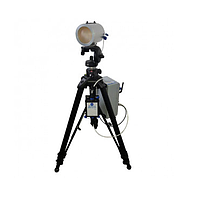
Doppler Radar
When motion, speed, or distance must be measured without physical contact, radar-based instruments become a practical choice in test benches, field measurement, and specialized industrial applications. In these situations, Doppler Radar systems are valued for their ability to detect movement by analyzing frequency changes in reflected signals, helping engineers capture data where mechanical sensors or contact methods are not suitable.
Within electric and electronic measurement workflows, this category is relevant for users who need reliable motion sensing, velocity observation, or non-contact detection as part of a broader instrumentation setup. Depending on the application, Doppler radar may be used alongside other diagnostic tools to build a more complete measurement chain for validation, troubleshooting, or monitoring.
How Doppler radar fits into measurement tasks
The core operating principle is straightforward: a transmitted signal reflects from a moving object, and the frequency shift of the returned signal is used to determine motion-related information. This makes non-contact measurement especially useful in environments where direct attachment is difficult, moving targets are involved, or sensor wear must be minimized.
Compared with contact-based approaches, Doppler radar can reduce mechanical complexity in many setups. It is often considered where repeatable speed indication, motion presence detection, or remote sensing is required without interfering with the target being measured.
Typical use cases in industrial and technical environments
Doppler radar instruments can support a wide range of technical scenarios, including motion analysis in lab environments, equipment testing, conveyor or transport monitoring, and other applications where moving objects need to be observed from a distance. In some setups, the goal is precise speed-related feedback; in others, it is simply to confirm movement, direction, or dynamic behavior.
In practice, users often select this type of instrument when optical methods may be limited by surface condition, lighting, or contamination, or when contact probes are inconvenient. As part of a broader measurement ecosystem, radar-based sensing may complement tools such as a multimeter for electrical checks or more application-specific instruments used for system-level diagnostics.
What to consider when choosing a Doppler radar solution
The right selection depends first on the measurement objective. Some buyers prioritize speed detection, while others are focused on motion presence, target tracking behavior, or integration into a larger test arrangement. Installation distance, target characteristics, environmental conditions, and expected signal behavior all affect suitability.
It is also important to think about the broader instrumentation context. If the radar output will be used together with data acquisition, control logic, or verification equipment, compatibility and signal interpretation become just as important as the sensing principle itself. For buyers comparing categories, adjacent measurement tools such as SMU semiconductor test equipment serve very different purposes, which highlights why application fit should lead the selection process.
Advantages of non-contact radar measurement
One of the main strengths of Doppler radar is its ability to measure motion without touching the target. This can help reduce wear, simplify installation in moving systems, and support testing where attaching a sensor would alter the result. In many engineering environments, that makes remote motion sensing more practical than mechanical alternatives.
Another advantage is flexibility. Radar-based instruments can often be incorporated into temporary test setups, permanent monitoring points, or validation procedures where repeatable observation matters. The result is a measurement approach that supports both development work and operational diagnostics, especially where direct access to the target is limited.
Brand context and product sourcing
This category includes solutions associated with PROTOTYPA, a manufacturer listed in this measurement range. For technical buyers, brand context can be useful when evaluating system compatibility, procurement consistency, and support for specialized applications.
Rather than choosing on brand name alone, it is usually more effective to match the instrument to the actual sensing task, installation constraints, and expected output requirements. That approach is particularly important for radar-based measurement, where target behavior and use conditions strongly influence practical performance.
Doppler radar within a broader diagnostic workflow
In many real projects, radar measurement is only one part of the troubleshooting or validation process. Teams may combine motion sensing with electrical safety checks, grounding verification, or fault location depending on the system under test. For example, applications involving infrastructure or distributed electrical systems may also involve tools such as an earth resistance and resistivity tester or other complementary instruments.
Looking at the full workflow helps buyers avoid over-specifying one device while missing another essential tool. A good category page should therefore support comparison not only within Doppler radar options, but also across related measurement needs in the same technical environment.
Key points for buyers and engineering teams
For users sourcing Doppler radar equipment, the most important questions are usually practical ones: what needs to be detected, how the sensor will be installed, what environmental limitations exist, and how the output will be used. Starting from the application leads to better equipment selection than focusing only on terminology or general specifications.
Whether the requirement comes from industrial testing, motion monitoring, or a specialized measurement setup, this category helps narrow the search toward radar-based measurement solutions designed for non-contact sensing. Reviewing the intended use case, system integration needs, and related instruments will make the selection process more efficient and technically aligned.
For procurement teams and engineers alike, Doppler radar is most valuable when it is chosen as part of a complete measurement strategy. If your project involves motion detection or speed-related analysis without contact, this category is a practical starting point for identifying suitable instruments and comparing them in the context of your wider test and measurement workflow.
Get exclusive volume discounts, bulk pricing updates, and new product alerts delivered directly to your inbox.
By subscribing, you agree to our Terms of Service and Privacy Policy.
Direct access to our certified experts