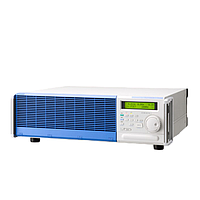
AC/DC electronic load
When power conversion products, chargers, UPS systems, inverters, and AC-input electronic equipment need to be validated under realistic operating conditions, the load side of the test setup becomes just as important as the source. A well-chosen AC/DC electronic load helps engineers simulate consumption behavior, verify stability, and observe how a device responds across voltage, current, power, and waveform changes.
In practical test environments, these instruments are used to reproduce both alternating-current and direct-current load conditions in a controlled, repeatable way. That makes them relevant for R&D, production testing, quality assurance, service labs, and system integration projects where repeatability and measurement visibility matter.
Why AC/DC loads matter in modern test systems
Many products no longer operate in a simple single-domain power environment. A device may take AC input from the grid, convert it internally to DC, and then drive switching stages, batteries, motors, or control electronics. Because of that, test engineers often need equipment that can evaluate behavior under both AC and DC conditions without building a fragmented setup.
An AC/DC electronic load allows users to assess how a unit under test behaves during normal operation, dynamic changes, protection events, and edge cases. Compared with a basic fixed load arrangement, a programmable load gives better control over test repeatability and makes it easier to investigate response to changing demand, current draw, or operating mode.
Typical applications of AC/DC electronic loads
These loads are commonly used in power electronics development, validation of AC power sources, inverter and converter testing, and evaluation of power supplies that must support different operating states. They are also useful when checking product behavior under sinusoidal, DC, or more complex load scenarios depending on the capability of the selected instrument.
In production and service environments, the goal is often not only to draw power but also to confirm measurable performance. This includes observing voltage and current behavior, checking protection thresholds, and verifying whether the equipment can remain stable within the intended operating window.
For projects focused only on direct-current testing, a dedicated DC electronic load may be the more direct choice. For broader mixed-power applications, the AC/DC category offers more flexibility in a single test workflow.
How to evaluate the right load for your requirement
The first selection factor is usually the electrical range. Voltage, current, and power ratings should be matched to the real operating envelope of the device under test, including startup conditions, overload cases, and protection margins. It is also important to consider whether the application involves only steady-state testing or requires dynamic behavior across multiple operating modes.
Another key point is operating mode flexibility. In many applications, engineers need constant current, constant voltage, constant resistance, or constant power functions in order to reproduce different kinds of load behavior. Measurement capability also matters, especially when the load must act as both a programmable sink and a test instrument for voltage, current, power, frequency, or power factor observations.
Interface options can also affect integration time. In automated benches, communication through LAN, USB, RS-232, or GPIB may be necessary for scripting, data capture, and remote control. If the project is expected to scale, users may also want to review related platform components such as a mainframe system when modular expansion is part of the plan.
Examples from the PRODIGIT range
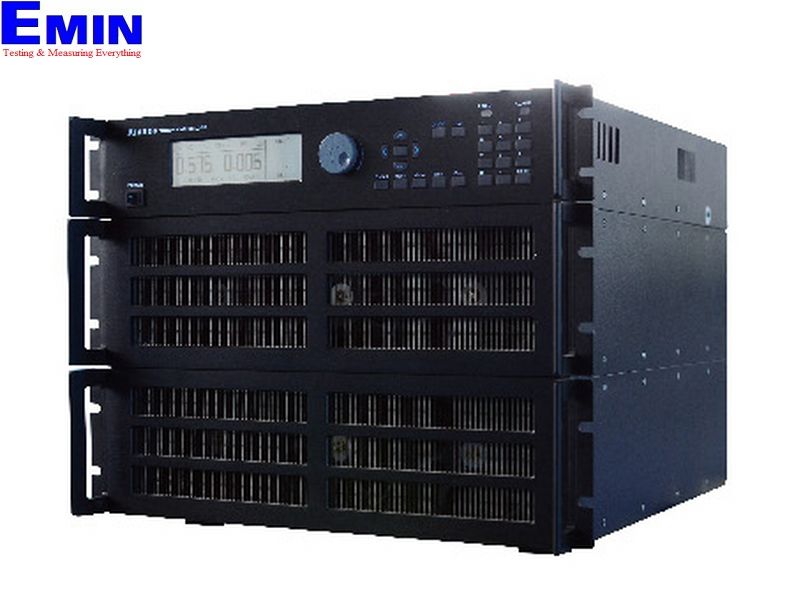
Within this category, PRODIGIT is a notable reference for AC/DC electronic load solutions across a wide operating range. The lineup shown here covers compact bench-oriented units as well as much higher-power configurations for demanding test tasks, giving users flexibility based on the stage of development or production scale.
For example, the PRODIGIT 3272 and PRODIGIT 3271 are suitable illustrations of lower-power AC/DC load testing where engineers need control over common operating modes and measured feedback in a more compact format. Moving upward, models such as the PRODIGIT 3273 and PRODIGIT 3274 serve applications that require more load capacity while still supporting AC and DC evaluation in one instrument.
At the higher end, units such as the PRODIGIT 32701, 32702, 32703, 32704, and 32705 demonstrate how the category extends into much larger power handling for system-level verification. For DC-focused high-power work, the PRODIGIT 36360E shows how a dedicated DC electronic load can complement an AC/DC setup when the test plan includes separate DC stress or characterization stages.
Fixtures and system accessories in real deployments
Not every item in this category ecosystem is a standalone load. Accessories such as the PRODIGIT 99104 and 99104-01 3-phase connection select fixtures play an important role in configuring the test environment correctly for compatible higher-current AC load systems. In practice, these kinds of components help streamline connection management and improve usability in more complex benches.
This is especially relevant in industrial labs where the load is part of a larger arrangement involving sources, switching, protection, data logging, and automation software. Choosing the right accessories early can reduce setup changes later and make recurring tests more consistent across operators or production shifts.
Brand context and broader solution planning
Different projects place different emphasis on precision, programmability, power range, and integration. In addition to PRODIGIT, buyers evaluating power test equipment may also compare broader ecosystems from manufacturers such as GW INSTEK, Ametek, KIKUSUI, Sorensen, Preen, and KEISOKU GIKEN depending on the surrounding source, measurement, or automation requirements.
The important point is to evaluate the complete test architecture rather than the load in isolation. In some environments, an AC/DC load is part of a closed loop with power sources, analyzers, and safety controls. In others, it functions as a straightforward production verification tool where speed, repeatability, and operator simplicity are the main priorities.
When an AC/DC electronic load is the better choice
A mixed AC/DC load category is particularly useful when products must be checked across more than one electrical domain, or when engineering teams want to reduce the number of dedicated instruments in a bench. This can simplify training, reduce changeover time, and support more unified procedures between development and production teams.
At the same time, the best choice still depends on the actual test intent. Some applications benefit from specialized tools such as a regenerative platform or a load designed specifically for LED drivers or pure DC systems. The value of this category lies in its versatility, especially for users who need one platform to cover broad validation tasks rather than only one narrow test scenario.
Choosing with confidence
The right AC/DC electronic load should fit the real electrical range, required operating modes, automation method, and level of measurement visibility needed in your workflow. Whether you are validating compact power products or building a higher-power test bench, the category offers solutions that support controlled loading, repeatable testing, and clearer insight into equipment behavior.
By reviewing the available models, supported accessories, and related product families, buyers can narrow down the most suitable setup for both immediate test needs and future expansion. A practical selection is not only about power rating, but about how well the instrument supports reliable testing across the full lifecycle of the device under test.
Get exclusive volume discounts, bulk pricing updates, and new product alerts delivered directly to your inbox.
By subscribing, you agree to our Terms of Service and Privacy Policy.
Direct access to our certified experts