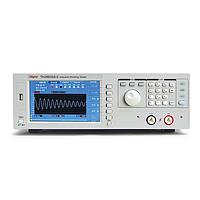
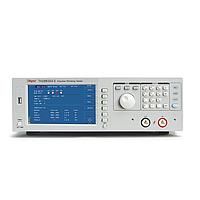
Impulse Winding Tester
When a motor, transformer, relay, or stator fails because of turn-to-turn insulation damage, the defect is often too small to be detected by basic resistance checks alone. In production, repair, and incoming inspection, that is where an Impulse Winding Tester becomes important: it helps reveal winding weaknesses by applying high-voltage pulses and comparing the electrical response of the coil.
For users selecting equipment in this category, the key question is not simply maximum voltage. The more practical approach is to match the tester to the winding type, inductance range, test speed, waveform analysis method, and level of data handling needed in daily work. That is what usually determines whether the instrument fits a repair bench, a quality control station, or an automated manufacturing line.

Why impulse winding testing matters in real applications
Winding faults do not always appear as obvious open circuits or complete insulation breakdown. Early-stage defects may involve only a few turns, partial weakness in enamel insulation, or inconsistent winding quality between batches. In those cases, impulse testing gives a more sensitive view of coil condition by examining waveform behavior under pulse stress.
This makes the category relevant for manufacturers of motors, transformers, inductors, solenoids, and related magnetic components, as well as for repair workshops that need to verify rewound coils before release. Compared with a standard multimeter, an impulse tester is designed for fault detection that depends on waveform comparison rather than only simple electrical values.
What to look for when comparing testers
The first selection factor is usually test voltage range. A lower-range instrument may be appropriate for smaller coils and low-voltage winding structures, while higher-voltage models are better suited to larger motors, transformers, or applications that require stronger stress testing. Choosing too high a range without a real need can add cost and complexity, while choosing too low may limit usable coverage.
Another major point is the minimum inductance the tester can handle. Some applications involve relatively small inductive components, while others focus on larger coils. If your products vary widely, this specification matters as much as pulse voltage. Test throughput is also important in production environments, especially where multiple measurements per second help reduce bottlenecks.
Users should also evaluate waveform analysis and storage capability. Testers that support comparison methods such as area, differential, Laplacian, flutter, or corona-related evaluation can help improve repeatability. Memory for standard waveforms and settings is especially useful when quality teams need consistent judgment across operators or production shifts.
Examples across different testing needs
Within this category, the available instruments cover a broad range of requirements. For example, the MICROTEST 7750 series includes models such as the 7750-1S, 7750-5S, and 7750-10S, all built around 200 MHz sampling with waveform comparison functions and LAN connectivity. These are suitable examples for users who need detailed waveform capture, data handling, and integration-friendly interfaces.
The HIOKI ST4030A is another strong reference point for applications requiring controlled high-voltage impulse testing, waveform judgment, and compact bench use. Its specified test range and interface set make it relevant for users who need a balance between analytical capability and routine production testing. For buyers already working with other HIOKI instruments, that can also support a more consistent measurement environment.
For broader voltage coverage across several model tiers, MultiTech offers examples such as the MTJ-9813, MTJ-9815, MTJ-9816, and MTJ-9810, spanning from lower to higher pulse voltage ranges. The MT9918 series also introduces multi-channel options, including 1-channel and 3-channel configurations, which may be useful where parallel testing or channel-specific workflows are part of the process.
Single-channel, multi-channel, and data handling considerations
Not every user needs the same test setup. A single-channel instrument may be sufficient for repair work, sample inspection, or lower-volume production where flexibility matters more than parallel throughput. In contrast, multi-channel equipment can make more sense in structured testing environments where repeatability and faster handling of multiple winding points are priorities.
Data storage and interface options should not be treated as secondary features. Built-in memory, USB communication, LAN, remote I/O, or PLC-oriented signaling can significantly affect how smoothly the tester fits into a production line. If the goal is traceability, recipe management, or standardized pass/fail decision-making, these functions can be just as valuable as the pulse specifications themselves.
How waveform comparison improves inspection consistency
Many users first focus on voltage and overlook the practical value of comparison logic. In real use, technicians often need more than a visual waveform display. Automatic comparison methods help reduce judgment differences between operators and make it easier to detect subtle variation from a known-good sample.
This is especially important when testing large batches of similar products. A stored master waveform, combined with statistical handling and defined judgment conditions, helps create a more repeatable process. For manufacturers concerned with broader electrical quality workflows, categories such as SMU semiconductor test systems may also be relevant elsewhere in the lab, although their role is different from winding impulse inspection.
Choosing by application rather than by brand alone
Well-known names such as HIOKI, MICROTEST, and MultiTech appear frequently in this category, and each may fit different operating priorities. Some users value high sampling performance and deeper waveform analysis, while others place more weight on practical voltage coverage, simpler operation, channel count, or memory capacity. Brand can be a useful filter, but it should not replace application-based selection.
A better approach is to define the actual coil types being tested, the normal inductance range, the required pulse level, and whether the instrument will be used for development, final inspection, or repair confirmation. That process usually leads to a more reliable choice than comparing only headline specifications or focusing on one manufacturer name.
Common buying questions
Is a higher voltage model always better?
No. A wider voltage range is useful only if it matches the winding types and insulation stress level required in your process. Oversizing can increase cost without improving daily results.
Do I need advanced waveform analysis?
If testing is frequent, standardized, or handled by multiple operators, advanced comparison methods often help improve consistency. For simpler bench checks, a more basic tester may still be adequate depending on the workflow.
When is multi-channel testing useful?
Multi-channel models are generally more relevant when throughput, fixture-based testing, or repeated evaluation across several points matters. For many maintenance and repair tasks, a single-channel unit can still be practical.
Final considerations for this category
An impulse winding tester is most valuable when it fits the real testing process behind your products, not just the highest specification on paper. Voltage range, minimum inductance, waveform judgment method, speed, storage, and interface options all affect long-term usability.
If you are comparing models in this category, it helps to start from the winding structure you test every day and then narrow the choice by workflow requirements. That usually leads to a more dependable selection for quality control, service verification, or production-line inspection.
Get exclusive volume discounts, bulk pricing updates, and new product alerts delivered directly to your inbox.
By subscribing, you agree to our Terms of Service and Privacy Policy.
Direct access to our certified experts