Logic analyzers
Debugging a digital system often means answering very specific timing questions: which line changed first, whether a trigger event happened as expected, and how different buses behaved at the same moment. That is where logic analyzers become especially useful. They help engineers capture multiple digital channels together, correlate events in time, and inspect protocol-level activity more efficiently than relying on a small number of oscilloscope channels alone.
On this page, you can explore instruments suited to embedded development, interface verification, board bring-up, production troubleshooting, and general digital design analysis. The range includes compact USB-based units for portable work as well as higher-channel systems for more demanding lab environments.
Where logic analyzers fit in digital measurement
A logic analyzer records digital states across many inputs simultaneously and presents the result as time-aligned waveforms, state data, or decoded protocol traffic. This makes it well suited to applications such as GPIO observation, bus validation, FPGA and MCU debugging, memory interface checks, and verification of communication between controllers and peripherals.
In practice, the instrument is often used alongside other test tools. For example, an engineer may use a multimeter to confirm supply levels and continuity, then move to a logic analyzer to study signal timing, trigger conditions, and bus transactions in more depth. The two tools answer different questions, and digital troubleshooting is usually faster when both are available.
Why engineers choose a logic analyzer instead of only an oscilloscope
Oscilloscopes are excellent for observing voltage behavior, edge quality, overshoot, ringing, and analog characteristics. A logic analyzer, however, is usually the better choice when the problem involves many digital channels, long captures, or the need to decode serial protocols while maintaining time correlation across the system.
This is particularly important in embedded systems where several signals interact at once. Triggers based on edge, pattern, pulse width, timeout, or combined conditions can help isolate a failure that appears only occasionally. Many models also support protocol analysis for interfaces such as I2C, SPI, UART, CAN, CAN FD, LIN, USB PD, and MIPI-related buses, depending on the instrument.
Common logic analyzer formats and usage scenarios
Different form factors suit different workflows. Benchtop units are often preferred in fixed test benches where an integrated display and standalone operation are important. USB-powered or PC-connected models are attractive for field work, engineering desks, education labs, and teams that want flexible software-based analysis on a host computer.
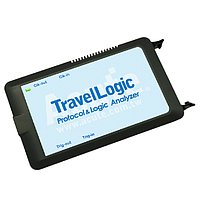
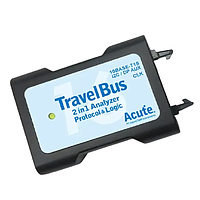
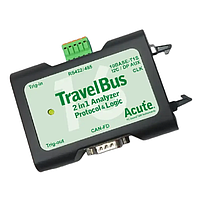
Portable options are especially practical when engineers need to move between prototypes, production fixtures, and customer systems. Models such as the Acute TB3016F TravelBus logic analyzer and Acute TL4134E TravelLogic show how compact analyzers can still provide substantial sampling performance, trigger capability, and protocol decoding support in a travel-friendly format.
For embedded interface development, the Prodigy Technovations portfolio is also relevant when protocol-aware debugging and software-driven workflows are part of the requirement.
Key selection criteria for a suitable model
Choosing the right instrument starts with the signals you need to observe. Channel count is one of the first filters. A compact design with 16 to 34 channels may be enough for serial buses, control signals, and routine MCU debugging, while larger digital systems can require 68 or even 136 channels for wider buses and more complete timing correlation.
Sample rate and state speed matter next. Timing analysis captures asynchronous activity, while state analysis uses a clock to sample synchronous systems more meaningfully. If you are validating high-speed digital interfaces or trying to catch short glitches, higher timing sample rates and fine trigger resolution are valuable.
Memory depth and storage method also affect real-world usability. Longer records help when faults appear infrequently, and transitional or intelligent storage can improve efficiency by focusing on signal changes rather than repetitive idle states. For teams working heavily with serial interfaces, protocol trigger and decode support can save significant analysis time.
Examples from this category
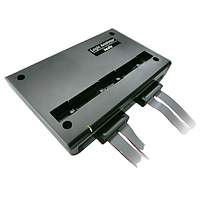
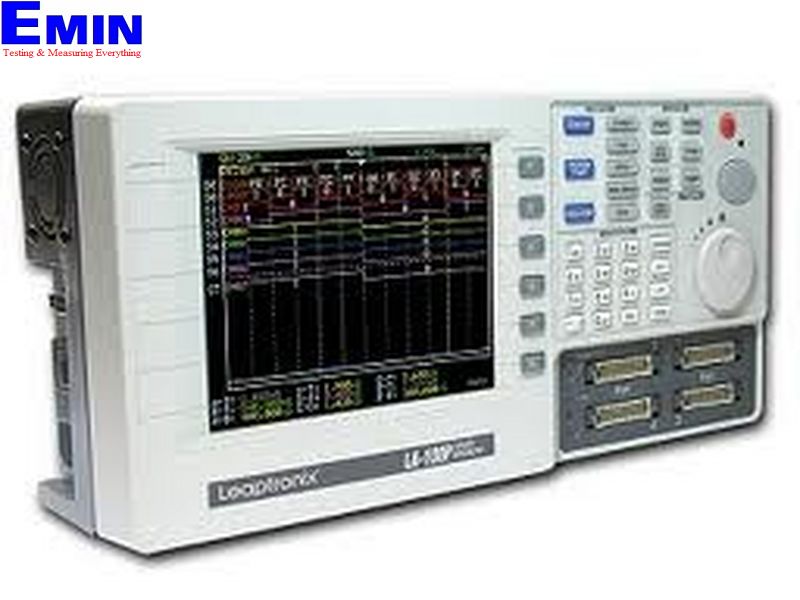
The available range illustrates several common use cases. The LEAPTRONIX LA-2050 is a 32-channel benchtop-style option with timing and state analysis capability, making it suitable for users who want a self-contained platform for routine digital troubleshooting. If you prefer to browse the brand further, you can also explore LEAPTRONIX solutions for related models.
For embedded communication work, the Prodigy Technovations PGY-LA-EMBD focuses on a 16-channel workflow with protocol support for interfaces such as I2C, SPI, UART, I3C, SPMI, RFFE, CAN, and CAN FD. This type of analyzer is useful when the priority is not only waveform capture, but also quick interpretation of protocol transactions during firmware and hardware validation.
Acute offers a broad spread across portable and higher-capacity systems. The Acute TB3016B and TB3016E address compact bus analysis needs, while the TL4134B and TL4234B extend capability with 34 channels and deeper memory options. For larger digital platforms, the Acute LA4068B, LA4068E, LA4136B, and LA4136E provide high channel counts intended for more complex buses, denser logic designs, and advanced trigger strategies. You can view more from Acute if your application calls for a wider selection.
Features that make day-to-day debugging faster
A useful logic analyzer is not defined by sample rate alone. In everyday engineering work, the most valuable features are often the ones that reduce time to insight: flexible triggering, protocol decoding, searchable captures, and software that makes it easy to zoom from a broad system view down to a single event.
Trigger support can include simple edge detection or more advanced pattern, width, and multi-level conditions. On some models in this category, setup/hold timing violation triggers and protocol-aware triggers are also available. These functions are especially helpful when trying to capture an intermittent bus failure or verify whether a device responded correctly to a command sequence.
Modern software workflows also matter. USB 3.0 or USB Type-C connectivity, host-based analysis, report export, and in some cases automation support can make a large difference in validation and regression testing. This is one reason PC-based analyzers remain popular in embedded development and protocol-focused debug environments.
Applications across R&D, production, and service
Logic analyzers are widely used in electronics R&D, but they are just as practical in manufacturing support and failure analysis. During board bring-up, they help verify reset sequences, bus initialization, and peripheral communication. In production troubleshooting, they can reveal whether a digital handshake, trigger line, or interface timing departs from expected behavior.
They are also relevant in semiconductor and device characterization workflows when digital control and communication need to be correlated with other measurements. In broader test environments, engineers may combine them with tools used for semiconductor test or electrical verification to build a more complete picture of system behavior.
Choosing with the application in mind
The best choice depends on how you work: the number of channels you truly need, the buses you must decode, whether portability matters, and how often you deal with rare or timing-sensitive faults. A compact USB unit can be ideal for embedded interfaces and field debugging, while a larger analyzer is more appropriate for wide buses, FPGA systems, and lab-based validation.
If your work centers on digital timing, protocol visibility, and multi-channel correlation, this category provides a practical starting point across several established manufacturers. Reviewing channel count, sampling capability, trigger depth, memory, and protocol support will usually narrow the shortlist quickly and lead to a more suitable instrument for your actual debugging workflow.
Get exclusive volume discounts, bulk pricing updates, and new product alerts delivered directly to your inbox.
By subscribing, you agree to our Terms of Service and Privacy Policy.
Direct access to our certified experts